




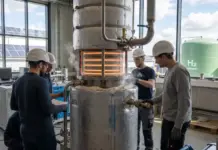

Evonik has gone ahead and started the manufacturing of its high-performance polymer membrane at a recently constructed pilot plant located in Germany’s Marl in North Rhine-Westphalia, marking a key step for the development of the green hydrogen economy. The innovative membrane technology is intended for making green hydrogen production less expensive and more effective and thus support the worldwide transition to a climate-neutral as well as sustainable energy system.
This is indeed a significant accomplishment for Evonik, as it allows the company to produce its advanced membranes on a commercial level, with a yearly capacity for production that will meet the needs of electrolysis systems of almost 2.5 gigawatts. That output is about a quarter of the electrolysis capacity that Germany aims to have in 2030.
It is well to be noted that green hydrogen will probably be a significant force to deal with in the energy mix of the future as industries look for viable alternatives to fossil fuels. It can very well be made use of as a clean energy carrier and also a vital raw material for the chemical, steel, and various other energy-intensive industries. Electrolysis is a procedure that produces hydrogen by employing renewable electricity so as to split water into hydrogen as well as oxygen. Green hydrogen might as well be good for the environment, but it is still far more costly compared to traditional grey hydrogen, which is derived from fossil resources. Production costs are at present estimated to be two to four times higher, depending on the region. Apart from electricity prices, the costs and efficiencies of electrolysis technology also play a significant role in the competitive edge of green hydrogen.
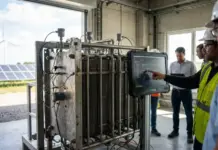
Anion Exchange Membrane – AEM electrolysis is a viable next-generation technology in order to address these challenges. A key element in this process has been invented by Evonik, which is the DURAION® anion-conducting membrane. This membrane was designed by the innovation teams of the company, including experts from its High Performance Polymers business, and is intended to improve the efficiency and financial viability of AEM electrolysis.
The membrane provides better efficiency in operation with fewer investment requirements and supports the acceleration of the broad adoption of this emerging hydrogen generation technology, says Evonik.
The AEM electrolysis technology has attracted growing interest in Europe and Asia thanks to its ability to lower the cost and enhance the operational versatility. In contrast to some traditional electrolysis methods that rely on expensive precious metals, AEM systems work in alkaline environments, enabling the utilization of cheaper, precious-metal-free materials. Economic evaluations indicate that this approach could decrease capital investment standards by over 25%. Moreover, AEM technology is capable of generating hydrogen directly at pressure, which removes the requirement for extra compression equipment and lowers overall system complexity as well as expenses. Its capacity to respond quickly to fluctuating renewable electricity sources like wind and solar energy makes it highly appropriate to support renewable-based energy systems.
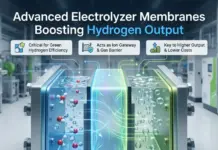
The DURAION® membrane makes it possible to realize the full potential of AEM electrolysis. It offers high ion conductivity, with excellent chemical resistance as well as mechanical strength for long-lasting performance and enhanced process efficiency. Also the membrane guarantees good separation of hydrogen and oxygen gases, minimizing the possibility of hazardous explosive mixtures. It is engineered for good performance at high current densities and high pressures to satisfy the stringent requirements of industrial hydrogen generation. Another important environmental benefit is that no PFAS substances are introduced during the membrane manufacturing procedure.
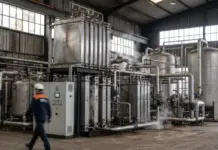
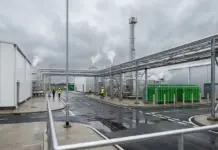
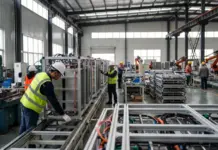
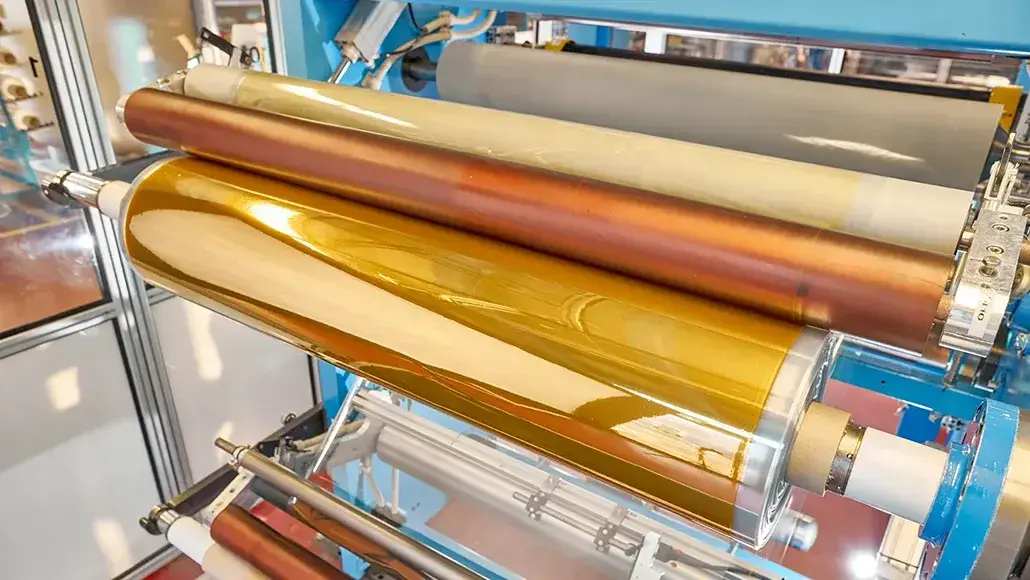
Notably, the new production facility located in Marl in addition to making green hydrogen production less expensive, is a successful translation by Evonik when it comes to the research in the laboratory into ongoing industrial production. The almost 20 metre-long coating system is one of the largest of its kind across the world and can go on to produce membranes of almost one metre in width, which can be used for large-scale electrolyzer applications. The integrated production approach by Evonik right from the raw molecular components to the finished membrane rolls enables the company to produce large volumes of manufacturing while at the same time maintaining high product quality. If required, the membrane can go on to get reinforced with a distinct fabric, thereby making it even more compatible with the larger systems used in industry.
There are several early AEM electrolyzer manufacturers who are already utilizing DURAION® membranes in pilot as well as demonstration projects, showcasing a market acceptance of the technology that is growing by the day.
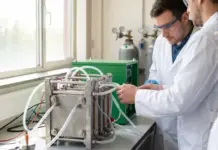
Specifically, the trend for large-scale AEM deployment worldwide is high in China, where investments when it comes to hydrogen infrastructure are quickly growing. In addition, Evonik has opened the Evonik AEM Center Shanghai, which is its first technology-oriented application center located in Asia focused solely on AEM electrolysis, so as to broaden its footprint in this strategically important market. The center offers the possibility of testing membranes, which are manufactured in Marl under real operating conditions, together with regional customers as well as technology partners. The expansion of production in Germany and research in China happens to be a part of efforts made by Evonik to speed up the commercialization and global implementation of efficient AEM hydrogen technology.