








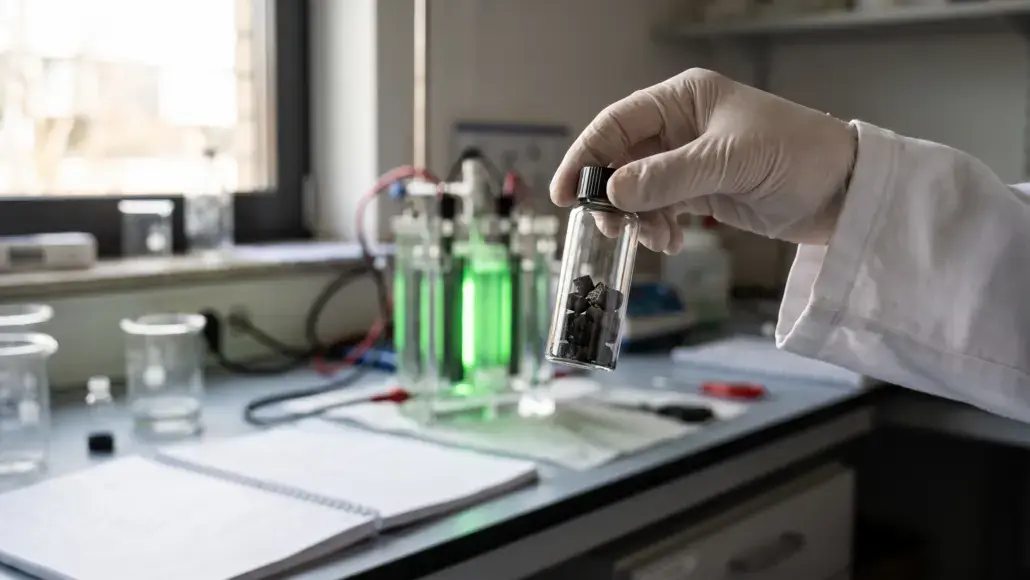

At the heart of every green hydrogen production system lies a silent but powerful driver of chemical change: the catalyst. These specialized materials are responsible for lowering the activation energy required to split water into its constituent parts, oxygen and hydrogen. As the global demand for clean energy intensifies, the performance of these catalysts has become a critical bottleneck for the industry. The efficiency, durability, and cost of an electrolyzer are all directly tied to the atomic-level interactions occurring at the catalyst surface. By leveraging breakthroughs in nanotechnology and computational material science, researchers are now developing advanced electrolyzer catalysts that offer higher hydrogen output while utilizing significantly fewer rare and expensive materials. This evolution in catalyst technology is the key to unlocking affordable green hydrogen at the scale needed to combat climate change.
The Electrochemical Challenge: Oxygen and Hydrogen Evolution
To appreciate the significance of catalyst innovation, one must first understand the two primary reactions occurring within an electrolyzer: the Hydrogen Evolution Reaction (HER) at the cathode and the Oxygen Evolution Reaction (OER) at the anode. Of the two, the oxygen evolution reaction is significantly more complex and energy-intensive. It involves a four-electron transfer process that is inherently slow, leading to a high “overpotential” the extra energy required beyond the thermodynamic minimum to drive the reaction. This overpotential is the primary source of efficiency loss in modern electrolyzers, manifesting as wasted heat.
Advanced electrolyzer catalysts are designed to minimize this overpotential by providing more efficient pathways for the intermediate steps of the reaction. In acidic environments, such as those found in Proton Exchange Membrane (PEM) electrolyzers, iridium oxide remains the gold standard for the anode due to its unique combination of activity and stability. However, iridium is one of the rarest elements on earth, and its limited supply poses a major risk to the scalability of the industry. At the cathode, platinum is the preferred catalyst for hydrogen evolution, offering unrivaled efficiency but adding significant cost to the system. The central mission of modern catalyst research is to find ways to maintain or exceed this performance while drastically reducing the loading of these precious metals.
Nanotechnology and the Quest for Maximized Surface Area
The effectiveness of a catalyst is determined not just by its chemical composition, but by its physical structure. Since the electrochemical reactions only occur at the interface between the catalyst and the electrolyte, maximizing the “Electrochemically Active Surface Area” (ECSA) is paramount. This is where nanotechnology plays a transformative role. By engineering catalysts at the atomic or molecular scale, researchers can create structures with incredible surface-to-volume ratios, such as nanoparticles, nanowires, and porous thin films.
For example, instead of using solid particles of iridium, scientists are developing “core-shell” catalysts where a thin layer of active iridium is deposited onto a cheaper, more abundant core material like titanium or tin oxide. This approach allows for a reduction in iridium content by up to eighty percent without sacrificing performance. Similarly, the development of “single-atom catalysts” where individual metal atoms are anchored onto a conductive support represents the ultimate limit of atom efficiency. These advanced architectures ensure that every single atom of the catalyst is actively participating in the reaction, providing a massive boost to the overall efficiency of the electrolyzer stack.
Improving Durability through Catalyst-Support Interactions
In the harsh environment of an electrolyzer where high voltages, acidic or alkaline conditions, and rapid gas evolution are the norm the durability of the catalyst is just as important as its activity. Over time, catalysts can degrade through processes like dissolution, agglomeration, or detachment from the supporting electrode. This leads to a gradual loss of efficiency and eventually necessitates a costly replacement of the electrolyzer stack. Advanced electrolyzer catalysts address this through the engineering of the catalyst-support interface.
Innovative supporting materials, such as carbon nanotubes, graphene, and specialized metal oxides, are being developed to provide a more stable and conductive platform for the catalyst particles. These supports can form strong chemical bonds with the catalyst, anchoring it in place and preventing it from migrating or leaching away during operation. Furthermore, the use of “protective” coatings thin layers of conductive oxides that are permeable to ions but protect the underlying catalyst from corrosion is significantly extending the lifespan of modern electrodes. These durability improvements are essential for achieving the twenty-year operational life required for industrial-scale hydrogen projects.
The Rise of Non-Noble Metal Catalysts in AEM and Alkaline Systems
While PEM technology is currently constrained by its reliance on noble metals, Anion Exchange Membrane (AEM) and traditional alkaline systems offer a different pathway. Because they operate in a basic (alkaline) environment, these technologies can utilize much more abundant and inexpensive non-noble metal catalysts. Nickel, in various forms such as nickel-iron or nickel-molybdenum alloys, has long been the standard for alkaline electrolysis. However, these traditional catalysts often suffer from lower activity compared to their precious metal counterparts.
The new generation of advanced electrolyzer catalysts for alkaline systems is closing this gap. By doping nickel with other transition metals or creating complex layered double hydroxides (LDH), researchers have achieved activities that rival or even exceed those of noble metals in certain conditions. These non-precious catalysts are not only cheaper to produce but are also more resistant to the impurities often found in industrial water sources. This shift toward earth-abundant materials is a critical component of the strategy to lower the “capital expenditure” (CAPEX) of green hydrogen production, making it a viable option for countries with limited access to the global precious metal markets.
Computational Design: Accelerating the Discovery of New Materials
The traditional method of discovering new catalysts involved slow, trial-and-error experimentation in the laboratory. This process is being revolutionized by the integration of computational material science and artificial intelligence. Using “Density Functional Theory” (DFT) simulations, researchers can now predict the catalytic activity and stability of a material before it is ever synthesized. These models can simulate the interaction of water molecules and reaction intermediates with different catalyst surfaces at the quantum level, identifying the most promising candidates with incredible precision.
This “high-throughput screening” allows for the exploration of thousands of potential alloy combinations and crystal structures in a matter of days. Once a promising candidate is identified, AI-driven robotic laboratories can automatically synthesize and test the material, providing a rapid feedback loop that shortens the innovation cycle from years to weeks. This synergy between digital intelligence and physical chemistry is accelerating the development of the “ideal” catalyst: one that is inexpensive, highly active, and exceptionally durable. As these models become more sophisticated, they will be able to design entirely new classes of materials that do not even exist in nature.
The Impact on Global Hydrogen Economics
The impact of advanced electrolyzer catalysts on the economics of the hydrogen industry cannot be overstated. By improving the efficiency of the stack, these materials reduce the amount of electricity required per kilogram of hydrogen produced. Since electricity accounts for the majority of the “operating expenditure” (OPEX) of a hydrogen plant, even a small percentage increase in efficiency can lead to massive cost savings over the life of a project. Furthermore, by reducing or eliminating the need for rare metals, these catalysts lower the CAPEX and reduce the financial risk associated with price volatility in the precious metal markets.
As the industry scales to the gigawatt level, the availability of high-performance, low-cost catalysts will be the defining factor in reaching the elusive “one dollar per kilogram” price target for green hydrogen. This price point is widely considered the “holy grail” that will allow green hydrogen to compete directly with fossil fuels in all applications, from heavy transport to industrial heating. The continuous evolution of catalyst technology is the engine that will drive the hydrogen economy toward this goal, ensuring a sustainable and prosperous future for the global energy system.