






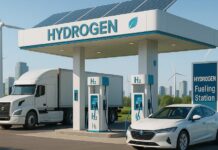
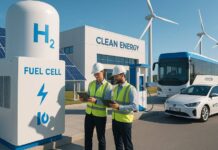
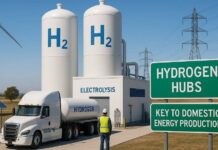

Hydrogen in Germany – this project is gathering momentum as bookings for capacity on the country’s future backbone network grow.
Companies that intend to do business in this market have reaffirmed their adherence to national infrastructure. Up to 23 July, 2026, has seen 6GW reserves booked by participants, both in terms of input and output which is around twice the indicated during the May 2026 update, according to network operators.
This rise is a strong commercial indicator for a project that is valued at 18.9 billion euros of investment.
Besides the increase of main reserves, the system records contracts for about 0.6 GW targeted at transport between various clusters of the network, while further requests close to 0.5 GW are still under assessment.
The geographical allocation of these reserves also demonstrates a notable trend, as demand is not centered in a particular industrial region but spreads to various points along the planned infrastructure.
A market sign with higher economic commitment
Contrary to the expressions of interest utilized in preliminary planning phases, the mechanism set up by the operators calls for the payment of a reservation fee. That makes the applications a much better indicator of the demands of hydrogen producers, marketers, and importers, as well as industrial consumers.
Moreover, reservations should not be taken as definitive transport agreements although they indicate the readiness of companies to pledge economic resources to guarantee future capacity, they still rely on the associated projects finishing their development, financing, and final investment decision processes.
It is worth noting that the reservation system was launched on March 19, 2026, with the objective of enabling future users to reserve capacity before the infrastructure is fully operational. Then, the reserved capacity can be converted into transport agreements with terms of as long as 15 years if the conditions set forth by the operators are fulfilled. The model also provides more insight into future network use and helps infrastructure administrators and project developers in their investment planning process.
The national backbone network of Germany gets a boost from Hydrogen
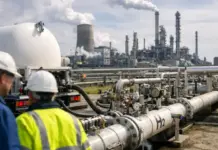
The backbone network authorized by the Federal Grid Agency comprises an extended length of 9,040 kilometers, which makes it one of the largest-scale hydrogen infrastructure projects across Europe. Of the overall plan, about 56% will rely on natural gas pipelines that will be transformed to transport hydrogen, whereas the other 44% will be connected to new pipelines constructed specifically for this fuel.
This strategy enables reduction in some development expenses and speeds up the availability of corridors that are capable of linking production centers and import terminals, as well as large industrial consumers spread out throughout Germany. Reusing prevailing infrastructure also seeks to optimize resources and minimize construction times in contrast to developing a network completely from scratch.
The strategy is in line with the industrial decarbonization goals of Germany, with sectors like steel and chemicals, as well as heavy manufacturing, planning to boost the consumption of hydrogen to slowly replace fossil fuels. The future network will also provide for the transport of the fuel from domestic production plants and import points to the primary industrial centers of the country.
The increase in reserves surpasses initial figures
The last update that was published in May 2026 already indicated a positive market reaction right after the beginning of the booking procedure leading to 6GW reserves booked by participants as of July 23, 2026. Operators then said business interest had surpassed initial projections and that several applications were already in process.
Data released in July 2026 shows that this trend progressed during the following months, rising to nearly 6 GW. This evidence shows that new companies have chosen to formalize financial commitments in order to secure a place on the future national hydrogen transport network, resulting in a positive signal for market growth.
Barbara Fischer, the managing director of FNB Gas, observed that both the volume as well as geographical distribution of reserves indicate that the infrastructure is conforming to real market needs.
She said that the high demand for capacity along with the willingness of companies to make payments in advance is a clear signal of the progress made by hydrogen in the German economy. The directive added that the geographical spread of the reserves indicates the requirement for a high-performance infrastructure, which can connect several industrial regions.
The figures need to be interpreted technically
Although the increase in bookings is a good sign for infrastructure development, operators maintain that the 6 GW they are talking about does not correspond to installed hydrogen production capacity, nor to the ultimate volume of industrial consumption.
The reserves only relate to the ability of hydrogen to either enter or leave the transport system when the network is working. The relevant production projects and import projects, as well as consumption projects, still have to be promoted to the construction stage and to the commercial operation stage, respectively.
In the same way, a reservation coupled with the associated payment is an indication of the intention of the company to obtain accessibility to future infrastructure, but it is not a substitute for a final investment decision, nor does it provide assurance that each project will be executed. The development of initiatives will continue to be affected by a range of regulatory and financial as well as technological factors for the production, import, and also industrial use of hydrogen.
Thus, the behavior of the first months of the reservation procedure is an early indicator of market trust in the future hydrogen backbone network. Although regulatory, technical, and financial challenges still need to be addressed, the rise in commercial pledges improves the outlook for an infrastructure set to take on a strategic role in the energy transition of Germany and the growth of a hydrogen-based economy in time to come.