

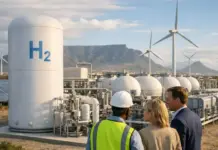

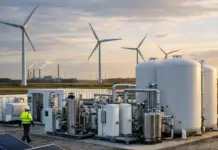
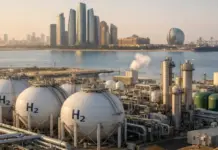
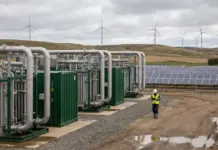
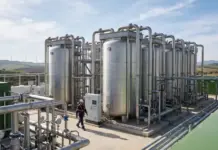

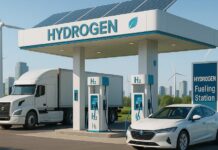
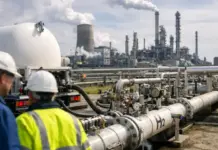
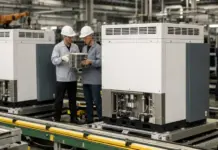
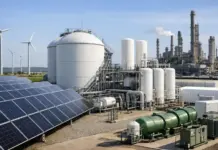

The Industry Ministry of Korea has approved 12 Cases for Sandbox Demonstration. Notably, regulatory sandbox program of Korea has paved the way for the construction of next-generation hydrogen manufacturing plants using electrolysis with greater efficiency and an underground hydrogen infrastructure for clean hydrogen.
The Korea Chamber of Commerce and Industry – KCCI Sandbox Support Center said on May 26, 2026 that the Ministry of Trade, Industry and Energy’s Industrial Convergence Regulatory Sandbox Review Committee went ahead and granted demonstration exemptions to overall 12 cases, which included three projects that it supported.
These include Hydrogen Production System with Solid Oxide Electrolysis Cell – SOEC and a Gaseous Hydrogen Infrastructure Underground Demonstration.
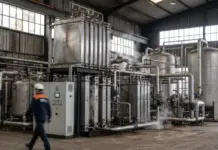
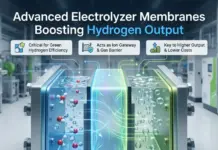
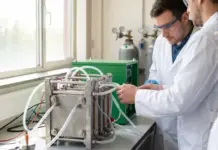
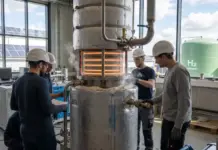
Unlike traditional electrolysis that breaks down water via electricity, the SOEC-based hydrogen production system, for which a consortium led by POSCO Holdings had applied, makes use of a solid – ceramic membrane in order to split hot steam into hydrogen and oxygen.
The system makes use of less power than the present electrolysis methods and is anticipated to contribute to a successful reduction of production expenses when utilising high-temperature heat from steel mills or industrial complexes.
The review committee gave the nod to the demonstration exemption considering the benefits such as obtaining core SOEC technology, establishing the foundation for commercialization, and revitalizing the domestic electrolysis industry of Korea. But the consortium also has to meet additional requirements such as setting demonstration safety norms, developing safety management strategies, and setting up a committee to oversee safety.
For the demonstration, the POSCO Holdings consortium is going to develop a single 100-kilowatt SOEC system at the Jeonnam Technopark Electrolysis Performance Evaluation Center which is located in Yeonggwang County at the South Jeolla Province.
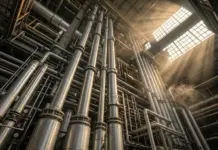
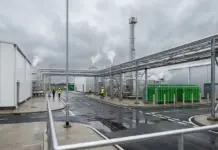
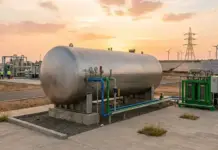
On May 26, 2026 itself, an approval was also given to the demonstration project for underground facilities of gaseous hydrogen by Korea Institute of Civil Engineering and Building Technology – KICT consortium. The project includes the underground installation of hydrogen storage vessels, fuel cells and various other gaseous hydrogen infrastructure and verification of the procedure of storing, distributing, and producing electricity from hydrogen. Gaseous hydrogen stored in conventional underground storage vessels shall be provided to hydrogen fuel cell power generation plants so as to produce electricity to power the facility.
KICT went on to say that it has developed technology for hydrogen power generation in a standard setting with safety equipment, and the sandbox is a space to test safety. This should help to decrease the burden of safeguarding above-ground sites, while safeguarding equipment from outside forces and minimizing the consequences of accidents.
The review committee felt that underground siting of high-pressure gas facilities could enhance the public acceptance and it is anticipated to energies the hydrogen economy. Yet, this project is also subject to extra security conditions. The KICT consortium will develop and commercialize a single underground gaseous hydrogen infrastructure facility at the Korea Clean Hydrogen Promotion Institute in Pyeongtaek, Gyeonggi Province.
Lee Jong-myung, the head of KCCI’s Industrial Growth Division remarked that “Through technology that lowers hydrogen production costs, we have laid a stepping stone toward clean hydrogen production, hydrogen-based steelmaking, and decarbonization of industrial processes.”
The regulatory sandbox system, which was introduced in January 2019, has issued a total of 934 approvals for industrial convergence sandbox exemption. KCCI operated the Sandbox Support Center since May 2020, and has supported 416 of those projects to obtain certification.