






The industrial world is currently witnessing a profound transformation as the physical and digital realms merge to create highly efficient, autonomous, and resilient production systems. In the hydrogen sector, this transformation is being led by the synergy between Digital Twins and AI. As the demand for green hydrogen scales toward gigawatt capacities, the complexity of managing these facilities grows exponentially. Traditional supervisory control and data acquisition (SCADA) systems are no longer sufficient to handle the dynamic interplay between renewable energy inputs, high-pressure electrochemical processes, and global supply chains. Digital Twins and AI provide the multi-dimensional visibility and predictive intelligence required to turn these complexities into competitive advantages.
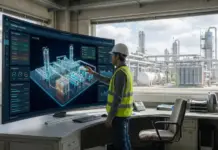
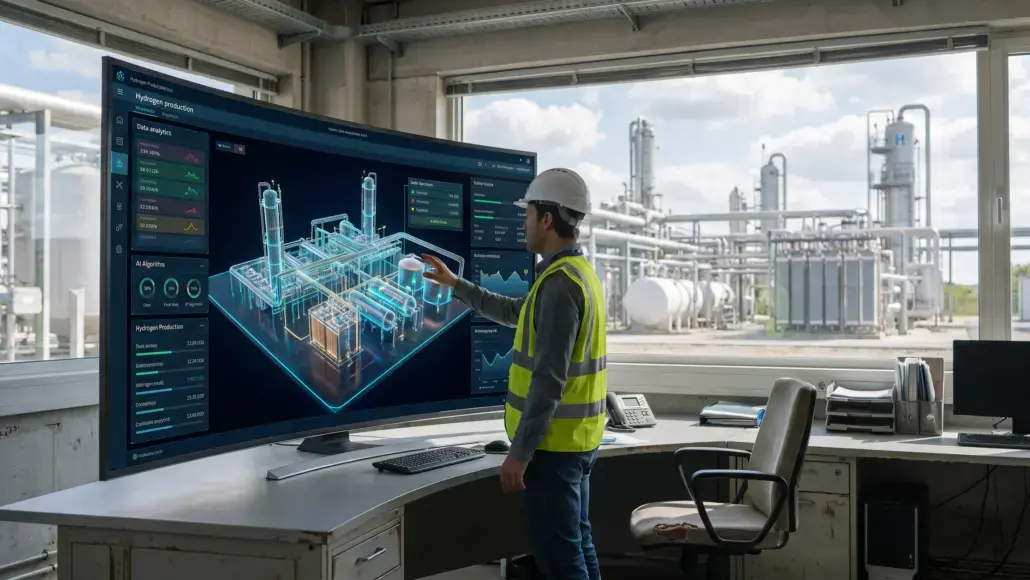
A Digital Twin is far more than a simple 3D model it is a live, data-driven virtual representation of a physical asset that mirrors its behavior, state, and history. When integrated with artificial intelligence, these twins become proactive decision-support systems that can simulate the future, optimize the present, and learn from the past. For hydrogen plants, this means the ability to monitor every valve, sensor, and electrolyzer cell in a virtual environment, allowing for a level of operational control that was previously relegated to the realm of science fiction. The transformation is not just about technology it is about redefining the economic and operational benchmarks for the entire hydrogen economy.
Virtual Commissioning and the Acceleration of Plant Deployment
One of the most significant impacts of Digital Twins and AI is seen even before the first brick of a plant is laid. Virtual commissioning allows engineering teams to test and refine the plant’s control logic in a simulated environment using a Digital Twin. By connecting the real industrial controllers to a virtual replica of the plant’s hardware, engineers can identify software bugs, process bottlenecks, and potential safety hazards long before physical construction is complete. This reduces the time-to-market for new green hydrogen projects and eliminates the costly “trial and error” phase that often occurs during the startup of a new facility.
Furthermore, AI-driven optimization within the Digital Twin can help in the design phase. By running thousands of simulations, the AI can suggest the most efficient layout for piping, the optimal size for storage tanks, and the best configuration for electrolyzer stacks to minimize pressure drops and energy losses. This “design for performance” approach ensures that the physical plant is built for maximum efficiency from day one. In an industry where speed and capital efficiency are paramount, the ability to virtually commission and optimize a facility using Digital Twins and AI is a game-changer for project developers and investors alike.
AI-Driven Root Cause Analysis and Troubleshooting
When a complex system like a hydrogen plant experiences a malfunction, identifying the root cause can be like finding a needle in a haystack. Digital Twins and AI streamline this process through automated Root Cause Analysis (RCA). By replaying the plant’s history in the virtual environment, the AI can trace the cascade of events that led to a failure. For instance, if an electrolyzer stack shuts down due to high temperature, the AI can determine if the primary cause was a cooling pump failure, a sensor drift, or an upstream power surge that overloaded the thermal management system.
This diagnostic capability drastically reduces the time required for troubleshooting. Instead of technicians spending hours or days testing individual components, the AI provides a definitive diagnosis and suggests a prioritized list of corrective actions. In many cases, the Digital Twin can even predict when a similar failure is likely to occur in other parts of the plant, allowing for proactive intervention. This intelligence layer ensures that operational disruptions are kept to an absolute minimum, further driving the efficiency narrative of Digital Twins and AI transforming hydrogen plant operations.
Generative AI and Synthetic Data for Training the Twin
One of the challenges in developing accurate AI models for hydrogen plants is the scarcity of data for rare or catastrophic failure events. Ideally, a plant never experiences a major leak or a total stack failure, but the AI needs to know how to handle these situations. This is where generative AI comes into play. By using the Digital Twin as a foundation, generative models can create “synthetic data” for thousands of hypothetical failure scenarios. These high-fidelity datasets are used to train the plant’s primary AI, ensuring it is prepared for events it has never seen in the real world.
This synthetic training loop creates a level of operational robustness that is impossible with data-driven models alone. The AI becomes an expert in managing the “edge cases” those rare but critical situations that define the safety and reliability of a facility. By constantly refining its understanding of these scenarios in the virtual space, the AI ensures that the physical plant is always operating within a safe and optimized envelope. The synergy between generative AI, synthetic data, and the Digital Twin is the cutting edge of industrial intelligence.
Cyber-Physical Security in the Age of Digital Connectivity
As hydrogen plants become more digitally integrated, they also become more vulnerable to cyber threats. The Digital Twin is a powerful tool, but it is also a potential target for malicious actors. Protecting the integrity of the virtual replica and the data it processes is paramount. AI-driven cybersecurity systems are now being embedded directly into the Digital Twin architecture. These systems use behavior-based anomaly detection to identify unauthorized attempts to access or manipulate the plant’s digital thread.
Moreover, the Digital Twin itself can act as a security layer. By comparing the real-time sensor data from the physical plant with the expected behavior predicted by the Twin, the AI can detect if a physical component is being tampered with or if a sensor is providing falsified information. This “digital verification” ensures that the plant’s control system is always acting on ground-truth data. In this context, Digital Twins and AI are not just operational tools they are the backbone of a secure and resilient industrial infrastructure that can withstand both physical and digital challenges.
Integration of BIM and IoT for Full Lifecycle Management
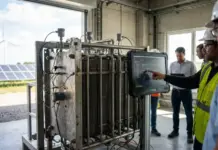
The utility of a Digital Twin persists throughout the entire lifecycle of a facility, from design and construction to operation and decommissioning. By integrating Building Information Modeling (BIM) data with real-time IoT feeds, the Digital Twin becomes a central repository for all technical information. A technician on the plant floor can point a tablet at a piece of equipment and instantly see its maintenance history, real-time sensor readings, and original design specifications all pulled from the Digital Twin. This “augmented reality” approach to maintenance reduces errors and speeds up repairs, ensuring that the physical plant remains in top condition.
As the plant ages, the Digital Twin and AI continue to provide value by tracking the cumulative stress and wear on every component. This allows for precise life-extension studies, where the AI determines which parts of the plant can safely operate beyond their original design life and which require immediate replacement. When the time comes for decommissioning or upgrading the facility, the Digital Twin provides a complete “as-built” and “as-operated” record, facilitating a safe and efficient transition. This cradle-to-grave digital thread ensures that the knowledge gained over decades of operation is preserved and utilized for the next generation of hydrogen infrastructure.
Empowering Remote Operations and Global Workforce Collaboration
The global scale of the hydrogen transition means that plants are often located in remote areas with limited access to specialized engineering talent. Digital Twins and AI bridge this geographic gap by enabling remote operations centers. Experts located thousands of miles away can log into the plant’s Digital Twin, seeing exactly what the local operators see and providing real-time guidance during complex procedures. This collaborative environment ensures that every plant, regardless of its location, has access to the best operational intelligence in the world.
Furthermore, Digital Twins are revolutionizing workforce training. New operators can be trained in a virtual reality (VR) environment that is an exact replica of the plant they will eventually manage. They can practice handling emergencies, performing maintenance, and optimizing processes in a safe, controlled setting. The AI can even act as a “virtual mentor,” providing feedback on their performance and identifying areas where more training is needed. By the time an operator sets foot on the actual plant floor, they already have a deep, intuitive understanding of the system, thanks to the immersive experience provided by Digital Twins and AI.
The Future of Autonomous Hydrogen Ecosystems
As we look toward the 2030s, the convergence of Digital Twins and AI will lead to the emergence of fully autonomous hydrogen ecosystems. In this future, the Digital Twin will not just be a tool for humans it will be the “brain” of the plant, capable of making real-time adjustments to maximize efficiency and safety without human intervention. Multiple plants will be linked through their Digital Twins, allowing a global AI to optimize the entire production and distribution network. This level of systemic intelligence will be the ultimate enabler of a low-cost, reliable hydrogen economy.
The journey of Digital Twins and AI transforming hydrogen plant operations is just beginning. As sensor technology becomes cheaper and AI models become more sophisticated, the fidelity and utility of these digital replicas will only grow. For the hydrogen industry, the message is clear: the path to scalability and profitability lies through the digital world. By embracing these technologies today, we are building the foundation for a cleaner, smarter, and more sustainable energy future for all.