



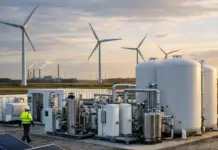





















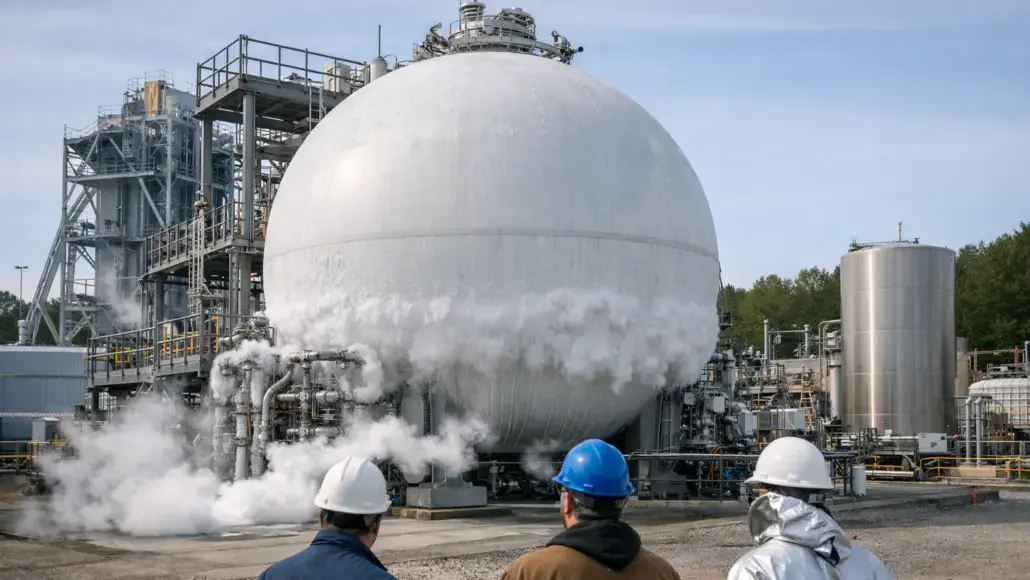

CB&I has reached a major milestone in developing large-scale liquid hydrogen -LH2 storage by completing the first fill of non-vacuum LH2 test tank at Marshall Space Flight Center – MSFC Hydrogen Test Facility – HTF in NASA.
With more than 60 years of experience in cryogenic insulation and LH2 storage, CB&I is leading the way to lower-cost, large-scale LH2 storage via the use of innovative non-vacuum insulation technology.
Launched in 2025, the program brings together CB&I, Shell, NASA, and GenH2, as well as the University of Houston, to establish and validate cost-effective, scalable LH2 storage systems in a real-life operational setting. The technology is being shown in a tank designed and built by CB&I that is incorporated into NASA’s HTF. Non-vacuum insulation technology presents an attractive opportunity to minimize capital expenses when it comes to high-throughput LH2 storage applications.
CB&I’s 20 m3 demonstration tank will triple the overall LH2 storage capacity of the HTF and will be replenished as often as once every day. This improved capability provides a novel platform for rapid testing of insulation systems through recurrent thermal cycles while at the same time increasing the capability of HTF to perform long-duration LH2 tests.
The first fill of non-vacuum LH2 test tank has been fully integrated into the current LH2 infrastructure of the facility.
CB&I’s vice president of engineering, Yogesh Meher, said that “the successful first fill of our demonstration tank marks an important step toward validating a more cost-effective approach to large-scale liquid hydrogen storage. By demonstrating this technology under real operating conditions at NASA’s Hydrogen Test Facility, we are accelerating the path to commercial deployment and helping enable the hydrogen economy at scale.”
In the months to come, NASA and CB&I, along with Shell, will be evaluating the effectiveness of the non-vacuum insulation system and collecting critical data to facilitate the commercialization and implementation of large-scale LH2 storage technologies.
CB&I has an extensive track record of backing America’s space program as well as hydrogen infrastructure. In 1960, the company constructed the first LH2 storage sphere for the Gemini and Apollo programs by NASA. Since then, CB&I has built over 130 LH2 storage spheres globally, including the largest LH2 storage sphere in the world, built in 2022, supporting the Artemis program by NASA.