

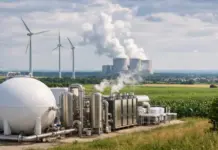
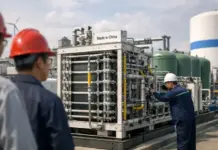
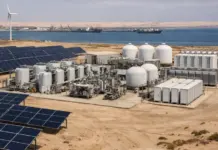
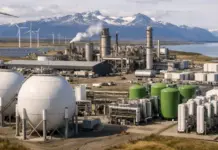
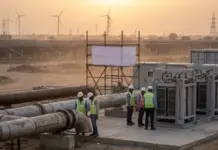

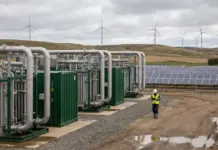

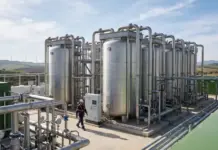

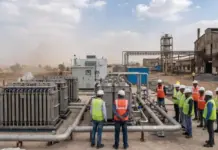
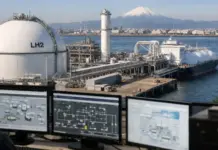
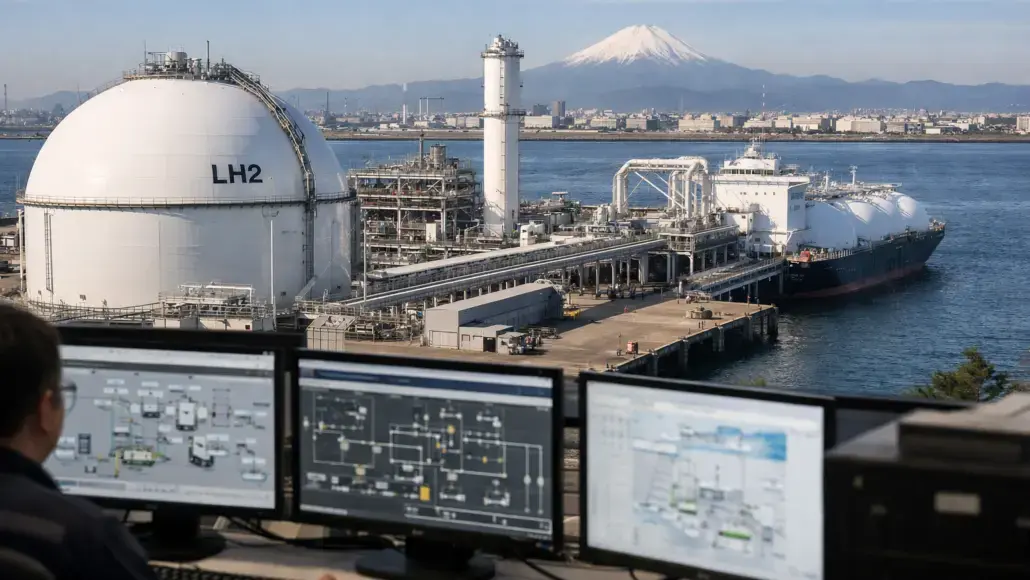

In a recent development, Kawasaki Heavy Industries, Ltd. has chosen ABB to supply its ABB Ability System 800xA DCS – distributed control system when it comes to the Kawasaki LH2 Terminal in Ogishima, which is situated approximately 30 km south of Tokyo, Japan. This, apparently, is the first facility in the world that is designed to manage and also scale up liquefied hydrogen supply from pilot projects to commercial level.
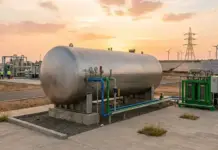
The terminal, which is projected to finish its pilot phase in 2030, will be central to the ambition of Japan to establish an international liquefied hydrogen supply chain. The Liquefied Hydrogen Supply Chain Commercialization Demonstration project, which is supported by Japan Suiso Energy, Ltd., as the project operator along with the New Energy and Industrial Technology Development Organization – NEDO because of its Green Innovation Fund, will consist of a 50,000 m³ liquefied hydrogen storage tank, in addition to freight handling, liquefaction, hydrogen gas distribution, and lorry dispatching.
Once operational, the facility is going to receive, keep, and distribute imported liquefied hydrogen securely and at scale. Ability System 800xA DCS from ABB is going to support this by offering integrated process control, security, and operational information in a common setting, allowing faster choices and higher operational insight throughout the terminal.
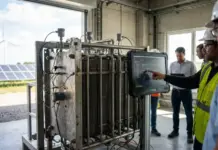
The scope of ABB goes on to include System 800xA integrated with a SIL 3 safety instrumented system – SIS which will offer a singular platform when it comes to process control, safety, and facility-wide operational oversight. The solution additionally incorporates redundant AC 800M controllers as well as critical server infrastructure that would help in operation, handling of data, and system availability in order to help maintain a dependable and uninterrupted operation.
It is well to be noted that the integrated and redundant architecture minimizes operational intricacy, allows more rapid and better-informed decision-making, and also enhances availability throughout the critical processes when it comes to the terminal, right from liquefaction and storage to loading, unloading, and delivery. This provides for reliable and stable results in the case of equipment failure.
Interestingly, the hydrogen ambitions of Japan go on to depend on infrastructure that is able to securely, consistently, and effectively function at commercial scale, says the vice president of ABB’s Energy Industries division in Japan, Tetsuo Miura. He added that they are indeed proud to endorse Kawasaki LH2 Terminal’s operations as Japan takes that major step in the direction of creating a future-proof hydrogen supply chain by integrating automation control and safety as well as operational knowledge together.
Apparently, liquefied hydrogen is a significant option when it comes to the transportation of hydrogen across distances, since volume is reduced to about 1/800 of that of the gaseous state. As Japan moves toward a low-carbon energy system, creating a global hydrogen supply chain is critical, and dependable terminal operations are crucial to making the supply chain practical as well as scalable.
The role of ABB builds upon its support to the Hydrogen Energy Supply Chain pilot, wherein it went on to supply control and safety systems for the Hy touch Kobe receiving terminal led by HySTRA.
The Kawasaki LH2 Terminal takes that partnership to a commercial level and supports work by Kawasaki to make hydrogen a feasible energy carrier of choice for Japan along with global markets.
It is worth noting that ABB is a pioneering technology leader in terms of electrification and automation, transforming both industry and society for a more productive, sustainable tomorrow. ABB uses its engineering and digitalization skills in order to help industries operate better, become more effective, efficient, and environmentally friendly, and hence outperform. This is what ABB is known as: Engineered to Outrun.
With a history of more than 140 years and approximately 110,000 employees around the world, ABB shares are listed on the SIX Swiss Exchange as ABBN as well as on Nasdaq Stockholm as ABB.
Notably, ABB’s automation business automates, electrifies, and digitalizes industrial operations to meet a broad spectrum of fundamental needs, right from providing electricity, water, and supplies to making products and moving them to the market. Automation helps process hybrid as well as maritime sectors, running with a leaner and cleaner approach along with its 26,000 employees, leading with advanced technology, and service knowledge.