









The global energy landscape is currently undergoing a seismic shift as industries and governments alike pivot toward decarbonization. At the heart of this transition lies hydrogen, a versatile energy carrier that promises to bridge the gap between intermittent renewable power and hard-to-abate industrial sectors. While several pathways exist for producing this molecule, the efficiency of production remains the primary hurdle to widespread adoption. Among the most promising technological frontiers is high temperature electrolysis, a process that leverages thermal energy to significantly reduce the electrical requirements of splitting water. By operating at temperatures ranging from seven hundred to nine hundred degrees Celsius, this method offers a thermodynamic advantage that low-temperature alternatives simply cannot match. The integration of high temperature electrolysis into the existing industrial fabric represents more than just an incremental improvement it is a fundamental reimagining of how we utilize energy to produce the fuels of the future.
Understanding the Thermodynamic Foundations of Solid Oxide Electrolysis
To appreciate the significance of high temperature electrolysis, one must first look at the underlying thermodynamics of the water-splitting reaction. Splitting a water molecule into hydrogen and oxygen requires a specific amount of energy, known as the total enthalpy of the reaction. This total energy demand consists of two distinct components: the electrical work, or Gibbs free energy, and the thermal energy, which is represented by the product of temperature and entropy. As the operating temperature of an electrolyzer increases, the proportion of energy that can be supplied as heat grows, while the requirement for high-value electrical energy decreases. This shift is the core reason why high temperature electrolysis, particularly when utilizing Solid Oxide Electrolysis Cells (SOEC), can achieve electrical efficiencies that approach or even exceed one hundred percent when waste heat is available.
The physics of this process is rooted in the increased mobility of ions at elevated temperatures. In an SOEC, oxygen ions are transported through a solid ceramic electrolyte, typically made of yttria-stabilized zirconia (YSZ). At high temperatures, this ceramic becomes highly conductive to oxygen ions but remains an insulator for electrons. This allows the system to operate at high current densities with minimal internal resistance. Unlike traditional alkaline or proton exchange membrane systems that operate in the liquid phase, high temperature electrolysis works with steam. Converting water to steam outside the electrolyzer using waste heat from industrial processes further optimizes the energy balance, as the latent heat of vaporization is not drawn from the electrical supply. This thermal integration allows SOEC systems to operate at significantly lower voltages than PEM or alkaline systems, typically between 1.1 and 1.3 volts per cell, compared to 1.8 to 2.0 volts for low-temperature technologies.
The Role of Industrial Synergy and Waste Heat Recovery
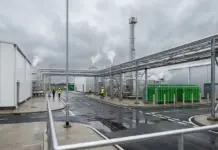
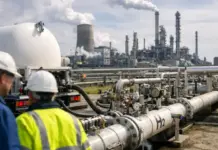
One of the most compelling arguments for the deployment of high temperature electrolysis is its ability to integrate with high-heat industrial processes. Industries such as steel manufacturing, chemical production, and petroleum refining generate vast quantities of low-to-medium grade waste heat that are often vented into the atmosphere. By capturing this thermal energy and piping it into an SOEC system, these facilities can produce green hydrogen with significantly lower operational costs. This synergy transforms the electrolyzer from a standalone energy consumer into a critical component of a circular industrial ecosystem.
In a modern steel mill, for example, the heat from blast furnaces or electric arc furnaces can be utilized to generate the high-pressure steam required for high temperature electrolysis. The hydrogen produced can then be used directly as a reducing agent in the Direct Reduced Iron (DRI) process, replacing carbon-intensive coking coal. This creates a closed-loop system where the byproduct of one process becomes the feedstock for another, drastically reducing the overall carbon footprint of the facility. The same principle applies to nuclear power plants, which provide a stable, high-temperature heat source alongside carbon-free electricity, making them ideal partners for large-scale hydrogen hubs. Projects like the MultiPLHY project in Rotterdam are already demonstrating the feasibility of this integration, using SOEC technology to produce hydrogen for refinery operations with efficiencies far exceeding state-of-the-art PEM systems.
Material Challenges and Technological Evolution in SOEC Systems
Despite the clear thermodynamic benefits, high temperature electrolysis has faced challenges related to material durability and system longevity. Operating at nearly a thousand degrees Celsius creates a harsh environment for the ceramic and metallic components of the electrolyzer stack. Thermal cycling the repeated heating and cooling of the system can lead to mechanical stresses and micro-cracks in the electrolyte or the sealant materials. Furthermore, the high temperature promotes chromium poisoning of the cathode, where chromium species from the metallic interconnects migrate and block the active sites of the electrode.
However, over the past decade, significant strides have been made in material science to mitigate these issues. Researchers are now developing advanced ceramic-metal composites, or cermets, that offer better thermal expansion matching and enhanced resistance to degradation. Innovations in electrode design, such as the use of Lanthanum Strontium Manganite (LSM) or Nickel-YSZ cermets with optimized microstructures, have played a crucial role in improving the lifespan of SOEC units. By increasing the active surface area and improving gas diffusion through graded porosity, engineers have managed to lower the overpotential and reduce the thermal strain on the cell. Specialized coatings for interconnects have also been developed to prevent chromium evaporation, significantly extending the stack’s operational life to over 40,000 hours in some pilot configurations.
Economic Viability and the Pathway to Scalability
The economics of green hydrogen are heavily dependent on two factors: capital expenditure (CAPEX) and operating expenditure (OPEX). High temperature electrolysis excels in the latter. Because it requires roughly 25-30% less electricity per kilogram of hydrogen produced (assuming external heat is available), the OPEX of an SOEC system is inherently lower than that of PEM or alkaline systems, especially in regions where electricity prices are high. While the CAPEX for high temperature systems has historically been higher due to the complexity of the materials and thermal integration, these costs are falling rapidly as manufacturing processes scale.
Mass production of ceramic cells through tape casting and screen printing, combined with automated stack assembly, is bringing the costs of high temperature electrolysis into alignment with more established technologies. Companies like Haldor Topsoe, Sunfire, and Bloom Energy are investing heavily in gigawatt-scale manufacturing facilities to capture this market. Moreover, when considering the “Levelized Cost of Hydrogen” (LCOH), the higher efficiency of SOEC often compensates for the initial investment within a few years of operation. Governments are recognizing this potential, offering subsidies and tax credits that specifically target high-efficiency production methods. As the global supply chain for ceramic materials matures and more specialized manufacturers enter the market, we can expect to see a significant acceleration in the deployment of these systems in industrial clusters.
Comparing SOEC with Low-Temperature Electrolysis Technologies
To fully understand the market position of high temperature electrolysis, it is helpful to compare it with the incumbent low-temperature technologies. Alkaline water electrolysis (AWE) is the oldest and most mature method, relying on a liquid electrolyte and non-noble metal catalysts. It is relatively inexpensive to build but suffers from lower efficiency and limited flexibility in responding to the intermittency of wind and solar power. Proton Exchange Membrane (PEM) electrolysis, on the other hand, is highly responsive and compact but requires expensive noble metals like iridium and platinum, which poses a long-term supply chain risk and limits its scalability.
High temperature electrolysis occupies a unique niche that bridges these two worlds. It offers the high efficiency that alkaline systems lack and avoids the heavy dependence on rare metals that plagues PEM technology. While it is less suited for small, distributed applications that require rapid start-up times due to the time needed to heat the stack to operating temperature it is the superior choice for large-scale industrial baseload hydrogen production. The choice between these technologies often comes down to the specific application: if high-grade heat is available and the goal is maximum efficiency for heavy industry, SOEC is the undisputed leader. Its ability to perform co-electrolysis splitting both water and carbon dioxide simultaneously to produce syngas further expands its utility in the production of sustainable aviation fuels and green chemicals.
Strategic Integration into the Global Hydrogen Economy
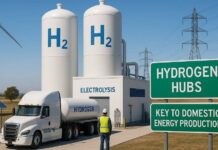
As we look toward the 2030 and 2050 climate targets, the role of high temperature electrolysis will be pivotal in decarbonizing “hard-to-abate” sectors. These sectors, which include heavy-duty shipping, long-haul aviation, and primary steel production, cannot be easily electrified and require a high-energy-density molecule like hydrogen. By providing a pathway to produce this hydrogen at the lowest possible energy cost, SOEC technology acts as an enabler for the broader green transition. The development of hydrogen valleys and industrial hubs, where production is co-located with demand and waste heat sources, will be the primary testing ground for this technology.
Future research is focused on further lowering the operating temperature of SOEC to the “intermediate” range of 500-600 degrees Celsius. This would allow for the use of less expensive stainless steel interconnects and sealants, further driving down CAPEX. Additionally, the development of reversible Solid Oxide Cells (rSOC), which can switch between electrolysis mode (producing hydrogen) and fuel cell mode (producing electricity), offers a unique solution for long-duration energy storage. During periods of excess renewable energy, the system produces hydrogen during periods of low supply, it consumes the hydrogen to provide power back to the grid. This versatility makes high temperature electrolysis not just a production tool, but a critical asset for grid stability and energy security.