





Hyundai Motor Group has gone on to announce on February 27, 2026, that it has inked a Memorandum of Understanding – MoU with the South Korean government as well as Jeonbuk State in order to establish a major innovation hub located in the Saemangeum area of Gunsan city.
Interestingly, this strategic move happens to position the Hyundai Motor Group as a leader when it comes to robotics and AI, along with energy solutions, having plans to invest almost KRW 9 trillion at the start of 2026 so as to construct a cutting-edge industrial complex. Due to this initiative, the Group looks forward to pioneering seamless integration when it comes to advanced AI along with hydrogen energy transformation so as to advance human progress.
According to the Vice Chair of Hyundai Motor Group, Jaehoon Chang, “What we’re building in Saemangeum will reshape not just a region but Korea’s industrial future. Hyundai Motor Group brings together the manufacturing excellence, AI capabilities, and hydrogen energy expertise needed to establish a truly advanced industrial ecosystem. This is how we translate our commitment to ‘Progress for Humanity’ into reality.”
Hyundai Motor Group Planning in Saemangeum – what is it all about?
The Hyundai Motor Group is going to establish a major innovation hub, which would be dedicated to attaining robotics, hydrogen energy, AI, and solar power, as well as AI-driven smart city solutions.
Apparently, a major chunk pertaining to the investment is going to stress new businesses that are based completely on these technologies, thereby contributing to the development of future industrial competitiveness of Korea. Via expanded investment all through numerous regions, the Hyundai Motor Group looks to stimulate the local economic growth and also lay the foundation for sustainable growth of Korea along with its mobility sector.
Why Was Saemangeum Opted for This Investment?
Saemangeum can be called a strategic location for such a transformative project because of its rich renewable energy resources and also comprehensive transportation infra such as rail, port, and also airport connectivity.
Interestingly, this investment happens to be a central initiative within the broader plans of the group so as to invest KRW 125.2tn in the country between 2026 and 2030, as announced in 2025.
Who went on to attend the Signing Ceremony?
The signing ceremony had important South Korean government officials along with Hyundai Motor Group executives.
The Group apparently goes on to target the AI data center along with solar power infrastructure so as to break ground in 2027 and also reach culmination by 2029. The PEM electrolyzer plant is all set to break ground in 2027 itself and also commence operations in 2029 and go through phased capacity expansion thereafter.
It is well to be noted that the robotics cluster is anticipated to start construction in 2028 and be completed by 2029. The Hyundai Motor Group is in dialogue with funding partners, such as the Korea Development Bank, in order to structure the financing for the project.
How is the AI Data Center going to advance physical AI?
The fact is that a high-capacity AI data center is indeed the core to the strategy, thereby serving as the necessary infrastructure for executing physical AI throughout autonomous driving and robotics.
Key features are going to include:
- GPU Computing Power – Phased development, which is scaled to 50,000 units.
- Big Storage – For massive amounts of data, which is needed for core information learning and Software-Defined Vehicle -SDV development along with smart factory execution.
- Integrated Platform – Coming up with a virtuous cycle that elevates the speed and balance of research and product development through making utmost use of critical data throughout the overall value chain.
Through consolidating as well as processing certain large-scale learning requirements throughout these numerous technological domains, the facility is indeed going to establish a base for speeding up physical AI innovation.
What will the robotics manufacturing cluster come with?
In order to execute customized robotics, the Group is going to establish a complete robotics manufacturing cluster, which will be designed to translate manufacturing expertise along with proven innovation capacities into advanced production systems. The cluster is going to-
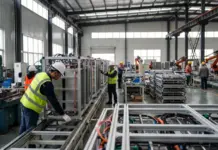
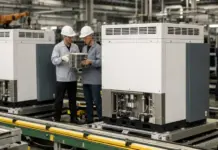
- Manufacture almost 30,000 units per year, which will have a foundry operation plant along with a component supply zone.
- Make utmost use of the manufacturing solutions and smart logistics of the group powered by autonomous guided vehicles – AGVs as well as autonomous mobile robots – AMRs.
- Verify as well as train robots at the Robot Application Center, which will be established in Korea by way of using the AI-based software validation before the rollout, hence making sure of continuous improvement for smarter and much more dependable systems.
- Support the transition of automotive component suppliers into robotics component manufacturing, and hence strengthen the global competitiveness of the domestic robotics industry of Korea.
How is Hyundai Motor Group going to catalyze the hydrogen economy of Korea?
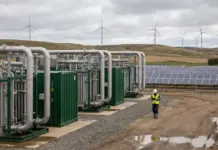
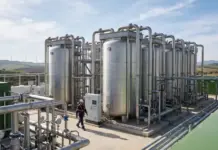
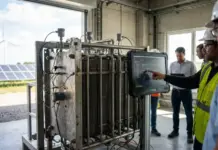
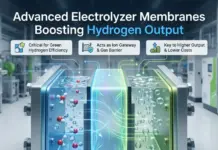
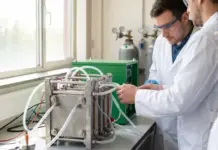
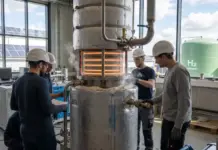
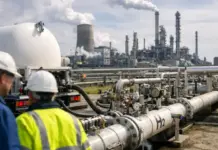
Making rightful use of the renewable energy resources of the region, the Group is going to construct a 200 MW-class PEM electrolyzer plant in order to produce clean hydrogen at scale, therefore establishing energy self-sufficiency in Korea and also speeding up its shift towards a hydrogen economy.
The facility is going to deliver –
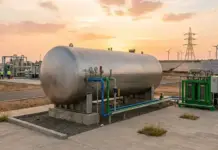
- Large-scale hydrogen production using the renewable energy resources on-site.
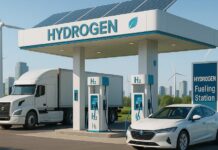
- Supporting the hydrogen supply infrastructure, which includes refueling stations along with distribution networks.
- Direct supply capacity so as to diversify the future mobility solutions such as buses
trams along with demand-responsive transport – DRT services. - Foundation in terms of establishing an integrated hydrogen spectrum throughout production, supply, and storage, as well as utilization.
In order to speed up the broader transition of Korea to a hydrogen economy, the Group looks to systematically go ahead and expand electrolyzer capacity throughout regions and target 1 GW of total capacity domestically. It has already started construction of the Ulsan Fuel Cell Plant when it comes to manufacturing the PEM electrolyzers and hydrogen fuel cell components, with the culmination targeted for 2027.
The proprietary PEM electrolyzer technology of the group, which is developed via domestic R&D efforts, has also attained more than 90% localization, which is indeed quite a major landmark when it comes to establishing technological independence and export capabilities of Korea in terms of production of green hydrogen.
Through such kinds of interconnected investments, the Hyundai Group is coming up with a comprehensive hydrogen space, which goes on to position Korea as a worldwide leader as far as clean energy production along with hydrogen-powered mobility is concerned.
How is the Innovation Hub going to be powered sustainably?
So as to power such transformative initiatives and also make sure of operational sustainability, the Group is going to develop solar power at a gigawatt-scale capacity by 2035.
Notably, the solar portfolio strategy includes –
- Scaling up from existing involvement of the group in the 99 MW solar facility since 2021.
- Offering dependable, predictable baseload power when it comes to large-scale data along with energy-intensive operations.
- Supporting the carbon neutrality of the group in addition to RE100 commitments.
How are these technologies going to create an AI hydrogen smart city?
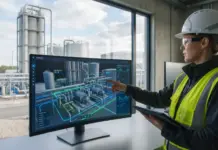
It is well to be noted that the AI Hydrogen Smart City is going to integrate the entire technological portfolio of the group into a standardized industrial ecosystem wherein AI, hydrogen as well as robotics happen to converge.
The city integrates six major elements through the D.E.S.I.G.N. framework –
- Demand – coming up with novel requirements related to power, data, as well as robotic solutions
- Experience – making right use of the world-class manufacturing expertise
- Supply Chain – creating integrated robotics along with hydrogen energy ecosystems
- Infrastructure – making utmost of the transportation and digital as well as logistics networks of Korea
- Government – syncing along with national strategic priorities as well as policy initiatives
- Network – helping the public-private partnerships in addition to global expansion
The city is going to feature –
- A localized energy system that is powered by hydrogen that is produced on-site, making use of hydrogen power generation tech in order to help with energy independence throughout the region.
- Roll out of Physical AI in order to let a seamless integration when it comes to AI-powered systems throughout transportation, logistics, and safety, as well as everyday urban living.
The Group looks forward to expanding its smart city solutions along with urban AI applications across the world based upon the experience in city-scale demonstration that’s gained in Saemangeum.
What is the anticipated economic effect of this investment?
It is worth noting that the Saemangeum investment is forecasted to generate enough economic perks and also promote balanced regional development.
The investment is anticipated to create –
- KRW 16 trillion in overall economic impact.
- Almost 71,000 jobs throughout direct and indirect employment, as well as employment in Korea that’s pretty much induced.
The fact is that this concentration of cutting-edge facilities is going to position the region as a worldwide innovation hub and go on to generate medium- and long-term competitive advantages for the industrial future of Korea.