


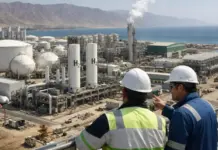
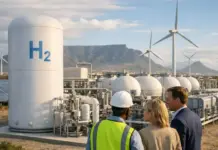

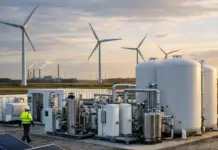
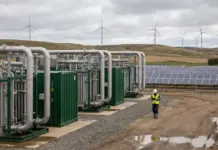









Mitsubishi Heavy Industries, Ltd. (MHI) and the Ministry of Energy of Uzbekistan (MOE) have signed a Memorandum of Understanding (MOU) to conduct a joint study of a power development plan with stable power source needs, including the potential upgrade of the country’s gas turbine fleet with hydrogen co-firing capability as well as other technologies that can contribute to decarbonization.
Under this MOU, both entities have been working on the following three items:
– Evaluation of an upgrade for existing power plants leveraging MHI equipment, to meet necessary parameters;
– Evaluation of new gas turbine combined cycle (GTCC) plants, including hydrogen co-firing and scope of necessary modifications;
– Capacity planning with latest technologies.
The program was officially launched after the agreement on the detailed work plan between the MOE and MHI, and will continue for two years with financial support from the Ministry of Economy, Trade and Industry (METI) of Japan.
Uzbekistan’s government recently published its plan for introducing renewable power by 2030, which aims to achieve a generation ratio for renewables of more than 54% by that date. MHI has supplied systems for thermal power generation installations in Uzbekistan which are contributing toward generating stable power as demand increases; and which also offer a variety of decarbonization technologies such as hydrogen co-firing and carbon capture, utilization and storage (CCUS). Through this program, the MOE and MHI will evaluate the current plan and determine necessary countermeasures, including implementation of new systems and the modification of the current gas turbine fleet to supplement renewables introduction and promote further decarbonization.
In January 2024, METI and the MOE concluded a Memorandum of Cooperation (MOC) to promote and enhance Japan-Uzbekistan energy cooperation in an effort to achieve a realistic energy transition that takes advantage of all available energy sources, technologies, and options, including energy conservation; renewable energy; hydrogen; ammonia; e-fuels; CCUS, carbon recycling; and highly efficient power generation technology. This program is in line with this MOC and promotes further collaboration between both countries.