

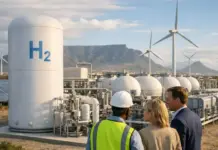

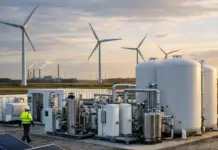
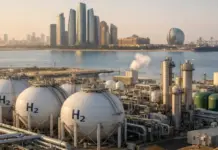
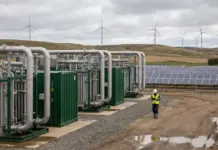
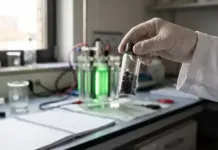
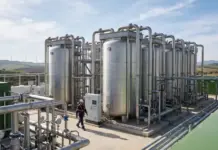

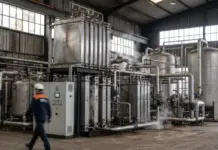








Saudi Arabia’s Public Investment Fund – PIF revised its National Green Hydrogen Project Equipment Access White List on May 31, 2026, mandating all alkaline – ALK electrolyser providers to get a SASO-H2:2026 nod by August 31, 2026.
This is a direct effect on manufacturers and exporters, as well as system integrators servicing major Saudi green hydrogen projects, such as NEOM and Qassim, and points to a heightened level of technical safety along with local support specifications in one of the fastest-growing hydrogen markets in the world.
Event Introduction
The Saudi Public Investment Fund – PIF issued a new version of its National Green Hydrogen Project Equipment Access White List on May 31, 2026. As per the revision, all alkaline electrolysers suppliers shall get a SASO-H2:2026 nod, a required document enacted by the Saudi Standards, Metrology and Quality Organization – SASO, no later than August 31, 2026. Certification requirements: Verification of electrochemical performance, hydrogen purity (≥99.999%), explosion protection rating – Ex d IIC T4, demonstrated local operational and maintenance support capability. Suppliers that do not meet the deadline would be excluded from future tenders for 12 GW worth of green hydrogen projects, including NEOM and Qassim.
Industries Impacted
Electrolyser Manufacturers & OEMs: ALK electrolyser manufacturers, particularly those outside of Saudi Arabia, are directly affected, as SASO-H2:2026 is a gatekeeper requirement for tender eligibility. The effect is delayed market entry, higher pre-bid compliance costs, and possibly redesign or retesting of existing product lines to meet localised safety and purity thresholds.
Export-Orientated System Integrators – Companies that integrate ALK stacks into larger hydrogen production units are subject to cascading compliance obligations. Their ability to bid is based on their own certifications but also on traceable sub-suppliers that are SASO-H2 compliant, especially for critical components impacting hydrogen purity and explosion safety.
Local Support & After Sales Service Suppliers – New dependency: Verified local operational & maintenance capacity required. Foreign suppliers without service infrastructure in the country or formal partnerships with local entities recognised by SASO may be technically compliant but operationally disqualified.
Important factors and suggested actions
The new SASO-H2:2026 standard was published in early 2026 and its interpretation, testing protocols and accreditation pathways are still being finalised. Companies should watch for updates from SASO’s official portal and PIF procurement bulletins, especially any transitional provisions or third-party lab recognition lists.
Focus on certifying high-priority SKUs and configurations
Suppliers should determine which ALK models are most inclined to be implemented in the NEOM and Qassim phases I–II and initiate SASO-H2 testing for those particular configurations first, as opposed to blanket certification throughout entire portfolios, considering the August 31, 2026 deadline and restricted testing resources at accredited labs.
Separate regulatory signal from near-term procurement impact
The whitelist update is only for PIF-led projects in the National Green Hydrogen Program. It does not automatically apply to non-PIF projects – e.g. ACWA Power-led projects or Aramco pilots – except when those entities choose to adopt it. Apply as per the tender notification.
Local backing commitments validation – evidence in writing
The local operational and maintenance support criteria require more than just a commercial agreement, it demands verifiable capacity, e.g., certified technicians, SLA-backed response times, and spare parts inventory locations.
Suppliers now need to prepare auditable documentation such as MOUs with SASO-registered local partners or internal staffing plans that conform to SASO’s service-level expectations.
Industry Insight / Editorial View
This move clearly demonstrates a larger change in the hydrogen strategy of the Gulf – from procuring technology to ensuring sovereign capability. The SASO-H2 mandate is more than simply the starting point for IEC/ISO alignment – it integrates national safety, quality and localisation priorities right into procurement eligibility. Analysis suggests this is not so much a one-time compliance hurdle but rather a fundamental signal – future Saudi hydrogen tenders will likely include further domestic value requirements such as localisation ratios, data sovereignty terms, or joint venture requirements.
From an industry perspective, it is best viewed not as a short-term certification checkpoint but instead as the first formalized pillar of a long-term and standards-driven market access framework.
Final comments
The white list update by PIF from May 2026 makes SASO-H2:2026 a strict condition for ALK electrolyser involvement in flagship Saudi green hydrogen projects. Its importance is not just in its newness but also in its relevance to multi-gigawatt procurements and its clear connection of technical compliance along with service readiness on the ground. This is right now more of a mandatory market access requirement for PIF tenders, rather than an industry benchmark. It should be functional, not ambitious, and certifications, partner selection and documentation timings should be aligned correspondingly.