

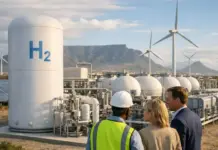

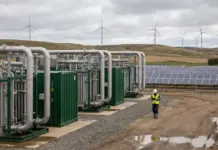
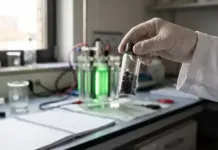
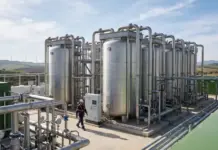

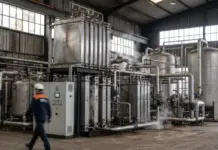


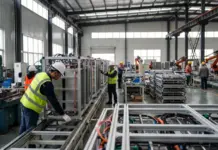
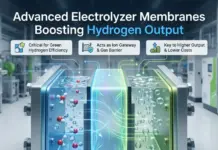
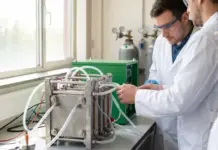
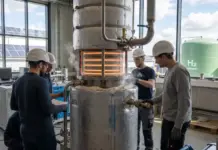




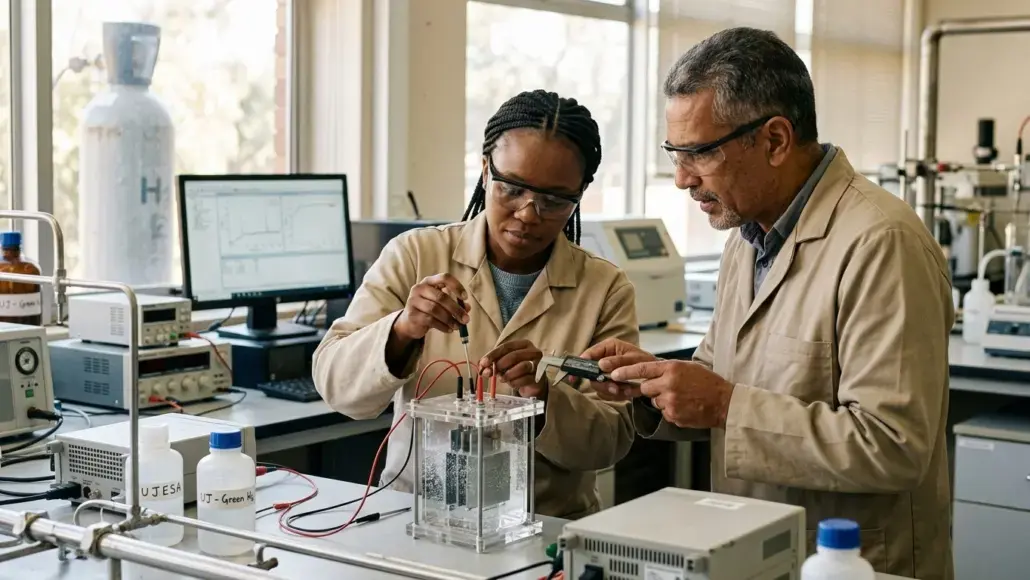

Researchers from the University of Johannesburg’s JENano Group are helping to drive the green hydrogen push of South Africa via comprehensive research, including computational-based materials design, high-tech electrode fabrication, hydrogen storage, and membrane-free electrolysers, as well as fuel-cell systems.
The team is collaborating with local and global organizations so as to develop technologies that can help move towards a low-carbon economy in the country, while at the same time, dealing with practical issues of implementation.
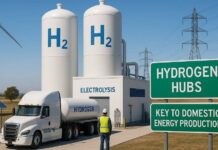
Green hydrogen is produced through splitting water by using electricity generated from the renewable sources of energy like solar and wind. Green hydrogen does not emit carbon at the level of production, in contrast to conventional hydrogen from fossil fuels. It is increasingly regarded as a key solution to decarbonizing challenging sectors like steelmaking, heavy transport, chemicals and long-duration energy storage.
South Africa is indeed pretty well placed to be a producer as well as an exporter of green hydrogen, all thanks to its plentiful solar and wind resources. Realising this possibility will require technologies that can work effectively, with dependability, and at a reasonable cost.
It is well to be noted that the JENano Group is part of UJ’s Department of Mechanical Engineering Science, which is led by Prof. Tien-Chien Jen, who is the holder of the South African Research Chairs Initiative Chair in Green Hydrogen, supported by Sasol and the National Research Foundation.
Interestingly, the group’s work includes hydrogen generation, storage and utilization and it is also moving into cutting-edge battery materials as well as electrochemical energy storage. Studies are exploring technologies so as to boost energy density, reliability, security, and charging performance, recognizing that batteries and hydrogen will have dual roles in future energy systems.
Simulation and Experimentation Combined
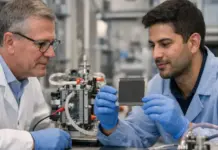
A distinctive feature of the research method of the group is the incorporation of state-of-the-art computational modeling with laboratory verification.
Apparently, the materials are studied at the atomic scale by way of using molecular dynamics and density functional theory, as well as reactive molecular dynamics simulations, before being produced and tested by researchers. They serve to study hydrogen storage materials, hydrogen evolution reaction mechanisms, and electrolyser components along with fuel cell systems.
The same techniques are used in battery studies. Recent research on niobium-modified lithium iron phosphate – LFP cathode have proved that niobium incorporation may improve the lithium-ion diffusion, boost the conductivity and keep the structural stable state. The findings point to ways to create quicker-charging as well as tougher battery systems.
The simulations are accompanied by experimental studies in the fabrication of high-performance electrodes when it comes to water electrolysis. The group develops catalyst systems composed of iridium oxide, nickel–iron alloys, and platinum-on-carbon as well as molybdenum disulphide deposited on conductive substrates that are chosen for either proton-exchange membrane – PEM or alkaline electrolyser systems.
The simulation-based approach not only decreases development time but also helps in detecting promising substances prior to costly experimental tests.
Advanced Fabrication and Characterization
The experimental capabilities of the group are derived from the first atomic layer deposition – ALD research facility in South Africa, which is housed at UJ. The facility, set up by means of a National Nano Equipment Programme grant of roughly $1 million, has two Picosun ALD reactors within ISO 7-certified cleanroom laboratories. ALD allows the accumulation of ultra-thin and highly uniform films with atomic-level precision. This is essential for optimization of catalyst performance, electrical conductivity, and longevity for hydrogen technologies.
The facility houses thermal annealing furnaces, chemical vapour deposition systems, and also an array of advanced characterization tools involving X-ray diffraction, scanning electron microscopy, and X-ray photoelectron spectroscopy as well as electrochemical testing techniques.
ALD is increasingly used for the development of advanced battery materials as well as protective coatings for lithium-ion along with solid-state batteries, in addition to hydrogen usage.
Recent studies on Nb2O5coated LFP cathodes have shown superior discharge capacity as well as cycling stability along with voltage performance, emphasizing the significance of nanoscale surface engineering when it comes to extending life and enhancing the performance of batteries.
FeNi Catalysts for Hydrogen Generation
With an intent to drive green hydrogen push of South Africa, the group has made major modelling accomplishments, one of them being the detection of iron-nickel – FeNi heterometallic surfaces as outstanding catalysts in terms of alkaline hydrogen evolution reactions.
FeNi surfaces were compared to traditional nickel- and platinum-based catalysts in the gamut of reactive molecular dynamics simulations. The findings indicate that FeNi gave higher rates of hydrogen evolution under a variety of operating parameters.
The performance improvement stems from the complementary functions of iron and nickel when it comes to the catalyst architecture. The iron-rich regions encourage water dissociation along with hydroxide adsorption, whereas the nickel-rich regions favor hydrogen adsorption and release.
The FeNi catalysts are constructed from plentiful and relatively cheap materials, making them a potentially economical substitute for precious-metal-based systems. The results, which first appeared in 2021, still guide experimental research on electrodes for next-generation alkaline electrolysers.
Hydrox Holdings – Membraneless Electrolysis
In addition to catalyst development, JENano Group is working with Hydrox Holdings, which is the first electrolyser OEM in Africa, to explore membrane-free electrolysis methods.
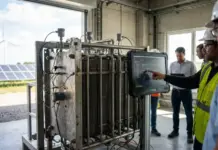
The proprietary Divergent-Electrode-Flow-Through – DEFT system from Hydrox removes the polymer membrane utilized in traditional PEM electrolysers, eliminating one of the most cost-intensive and fragile components of the technology.
The DEFT system utilzes interpenetrating porous electrodes of nickel-based alloys, which form microchannels for the separation of hydrogen and oxygen, rather than a physical membrane. The design includes a filter press stack arrangement and outside gas-liquid separation chambers for ease of upkeep and greater operational dependability.
The technology can produce hydrogen at purities of 99.5 to 99.9995% and is intended to deal with varying renewable energy inputs. Early techno-economic evaluations indicate that DEFT could substantially lower the levelised cost of producing standard-sized hydrogen in comparison with conventional membrane-based systems.
Hydrox brings engineering, integration of systems and commercialization capability, with JENano providing modelling, development of materials and standard electrochemical characterization proficiency.
Hydrogen Storage Research
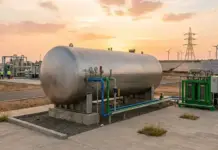
Efficient hydrogen storage is still one of the major obstacles for the large-scale implementation of hydrogen. To this end, the JENano Group is exploring sophisticated two-dimensional materials for secure, productive hydrogen storage.
Borophene is a two-dimensional form of boron and is one focus area due to its distinctive electronic and mechanical characteristics. Studies have shown that yttrium-doped borophene may significantly enhance the hydrogen storage capacity while retaining the reversibility with both adsorption and properties necessary for practical uses.
The group is further exploring doped B4C4 materials that could offer adjustable storage properties for mobile and stationary hydrogen systems.
These initiatives are supported by partnerships with Chinese universities and research institutions that possess expertise in advanced materials and thin film technologies as well as computational modelling.
Deployment in Future
The development of skills and technology demonstration are also of great importance to the JENano Group in addition to research.
Its green hydrogen learning kits include miniaturised electrolysers, hydrogen storage units and fuel cell stacks, allowing students to see the entire hydrogen value chain from production to power generation. These systems are deployed in undergraduate as well as postgraduate education and technical and vocational education along with training engagement programmes and school outreach initiatives.
The group is additionally investigating the installation of 9 kW solid-oxide fuel-cell units at UJ in collaboration with energy technology and software solutions company Mitochondria Energy Systems. The installations would offer a practical demonstration platform for dispersed power generation from hydrogen-rich fuels and supporting training and applied research.
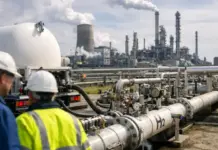
The energy-security challenges facing South Africa highlight the requirement for new energy solutions which can increase reliability while enabling decarbonization. Green hydrogen can help the country expand its energy mix, establish new industrial value chains, and cut emissions in industries where electrification is hard.
Meanwhile, advanced battery technologies will also have a critical complementary role to support renewable energy integration as well as electric mobility along with distributed energy systems.
The JENano Group is working on hydrogen production, fuel cells, storage, and electrolysers as well as battery technologies to help overcome major technical and economic obstacles to deployment. These efforts, along with industry collaborations, global cooperation and skills development programs, are establishing UJ and South Africa as significant contributors to the global hydrogen economy and a wider clean-energy change.