

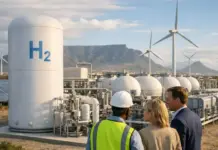

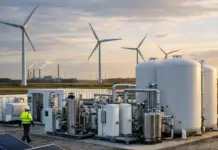
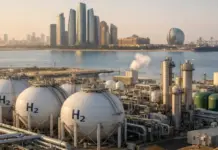







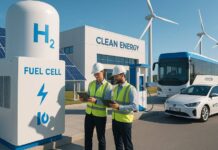
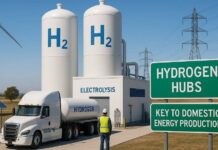

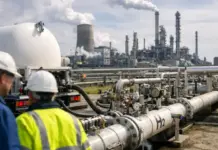

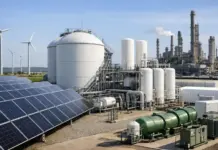
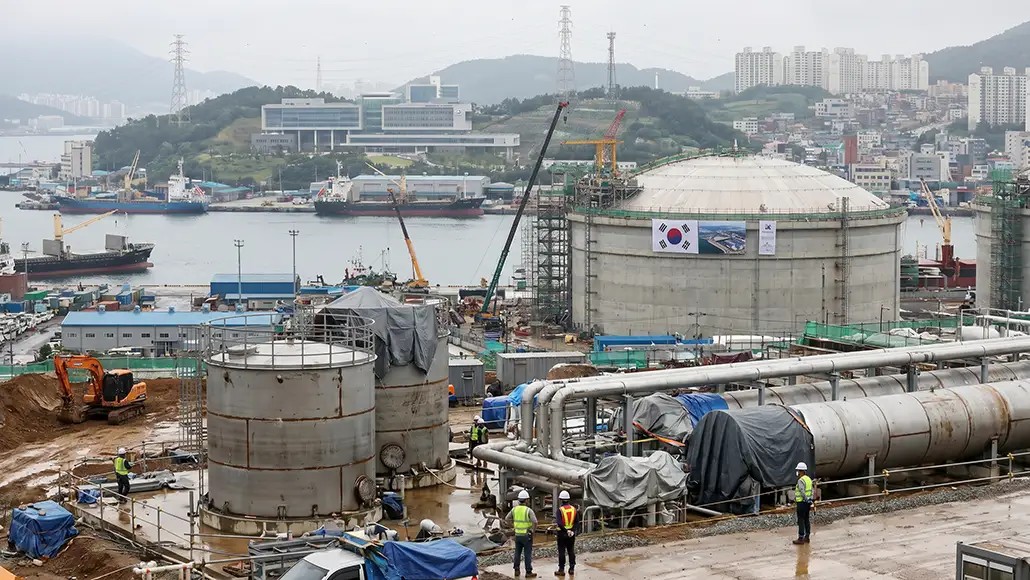

As Japan has gone ahead and started construction of the first 50,000-kl commercial liquefied hydrogen storage tank in the world, the Korean government has also initiated efforts to safeguard core technologies within the areas of clean hydrogen production, storage, and transportation. The objective is to localize hydrogen production technologies centered around renewable energy and build a domestic liquefied hydrogen storage infra, thus getting ready for the hydrogen economy age slated for 2050.
The Ministry of Climate and Environment recently unveiled the Core Technology Development for New and Renewable Energy – Hydrogen project and is now looking into ways to develop a detailed technology blueprint for the whole of the hydrogen value chain, right from production to storage and transportation, sources in the industry said on June 15, 2026.
The current hydrogen R&D project from the government is considered a core project that will decide the leadership of Korea’s hydrogen supply chain for many years to come, beyond the basic objective of technology acquisition.
In order to satisfy this demand, the government anticipates that 27.9 million tons of hydrogen are expected to be used locally by 2050, with another 22.9 million tons imported, representing 82% of total hydrogen. With the use of hydrogen projected to rise dramatically in comparison to current levels, the government feels there is a requirement to lay the groundwork for self-reliance on technology at all phases of production, storage, and transportation.
Acquisition of 100MW-class electrolysis technology for production competitiveness
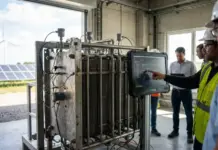
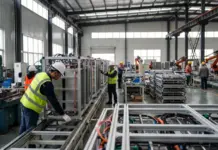
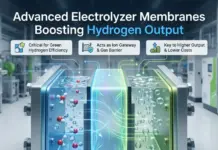
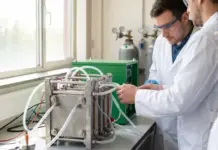
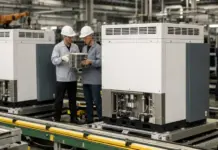
The production sector considers the development of 100MW-class electrolysis technology as the highest priority. Electrolysis is a process that makes use of electricity so as to separate water into hydrogen and oxygen, which means that hydrogen can be produced without even emitting carbon and is therefore considered a key technology for green hydrogen. At present, most of the domestic electrolysis demonstration programs are only at the 10MW level. In contrast, China already has a 260MW-class electrolysis plant in operation and there are also large-scale projects of over 100MW expanding across Europe as well as the US.
It is well to be noted that the size of electrolysis plants remains directly related to the level of competitiveness of production. Lower investment and operating costs contribute to lower hydrogen production costs, and larger facilities cost less. Green hydrogen is more costly than fossil fuel-based hydrogen presently, and the biggest hurdle is economic viability. The government’s effort to acquire the 100 MW-class plant design technology is believed to be an attempt to establish a commercial-scale production system.
Interestingly, the next generation of hydrogen production technologies like photoelectrochemical – PEC as well as photocatalyst techniques are also on the research list. These technologies go on to utilize solar energy directly in order to produce hydrogen, which will reduce energy loss in comparison to the situation when solar power generation and electrolysis are operated separately. At the laboratory level, these techniques are classified as technologies that can have an impact on production expenses in the long run.
Localization pertaining to Liquefied Hydrogen Storage Tanks, the soul of transport
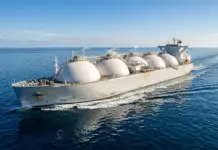
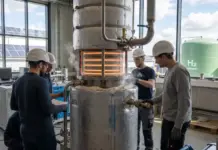
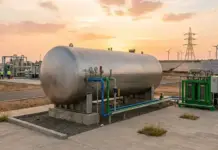
The most urgent problem in the area of hydrogen storage and transportation is the acquisition of the technology of the liquid hydrogen storage tank. One needs large-scale storage facilities and carriers to import hydrogen from abroad in bulk. It is worth noting that hydrogen can be liquefied at -253 degrees Celsius, decreasing its volume to roughly one eight-hundredth of its gaseous state, thereby making it very much possible to transport it across long distances by sea. In order to import hydrogen generated in the Middle East, Australia, or North America, it is essential to build liquefied hydrogen import terminals as well as storage tanks in Korea.
The fact is that the problem is the technology that is currently in the country. Kawasaki Heavy Industries in Japan has taken the lead in constructing the world’s first 50,000-kl commercial liquefied hydrogen storage tank and terminal. Notably, the United States is also working on ultra-large-scale domestic liquefied hydrogen storage infra. Korea has started developing liquefied hydrogen carrier technology but is yet to secure the core technology for storage tanks like insulation materials and construction methods.
The primary technology of a liquefied hydrogen storage tank is insulation. If ultra-low temperatures are not preserved during storage, hydrogen will break down and result in losses. Hence, the effectiveness of the insulation materials, the layout of the tank structure, and the construction technologies are crucial when it comes to economic viability. Therefore, the government has made non-vacuum insulation technology an independent research project. The government confirms that as Korea localized LNG storage tank technology in the past, it is important to create liquefied hydrogen storage tank technology domestically in order to secure competitiveness in the future within the hydrogen supply chain.
In addition to this, the government also plans to look into the creation of liquid organic hydrogen carrier- LOHC technology. LOHC is also a next-generation technology for the transport of hydrogen alongside liquefied hydrogen, which stores hydrogen in liquid chemical compounds and releases it as needed.
Germany and Japan have already started industry-scale demonstration projects; however, Korea is still at the trial stage. The global hydrogen patent market shares at present stand at 43% for China, 20% for Japan, and 16% for Korea, the Ministry of Climate and Environment stated.
According to a government official, following the outcomes of this research, the ministry will gradually carry out the fundamental technology development projects in order to raise technological autonomy. The government official adds that they will develop core technologies in terms of production, storage, and shipping so as to decrease reliance on foreign hydrogen supply chains and enhance future competitiveness within the worldwide hydrogen market.