

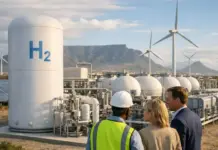

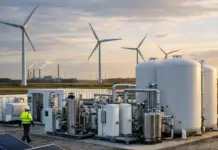

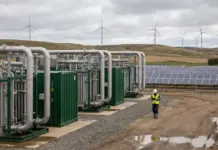






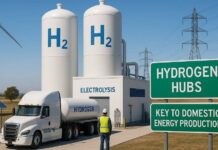


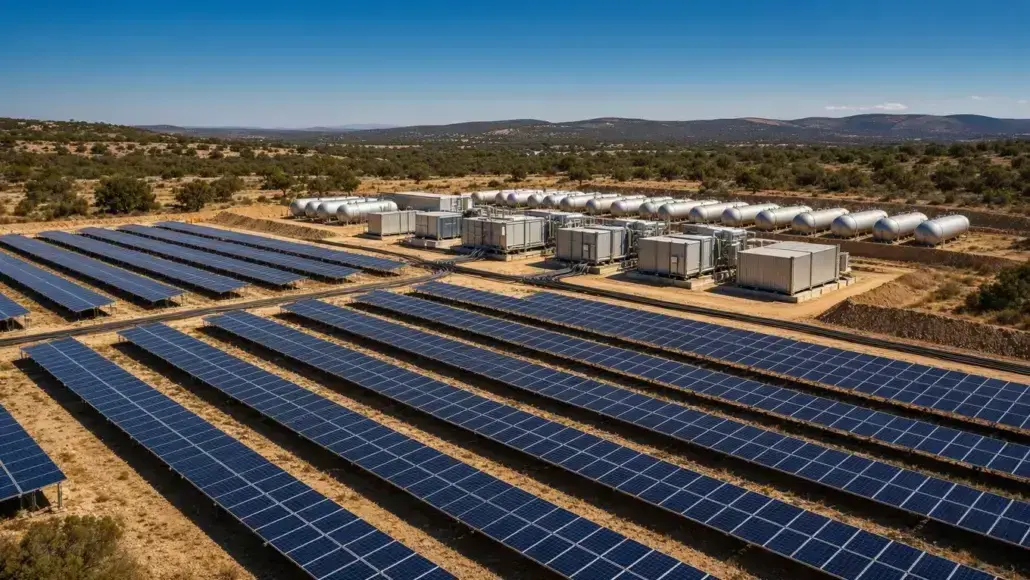

Following a non-binding agreement with Spanish renewables developer Sun Systems, H2Pro, the Israeli electrolyser developer is planning its first 150MW green hydrogen project in Spain. The planned Tarragona project would commence with 25MW of electrolyser capacity, generating some 1,250 tonnes of green hydrogen every year, before scaling up to 50MW and eventually reaching 150MW by 2032. The first phase would be tied to a maximum of 220MW of solar power, with total investment estimated at up to €300m or $349m.
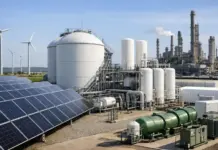
Instead of using grid power, this first 150MW green hydrogen project in Spain is built around off-grid solar power. This is the key. H2Pro’s system is being touted as an ideal match for variable renewable generation since it can track solar output more easily than standard systems. If the plant works at scale, it could be an effective model for producing hydrogen directly from cheap solar power rather than waiting for grid upgrades.
H2Pro develops electrolysers designed specifically to integrate with variable renewable energy. The company’s technology allows the production of hydrogen to be aligned with the availability of renewable electricity, making it suitable for an operational model based on dedicated off-grid photovoltaic generation.
Traditional electrolysers were developed for continuous base-load power. Supply them the variable output of a solar field, and they degrade gas crossover becomes a safety concern, membranes fail, and efficiency drops at partial loads. The industry’s response has been to mitigate the problem with batteries or grid backup. That adds cost and eliminates the purpose of cheap renewable electricity.
H2Pro’s system is the opposite. The Decoupled Water Electrolysis – DWE approach generates hydrogen and oxygen at different times using the same bi-functional electrode. Electricity at the electrode creates hydrogen, and a counter-electrode is charged up like a battery. Then the current is reversed, the counter-electrode is discharged and oxygen evolves. Two discrete steps. No gas produced at the same time and no membrane required to keep the steps distinct.
This means a system that can be turned on and off as frequently as required without hardware degradation, ramped up and down in real time in order to match solar output, and deliver hydrogen that fulfils the EU’s demanding RFNBO standards without grid backup. Earlier Chief Business Officer Rotem Arad said the efficiency is 10-15% higher than state-of-the-art PEM systems from minimal turndown up to nominal load conditions.
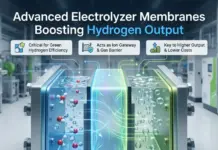
H2Pro’s decoupled water electrolysis technology splits the production of hydrogen and oxygen into two stages. Instead of generating both gases simultaneously through a membrane, the process employs a bifunctional electrode as well as alternating cycles. The company says this eliminates the requirement for expensive membranes and minimises the risk of hydrogen and oxygen mixing while making the system more suitable to short-term renewable power.
Sun Systems Group will supply a maximum of 220MW of photovoltaic capacity from a nearby project. H2Pro’s electrolysers plug directly into that generation DC to DC, and there is no grid in between. The first phase is 25MW, producing approximately 1,250 tonnes of green hydrogen every year. That grows to 50MW, subsequently to 150MW by 2032.
Initially the hydrogen will be injected into the natural gas transmission network of Enagás, with the project planned to directly connect into the H2Med corridor as that infrastructure is developed. The main customers are chemical as well as petrochemical users in the Tarragona industrial cluster.
This is the second project announced by H2Pro in Spain in the last three months. In March it entered a contract with Doral Hydrogen so as to develop a 5MW pilot in Extremadura, billed at the time as the first completely off-grid solar-to-hydrogen project in the world for gas grid blending, with plans to expand that to 50MW.
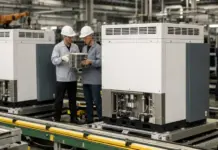
H2Pro says it will sell full electrolyser systems at 500€/kW. Western PEM and alkaline systems now average about $1,500/kW. That’s a three-to-one cost gap, and that’s the claim that will either formally define the company’s path or be quietly modified as projects transition from MOU to engineering design.
The company has raised over $100 million from investors, including Breakthrough Energy Ventures as well as GIC, which is Singapore’s sovereign wealth fund. Earlier in 2026, a 500kW system was brought online in Israel. It is well to be noted that Tarragona will be the first industrial-scale test to determine if the cost curve remains intact at 25MW, followed by 150 MW.