

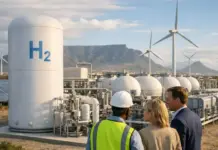

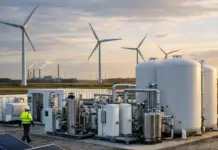





Netherland’s AkzoNobel and its high-performance coatings are protecting one of the most ambitious green hydrogen initiatives of China and the largest project of its kind in the world.
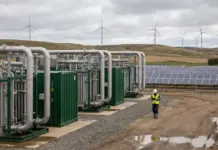
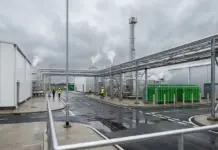
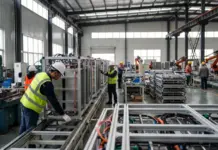
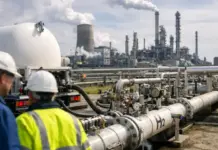
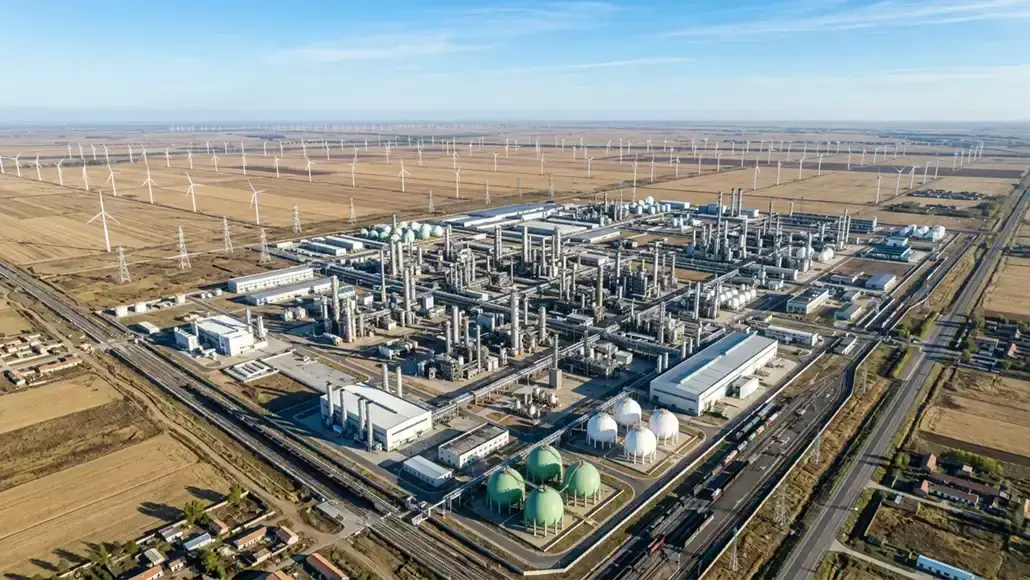
The company’s international brand is supplying long-term protection against corrosion and chemical and heat-resistant coatings for wind power as well as chemical processing plants at the Songyuan Hydrogen Energy Industrial Park. It is the world’s largest integrated project of green hydrogen-ammonia-methanol, built by China Energy Engineering Group Co., Ltd.
In phase two, the industrial park now runs on 100% renewable electricity and is currently producing 45,000 tonnes of green hydrogen and 200,000 tonnes of green ammonia and methanol per year.
According to Rob Leslie, business director of the company’s Marine and Protective Coatings business in Greater China, “It’s a great honour for AkzoNobel to participate in this flagship national initiative with global significance. This validates our technical capabilities in corrosion protection for renewable energy applications and demonstrates our commitment to supporting the green energy sector.”
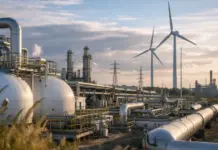
Wind turbines and chemical plants are exposed to harsh outdoor conditions, including aggressive corrosion and large temperature swings. AkzoNobel’s International brand provides products that deliver several key benefits to address these challenges.
The advanced steel structure is protected with a coating system consisting of Interzinc 52E and Interthane 990E as well as Intergard 475HS. This leads to low VOC emissions in comparison to traditional equivalents and provides excellent anti-corrosion protection.
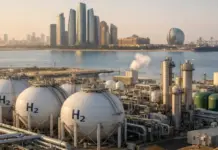
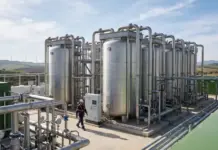
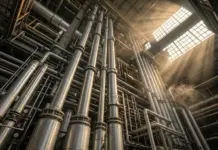
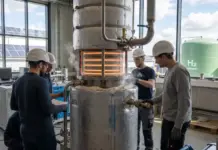
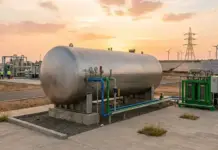
Due to its simplicity of application and worldwide reputation for protection against CUI corrosion under insulation Interbond 2340UPC was chosen for crucial piping and ammonia tanks, qualified to the latest standards. The spheres for storing hydrogen were coated with Interseal 670HS and a topcoat listed on the GB register of solar reflective coatings for compliance and safety.
Adds Leslie, “We’re fully focused on helping customers meet the challenges of extreme manufacturing environments and complex operating conditions. We’ll continue to tailor our protective solutions in China so we can support the energy sector’s carbon neutrality ambition.”
AkzoNobel has already decreased its own Scope 1 and 2 emissions by 47% as compared to the 2018 baseline and is targeting a 50% dip across the value chain by 2030. This is largely because of the increasing use of renewable electricity by the company, which stood at 69% at the end of 2025.
Notably, the construction began on the Songyuan project, which is one of the ambitious green hydrogen initiatives of China in 2023. It covers everything right from renewable electricity to green hydrogen to green ammonia as well as methanol, tackling an important global challenge, reconciling the intermittent nature of renewable power with the level of stability essential for chemical production.