







European Energy has won strong backing under the hydrogen auction scheme by the German government connected to the European Hydrogen Bank – EHB, representing another major turning point in the company’s mission to scale up renewable hydrogen manufacturing and bolster Europe’s clean energy infrastructure. The company was one of only three projects to be successful under the funding scheme and is expected to gain from up to EUR 228 million of support for renewable hydrogen production in Denmark.
The funding will allow European Energy to build an additional 150 MW of renewable hydrogen production in Denmark, expanding its growing Power-to-X portfolio and helping to accelerate the shift to renewable fuels around Europe. The award is part of a larger German hydrogen strategy to speed up the manufacturing and importation of renewable hydrogen and hydrogen-based fuels.
The initiative is aimed at helping decarbonize sectors that are challenging to electrify directly, such as heavy industry, transport as well as maritime shipping, and reinforcing the long-term energy security of Europe and its climate goals.
This funding is a major step toward the future for the company’s hydrogen ambitions, said the executive vice president and head of Power-to-X at European Energy, Rene Alcaraz Frederiksen.
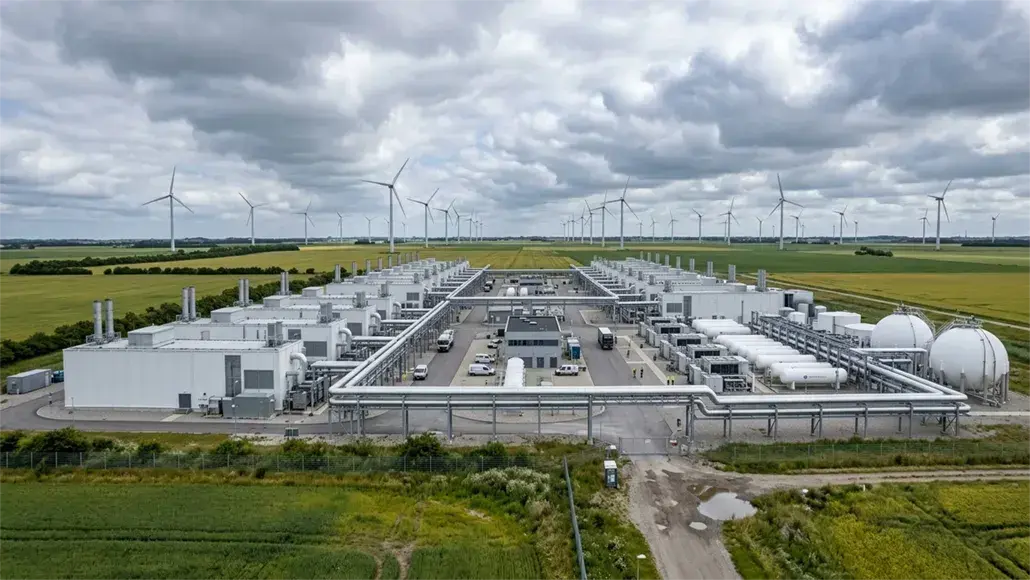
The support will allow for continued growth in hydrogen production related to the business’s operations at Kassø and the growth of the renewable fuels framework in Europe, he said. The funding mechanism is linked to the European Hydrogen Bank, a program created by the European Commission in order to encourage the development of the renewable hydrogen market.
The program will use competitive auctions as well as targeted financial support to fill the existing cost gap between both renewable hydrogen production and market demand, making large-scale projects viable economically and spurring funding across the entire hydrogen value chain. The latest funding decision-making is also anticipated to lend impetus to the suggested hydrogen pipeline between Denmark and Germany.
Denmark-based hydrogen producers, along with German-based industrial off-takers, are showing robust commitment to the emerging marketplace, and the project is becoming more feasible in the view of European Energy, it said.
The company has highlighted the need to build the infrastructure required for future hydrogen exports. European Energy says with large investments already underway in production capacity, transport infrastructure will be equally important to make sure renewable hydrogen can reach industrial customers across Europe.
The company has therefore called on Denmark’s next government to speed up plans for hydrogen transport infrastructure that would connect Danish production with the growing demand in Germany. Large long-term potential for growth is seen by European Energy in renewable hydrogen and in products made from hydrogen, such as e-methanol. Demand is expected to rise, especially for sectors that are difficult to electrify directly, such as maritime transport, aviation, and energy-intensive industrial processes.
These industries increasingly view renewable fuels as a practical way to achieve carbon emission reductions without loss of operating efficiency. One of the main drivers for growing demand is Germany’s changing regulatory framework for renewable fuels. German law has recently changed to require a certain percentage of road transport fuels sold in Germany to be certified as Renewable Fuels of Non-Biological Origin (RFNBO).
The mandate begins at 0.1% in 2026 and increases to 1.5% in 2030 and is projected to be 10% in 2040. These targets should generate substantial market demand for green hydrogen and hydrogen-based fuels in the next decades. European Energy welcomed Germany’s approach as a solid example of how government support for both manufacturing and consumption can help accelerate the development of a highly competitive green hydrogen market.
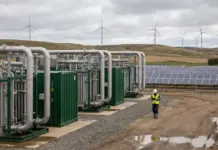
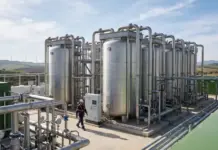
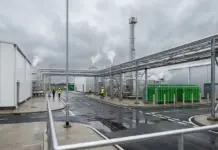
The company believes a combination of financial incentives along with aggressive renewable fuel mandates will offer the surety needed to bring in investment and boost production across Europe. The company already runs two large Power-to-X plants in Denmark. These consist of a green hydrogen production facility located in Esbjerg and the Kassø e-methanol manufacturing facility, co-owned with Mitsui & Co., Ltd.
The Kassø plant has become one of the largest renewable fuel projects in Europe and is a part of European Energy’s strategy to scale commercial production of green fuels. European Energy is continuing to build a broad international Power-to-X development pipeline outside Denmark. The company is now progressing renewable hydrogen and e-fuel projects in Europe, North America, Brazil, and Australia, in response to the increasing global demand for low-carbon energy solutions and alternative sustainable fuels.
The recent funding award further strengthens European Energy’s position as one of the leading developers in the growing renewable hydrogen sector. As governments across Europe increasingly focus on energy security, industrial decarbonisation and the adoption of renewable fuels, hydrogen and hydrogen-derived products are expected to play a growing role in the continent’s clean energy transition.