













It goes without saying that hydrogen is indeed a key component when it comes to decarbonization, but the challenge is to make sure that electrolyzers and fuel cells can go on to operate over the long term. It goes without saying that different operating conditions cause wear in addition to the performance losses. Fraunhofer IFAM has recently achieved a major development when it comes to dynamic impedance spectroscopy – this diagnostic method allows for an accurate analysis at the time of operation, real-time overload detection, and also rapid identification of weak points. This can be used specifically in order to optimize the resilience and efficiency, increase the service lifespan of the systems, and at the same time, minimize operating costs – a technological breakthrough having enormous potential when it comes to the hydrogen economy.
It is well to be noted that electrolyzers and fuel cells happen to have technical challenges that are related to the aging as well as degradation of materials. Changing operating loads, such as due to unpredictable renewable energy feed-in, can result in substantially reduced service lives and also high maintenance costs. Researchers at Fraunhofer IFAM have made substantial progress when it comes to the real-time diagnostic system pertaining to dynamic impedance spectroscopy in order to solve this problem in a sustainable way.
Real-time evaluation – From lab measurements to industrial applications with AI
The fact is that the advanced measurement methods call for a disruption of operation with the associated downtime so as to reach a steady state – for e.g. classical impedance spectroscopy. Measurements like these are time-intensive and can scarcely represent the true, fluctuating operating conditions.
According to the project manager at the Fraunhofer IFAM, Dr. Hermann Pleteit, “With our new dynamic measurement method, we are obtaining meaningful data directly from the actual running process for the first time, using significantly higher current levels than in the previous laboratory setup.”
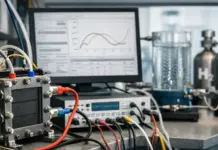
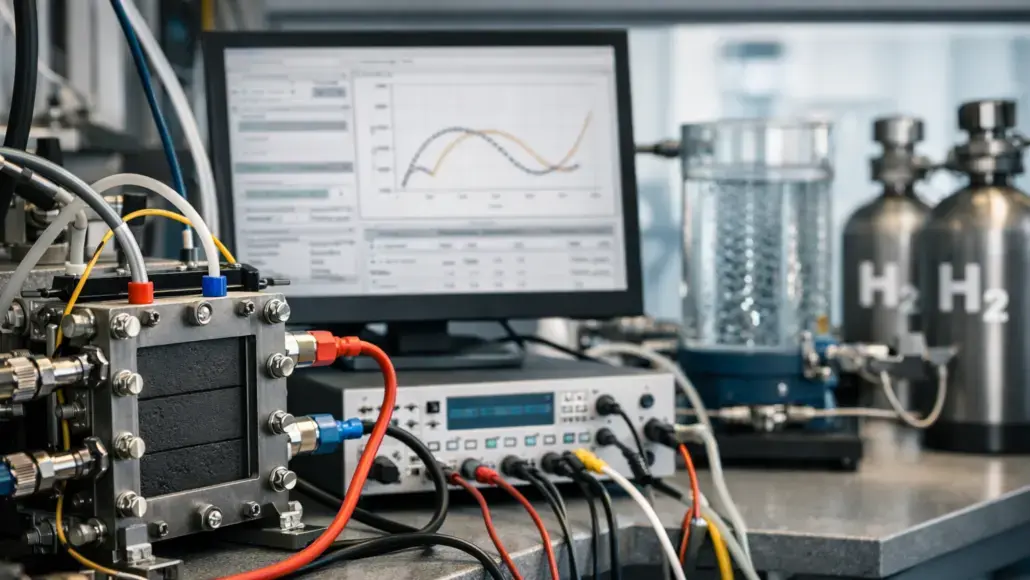
Dynamic impedance spectroscopy can indeed be regarded as a novel technique which allows for the probing of the internal condition of an electrolyzer or fuel cell under non-steady-state circumstances during operation. For this purpose, a small multi-frequency signal is added to the normal operating current. And at the same time, one can check how the system responds to this – i.e. how current and voltage shift. The ratio of these quantities is made use of so as to calculate what is called intricate resistivity, which can be thought of as the system’s frequency-dependent electrical resistance.
Pleteit stresses that “It is precisely this frequency-dependent nature that makes impedance so valuable for the applications mentioned and so interesting to us. Unlike simple resistance value, it provides a comprehensive picture of the processes occurring inside an electrochemical system. This is because the various physical and chemical processes – such as the reactions at the electrodes, the transport of ions through the membrane, electrical contact resistances, or the replenishment of the substances involved – each have an effect at different frequencies. “This allows us to distinguish these processes from one another, evaluate them individually, and, thanks to the detailed real-time resolution, see the state of the individual components, such as the membrane or electrodes.”
The temporal evolution of these spectra allows one to make specific inferences on the state as well as aging of the system. For example, an increase when it comes to some element of resistance may be indicative of a deterioration in terms of electrode reactions, corrosion, or even failing electrical contacts. Changes in phase behavior, however, may be pretty indicative of membrane fouling, water balance issues, or limited mass transfer. This allows us to determine the real causes of the performance losses, whether they are of material, interface, contact, or operating nature.
This information is thereafter made use of in a real-time diagnostic system for ongoing surveillance of the cell condition. This enables detecting incipient changes much earlier than they cause noticeable performance losses or even a failure.
Plateit says, “Instead of reacting only after the system has already shut down, we can precisely predict maintenance needs and avoid costly downtime.”
Therefore, dynamic impedance spectroscopy allows for a much-accurate condition monitoring, focused fault identification as well as predictive maintenance of electrolyzers as well as fuel cells.
These advances are based on the scaling up of dynamic impedance spectroscopy right from laboratory scale to real-world application dimensions, so that now the operating currents of almost 30 amperes can go on to be superimposed on the measurement signal. This constitutes a key step toward industrial application. Impedance is calculated by integrated on-line data processing, and its temporal evolution is shown in real time. Concludes Pleteit, “This allows us, for the first time, to measure our mathematical parameters for larger systems during ongoing processes. In combination with AI-based models, the results can be applied to changing environmental conditions – such as pressure and temperature fluctuations – as well as to new material compositions.”
Integration within plant control systems and practical advantages
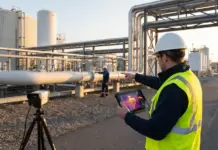
Notably, the advantage when it comes to the expanded system is its practical application in the plant control systems, like in the energy management system. The operators of hydrogen systems such as PEM fuel cells and alkaline electrolyzers – therefore obtain an ongoing, detailed picture of the present health status as far as the plant is concerned. Based on such kinds of advancements, critical processes such as the likes of catalyst degradation can be promptly detected, predictive maintenance periods may as well go on to get determined, and operating strategies may also be modified dynamically so as to minimize the degradation processes.
Pleteit says, “This allows us to significantly reduce lifetime costs and ensure the economic viability of green hydrogen projects – a key component for the competitiveness of the hydrogen economy.”