




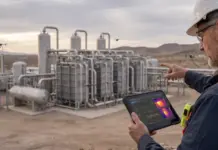
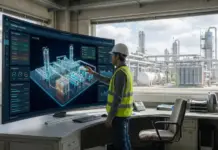








In the rapidly evolving landscape of clean energy, hydrogen production facilities are becoming increasingly complex, integrating sophisticated electrochemical stacks, high-pressure compression systems, and dynamic renewable power sources. Managing this complexity requires more than just basic observation; it demands a high-resolution understanding of every sub-system’s health and performance. Traditional monitoring relies on static thresholds alarms that trigger only when a variable like temperature or pressure exceeds a predefined limit. However, by the time a threshold is breached, the damage is often already done. AI-Powered Anomaly Detection represents a paradigm shift in industrial monitoring, providing the ability to identify the “unknown unknowns” those subtle, multi-variable deviations that signal the very earliest stages of failure or inefficiency.
The core strength of artificial intelligence in this context is its ability to comprehend relationships between disparate data points that are invisible to the human eye. In a hydrogen plant, a slight increase in cell voltage might be normal if the current density is rising, but if it happens while the temperature is also dropping, it could indicate a serious membrane issue. AI-Powered Anomaly Detection ingest thousands of such data streams, creating a high-fidelity “normal operational envelope” that adapts to varying loads and environmental conditions. This proactive intelligence is the primary defense against unplanned downtime and catastrophic failure in the next generation of hydrogen infrastructure.
Moving Beyond Static Thresholds to Dynamic Intelligence
For decades, industrial process control has relied on Supervisory Control and Data Acquisition (SCADA) systems that use simple “high” and “low” alarms. While effective for preventing immediate disasters, these systems are inherently reactive. They cannot detect a “drift” a slow, systematic change in performance that stays within the allowable limits but indicates a growing problem. AI-Powered Anomaly Detection changes this by utilizing unsupervised machine learning algorithms that do not require labeled failure data. Instead, they learn the unique “heartbeat” of a healthy plant and flag anything that doesn’t match that rhythm.
This dynamic intelligence is particularly crucial for green hydrogen plants powered by intermittent renewable energy. In such facilities, “normal” is a moving target. The temperature and pressure of the electrolyzer will naturally fluctuate as the wind picks up or the sun sets. An AI system can distinguish between these expected operational changes and a true anomaly. By correlating renewable power fluctuations with the internal states of the plant, AI-Powered Anomaly Detection ensures that operators are only alerted when something is genuinely wrong, virtually eliminating the “alarm fatigue” that can lead to human error in traditional control rooms.
Deep Learning and the Role of Autoencoders in Fault Detection
At the heart of many AI-Powered Anomaly Detection systems are deep learning architectures known as autoencoders. An autoencoder is a neural network designed to compress input data into a lower-dimensional representation and then reconstruct it back to the original form. During the training phase, the model is shown only “normal” operational data. It learns to compress and reconstruct this data with high accuracy. When the system encounters an anomaly such as a failing valve or a leaking seal the autoencoder struggles to reconstruct the data, resulting in a high “reconstruction error.”
This error score is a powerful indicator of system health. A rising reconstruction error across a multi-stack electrolyzer facility can signal that one of the stacks is beginning to deviate from its optimal state long before any single sensor reaches a critical threshold. By analyzing the “residual” data the difference between the actual input and the AI’s reconstruction engineers can pinpoint exactly which sensors are contributing most to the anomaly. This “explainable” feature of modern AI-Powered Anomaly Detection allows maintenance teams to focus their efforts on the specific components that are showing the first signs of wear, drastically reducing the time required for diagnosis and repair.
Identifying Electrochemical Anomalies in Electrolyzer Stacks
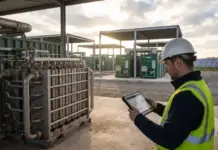
The electrolyzer stack is the most sensitive and expensive component of a hydrogen plant. Its health is determined by complex electrochemical interactions that are difficult to monitor directly. AI-Powered Anomaly Detection provides a window into these processes by monitoring the polarization curve and the internal resistance of each cell. A common anomaly is “catalyst poisoning,” where impurities in the water or electrolyte gradually reduce the active surface area of the electrodes. Traditional sensors might not detect this until production falls significantly, but an AI model can identify the subtle shift in the voltage-current relationship weeks in advance.
Furthermore, AI can detect gas crossover anomalies that pose a significant safety risk. By monitoring the concentration of hydrogen in the oxygen stream and correlating it with pressure differentials across the stack, the AI can identify the onset of membrane thinning or perforation. This level of granular, real-time electrochemical monitoring is essential for extending the life of the stack and ensuring that the plant consistently delivers high-purity hydrogen. AI-Powered Anomaly Detection transforms the electrolyzer from a “black box” into a transparent, predictable asset.
Mechanical and Vibration Analysis for Rotating Equipment
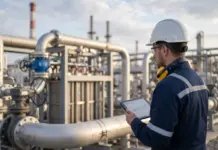
While the electrolyzer is the heart of the plant, the compressors and pumps are the muscles, and they are subject to intense mechanical stress. AI-Powered Anomaly Detection excels at monitoring rotating equipment by analyzing high-frequency vibration and acoustic data. Machine learning models, particularly those based on Recurrent Neural Networks (RNNs) or Long Short-Term Memory (LSTM) networks, are adept at identifying the temporal patterns that indicate bearing wear, shaft misalignment, or impeller cavitation.
For example, a centrifugal pump might show a slight increase in vibration at a specific frequency that indicates the early stages of a bearing failure. A human operator might not hear the change, and a traditional vibration monitor might not trigger an alarm until the bearing is near catastrophic failure. AI, however, can detect the anomaly in its infancy, allowing for a planned replacement during a scheduled maintenance window. This ability to predict and prevent mechanical failures ensures that the auxiliary systems do not become the bottleneck that stops hydrogen production, further reinforcing the reliability of the entire facility.
Thermal and Thermodynamic Anomaly Detection
Thermodynamics plays a critical role in the efficiency of hydrogen production and compression. Unexpected heat generation or loss is often the first sign of a process anomaly. AI-Powered Anomaly Detection monitors the thermal balance across the entire plant, including heat exchangers, cooling loops, and the electrolyzer stacks themselves. By using Physics-Informed Neural Networks (PINNs), the AI can compare the actual thermal behavior of the system with the theoretical models of heat transfer.
A common thermal anomaly is “fouling” in a heat exchanger, where a buildup of minerals reduces the efficiency of heat transfer. This leads to higher operating temperatures and increased energy consumption for cooling. The AI can detect the resulting drop in thermal efficiency, even if the absolute temperatures remain within safe limits. Similarly, AI can identify “hot spots” in power electronics that could lead to component failure. By treating the plant as a single thermodynamic entity, AI-Powered Anomaly Detection ensures that energy is not wasted and that thermal stresses do not compromise the longevity of the equipment.
Data Quality and the Infrastructure for Intelligent Monitoring
The success of AI-Powered Anomaly Detection is heavily dependent on the quality and integrity of the data it processes. In an industrial environment, sensors can fail, become miscalibrated, or be affected by electrical noise. Modern AI systems include built-in data cleaning and validation layers that can identify and correct these “data anomalies.” If a sensor suddenly starts providing erratic readings, the AI can cross-reference it with other related sensors to determine if the issue is a real process event or just a sensor fault.
This data-centric approach ensures that the anomaly detection system is both robust and reliable. As the hydrogen industry moves toward more decentralized and remote operations, the ability of AI to maintain high data quality and provide accurate alerts without human oversight will be essential. The infrastructure for this intelligent monitoring including edge computing devices and high-speed industrial networks is becoming a standard feature of new hydrogen projects, providing the foundation for a truly autonomous and resilient energy future.
Economic Benefits and the Reduction of Operational Risk
The financial justification for AI-Powered Anomaly Detection is profound. By identifying issues early, these systems reduce the cost of repairs, prevent expensive emergency shutdowns, and extend the operational life of the most capital-intensive components of the plant. Industry analysts suggest that AI-driven monitoring can reduce maintenance-related costs by up to 25% and improve overall plant uptime by as much as 10%. In the context of a large-scale hydrogen facility, these gains translate into millions of dollars in annual savings.
Beyond direct cost savings, AI-Powered Anomaly Detection reduces the operational risk associated with hydrogen production. By providing a constant, intelligent safety net, these systems make hydrogen projects more attractive to investors and insurers. The transparency provided by detailed health reports and anomaly logs gives all stakeholders the confidence that the facility is being managed with the highest level of precision and foresight. As green hydrogen strives to reach price parity with conventional fuels, the efficiency and reliability provided by AI-Powered Anomaly Detection will be the primary drivers of its success.
The Future of Self-Correcting Hydrogen Ecosystems
As we look toward the 2030s, the evolution of AI-Powered Anomaly Detection will lead to the emergence of self-correcting plants. In this future, the AI will not just detect an anomaly; it will also be able to suggest or even implement the necessary corrective actions. If a pump shows signs of cavitation, the AI could automatically adjust the flow rates to eliminate the problem. If a stack shows signs of degradation, the AI could recalibrate the power distribution to minimize further wear.
This level of systemic intelligence will be the ultimate enabler of the hydrogen economy, providing the reliability and scalability needed to meet the world’s clean energy demands. The journey of AI-Powered Anomaly Detection is a journey toward a smarter, safer, and more efficient industrial world. By placing these intelligent systems at the heart of our energy infrastructure today, we are ensuring a resilient and sustainable future for all. The era of the “smart” hydrogen plant is here, and artificial intelligence is the engine that drives it forward.