

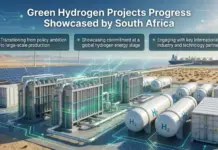









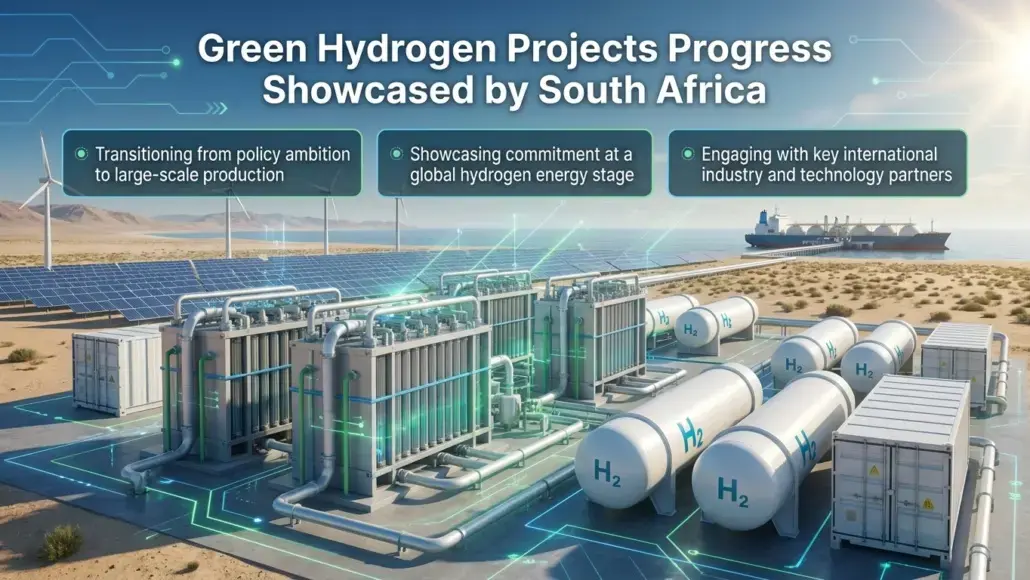

On September 10, 2026, during her visit to Japan, Dr. Nomalungelo Gina, the Deputy Minister of Science, Technology, and Innovation, demonstrated the commitment by South Africa to green hydrogen projects progress from mere policy ambition to large-scale energy production.
It is worth noting that Dr. Gina is attending the Hydrogen Energy Ministerial Meeting, which is hosted by the Ministry of Economy, Trade and Industry of Japan and the New Energy and Industrial Technology Development Organization in Chiba.
The event, which is being held in conjunction with the International Hydrogen & Fuel Cell Expo, which, by the way, is one of the largest exhibitions related to hydrogen in the world, aims to promote international cooperation and market creation. It also seeks to better integrate policy and business in favor of a hydrogen-based society.
Echoing President Cyril Ramaphosa’s 2019 address to the nation, the Deputy Minister said that “we must increase the contribution of renewable and clean energy to our national energy mix and explore the potential of the hydrogen economy.”
Apparently, President Ramaphosa also urged the hydrogen sector at the 2025 Africa Green Hydrogen Summit to upgrade from PowerPoint to gigawatts. This, as per Dr. Gina, was a confirmation of the commitment by the government to create tangible progress when it comes to the country’s transition to sustainable energy and its green hydrogen projects progress is a testament to that.
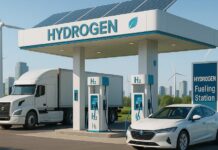
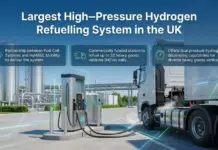
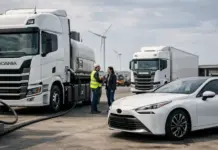
Speaking at the gathering, Dr. Gina said South Africa was indeed leading by example, and there was confirmation that the just energy shift was progressing in the country. She pointed out the recently unveiled Mobile Hydrogen Refueling Station, which will aid initiatives to decarbonize the transport sector. The project is a collaboration between the Department of Science, Technology and Innovation – DSTI and the Northwest University – NWU, as well as Toyota South Africa Motors.
According to the Deputy Minister, “This milestone is indeed a big step on the road to hydrogen mobility in South Africa and points to progress on an integrated hydrogen value chain.”
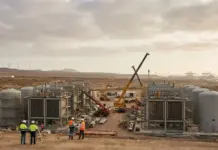
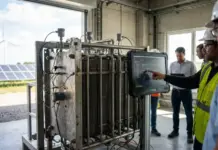
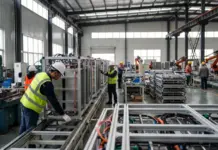
A Rapid Prototype Training and Testing Facility has also been set up in partnership with NWU and African Rainbow Minerals in order to accelerate the development and scaling up of water electrolysis technologies right from laboratory levels to pilot and industrial use.
The DSTI and NWU, in collaboration with Sasol Limited, developed a 2kW Proton Exchange Membrane Electrolyser System that is undergoing testing at one of the research laboratories by Sasol in Sasolburg.
Dr. Gina further confirmed that “This research will provide Sasol with confidence in the locally produced technology and enable Sasol to develop the skills that it needs to contribute to the country’s hydrogen economy agenda.”
The Deputy Minister also emphasized the necessity for collaboration within the sector, stating that the renewable energy and hydrogen ambitions of South Africa required solid relationships between governments, research institutions, development finance institutions, and industry, as well as international partners.
She opined, “By working together, we can build competitive regional industries, create quality jobs, strengthen economic resilience, build resilient industrial economies, and secure meaningful places in global green value chains.”
The meeting heard that in a critical time for energy, hydrogen is being given renewed attention for its capacity to help solve some of the biggest challenges that the economies are facing today, be it energy security, food system resilience, industrial development, or deep decarbonization.
Dr. Gina urged delegates to make use of the ministerial meeting to bring together assets and knowledge, establish robust regional value chains, unleash industrialization and foster sustainable economic growth.
Committed investment in clean hydrogen totalled $130 billion throughout over 570 projects globally, translating to 6.9 million tonnes per annum in terms of committed capacity, as per the Hydrogen Council’s Global Hydrogen Compass 2026.
While in Japan, Deputy Minister Gina also participated in a bilateral meeting with the Vice Minister of Economy, Trade, and Industry of Japan, Komori Takuo. She is also expected to hold more bilateral meetings so as to deepen collaboration on hydrogen technologies, energy policy, and the transition to clean energy, along with health research and development.