







The commercial viability of green hydrogen is a game of margins, where every reduction in energy consumption and infrastructure cost brings the world closer to a carbon-neutral future. One of the most significant, yet often overlooked, challenges in the hydrogen value chain is the need to compress the gas for storage and transport. Hydrogen is the lightest element in the universe, and in its atmospheric state, it occupies a massive volume. Traditional electrolysis systems produce hydrogen at near-ambient pressure, necessitating the use of large, energy-intensive mechanical compressors to prepare the gas for industrial use. Pressurized electrolysis has emerged as a disruptive solution to this problem. By conducting the water-splitting reaction at high pressures directly within the electrolyzer stack, this technology eliminates or drastically reduces the need for external compression, offering a more efficient and cost-effective pathway to large-scale green hydrogen production.
The Engineering Logic of Internal Compression
The fundamental appeal of pressurized electrolysis lies in the physics of electrochemistry. Splitting water into hydrogen and oxygen requires energy, but the amount of electrical energy needed to perform the reaction at thirty or even fifty bar is only slightly higher than what is required at atmospheric pressure. This is because liquid water is nearly incompressible, meaning the work required to pressurize the “feedwater” before it enters the electrolyzer is minimal. Once inside the pressurized stack, the hydrogen is generated in its compressed state. From a thermodynamic perspective, compressing hydrogen “electrochemically” is far more efficient than compressing it “mechanically” after it has already been produced.
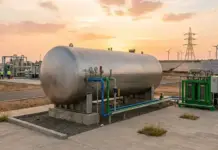
Mechanical compressors are notoriously problematic in hydrogen service. Hydrogen atoms are so small that they can leak through the smallest seals and can even embrittle the metals used in compressor components. Furthermore, mechanical compression is highly energy-intensive, often consuming up to ten or fifteen percent of the total energy value of the hydrogen being compressed. By moving this process inside the electrolyzer, pressurized electrolysis bypasses these inefficiencies. The result is a system that delivers high-pressure, high-purity hydrogen gas ready for immediate storage or pipeline injection, with a significantly lower total energy footprint than traditional atmospheric systems.
Impact on Capital Expenditure and Plant Footprint
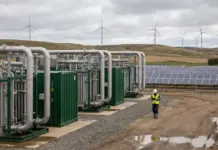
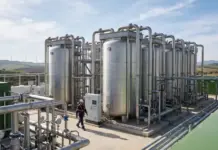
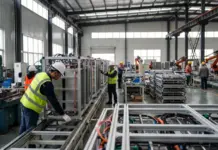
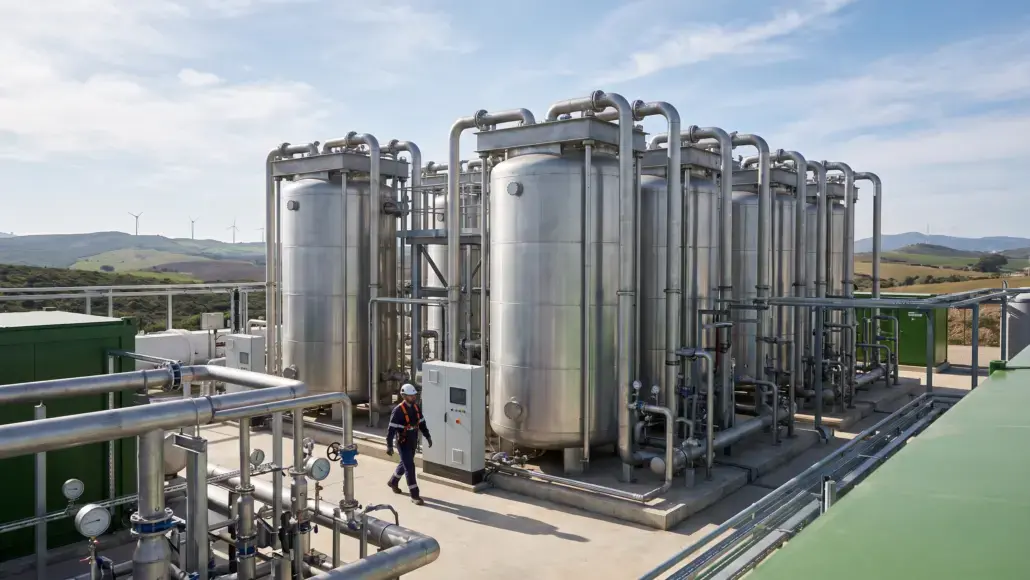
The shift toward pressurized electrolysis has profound implications for the capital expenditure (CAPEX) of a green hydrogen plant. In a traditional atmospheric electrolysis facility, the mechanical compression stage is a massive investment, often accounting for a significant portion of the total equipment cost. These compressors require their own foundations, cooling systems, and specialized maintenance teams. By integrating the compression function into the electrolyzer itself, pressurized systems allow for a much more streamlined and compact plant design.
A smaller plant footprint is particularly valuable in locations where land is at a premium, such as at existing industrial sites or offshore wind platforms. Furthermore, the reduction in the number of discrete components fewer pipes, valves, and stand-alone compressors lowers the complexity of the project and reduces the potential points of failure. This “system-level” simplification is a key driver of cost reduction, as it lowers the costs associated with engineering, procurement, and construction (EPC). As the industry moves toward gigawatt-scale projects, the ability to build more compact and less complex facilities will be a major differentiator for technology providers.
Overcoming the Challenges of High-Pressure Operation
Despite its clear advantages, pressurized electrolysis is not without its technical challenges. Operating an electrolyzer at thirty or forty bar creates a much harsher environment for the internal components. The gaskets and seals must be designed to withstand high pressure differentials while maintaining a gas-tight environment. Furthermore, high-pressure operation increases the rate of “gas crossover” the migration of hydrogen into the oxygen stream through the membrane. If not strictly controlled, this crossover can lead to safety risks and a decrease in faradaic efficiency.
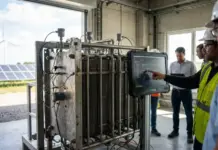
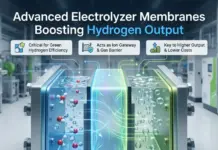
To address these issues, engineers are developing new, reinforced membranes and advanced “zero-gap” cell architectures that are specifically optimized for high-pressure service. These membranes are designed with low permeability to hydrogen gas while maintaining high ion conductivity. Sophisticated “pressure-balanced” systems are also used to ensure that the pressure remains identical on both sides of the membrane, minimizing the mechanical stress on the polymer film. These engineering solutions have matured to the point where pressurized PEM and alkaline electrolyzers are now routinely achieving thousands of hours of stable operation at thirty bar and beyond, proving the commercial readiness of the technology.
Synergy with Renewable Energy and Grid Integration
Pressurized electrolysis is also a perfect match for the dynamic nature of renewable energy. Because pressurized systems are typically more compact and have lower thermal mass, they can often ramp up and down more quickly than large atmospheric alkaline units. This responsiveness is essential for following the fluctuations of wind and solar power. Furthermore, the ability to produce high-pressure hydrogen directly is a massive benefit for “Power-to-Gas” projects, where hydrogen is injected directly into existing natural gas grids.
In many regions, natural gas pipelines operate at pressures between twenty and seventy bar. An atmospheric electrolyzer would require multiple stages of compression to inject hydrogen into these lines. A pressurized electrolyzer, however, can often feed the grid directly or with only minimal “top-up” compression. This seamless integration lowers the barrier for using the existing gas infrastructure as a massive energy storage system, providing a solution for the seasonal variability of renewable energy. The synergy between pressurized production and grid injection is a powerful argument for the role of hydrogen in a decarbonized energy system.
The Role of Pressurized Systems in the “Levelized Cost of Hydrogen”
Ultimately, the success of pressurized electrolysis will be measured by its impact on the “Levelized Cost of Hydrogen” (LCOH). While the electrolyzer stacks themselves may be slightly more expensive due to their more robust construction, the total system cost is often lower because the expensive downstream compression stages are eliminated. When you factor in the lower energy consumption resulting from the elimination of mechanical compression losses the economic case for pressurized electrolysis becomes even stronger.
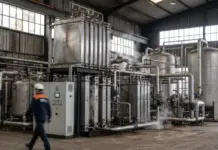
As manufacturing scales up, the cost of high-pressure components is falling, following the same downward trend as the rest of the hydrogen industry. Leading manufacturers are now offering standardized, containerized pressurized systems that can be easily “stacked” to reach the desired capacity. This modularity, combined with the inherent efficiency of pressurized operation, is making green hydrogen an increasingly attractive option for industrial users who require high-pressure gas, such as ammonia producers and refineries. The transition to pressurized electrolysis is not just a technical upgrade it is a fundamental shift in the economic structure of the hydrogen economy.
The Future: Pushing the Boundaries of Pressure
The current industry standard for pressurized electrolysis is around thirty bar, but the research frontier is pushing much higher. Some pilot systems are already operating at seventy or even one hundred bar. Moving to these ultra-high pressures would allow for even more efficient integration with high-pressure storage tanks and industrial processes. However, each increase in pressure brings exponential challenges in terms of material science and gas crossover management.
The future of the technology likely lies in a “hybrid” approach, where the electrolyzer produces hydrogen at a moderate pressure (e.g., 30 bar), and a small, highly efficient electrochemical compressor (which uses the same principle as an electrolyzer) takes it the rest of the way to seven hundred bar for use in heavy-duty vehicles. This would eliminate mechanical compressors entirely from the hydrogen supply chain. As our understanding of high-pressure electrochemistry continues to grow, pressurized electrolysis will remain at the cutting edge of the quest for affordable, scalable green energy.