




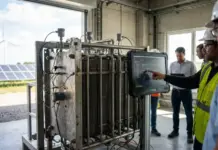



The global energy sector is on the cusp of an industrial revolution that rivals the mass production of solar panels and lithium-ion batteries in the previous decade. As nations commit to net-zero targets, the demand for green hydrogen is projected to skyrocket, requiring an unprecedented expansion of water electrolysis capacity. To meet this challenge, the industry is shifting from boutique, manual assembly of electrolyzer stacks toward gigawatt-scale electrolyzer manufacturing. This transition is not merely about building larger factories; it represents a fundamental overhaul of production methodologies, supply chain logistics, and quality control systems. By embracing automation and economies of scale, manufacturers are driving down costs and ensuring that green hydrogen can move from the periphery to the center of the global energy mix.
The Shift from Artisanal Production to Automated Gigafactories
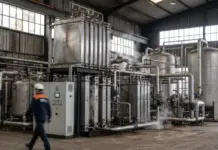
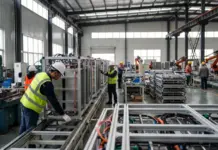
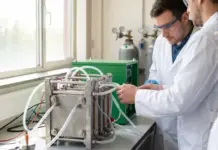
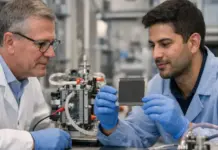
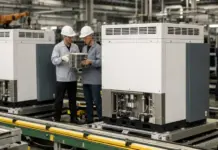
For much of its history, the manufacturing of electrolyzers was a specialized, low-volume activity. Each stack was often assembled by hand, with engineers meticulously placing components such as electrodes, gaskets, and bipolar plates. While this artisanal approach ensured high quality, it was prohibitively slow and expensive, making it impossible to produce the volume of equipment needed for a decarbonized global economy. The emergence of “Gigafactories”—facilities capable of producing more than one gigawatt of electrolyzer capacity annually—is changing the rules of the game. Companies like Nel Hydrogen in Norway and the United States, ITM Power in the UK, and Thyssenkrupp Nucera in Germany are leading this charge, moving toward fully automated production lines.
In these modern facilities, the focus has shifted to high-speed automation and continuous production processes. One of the most significant advancements is the adoption of roll-to-roll (R2R) manufacturing for the production of membranes and catalyst-coated substrates. This process, which is similar to printing newspapers or manufacturing flexible electronics, allows for the high-volume, low-cost fabrication of the most critical components of the electrolyzer cell. By moving from batch processing to a continuous flow, manufacturers can achieve a dramatic increase in throughput while significantly reducing material waste and labor costs. Automated coating heads ensure that the catalyst layer is applied with uniform thickness across the entire membrane, which is essential for maintaining the performance consistency of the final stack.
Robotics and Precision Engineering in Stack Assembly
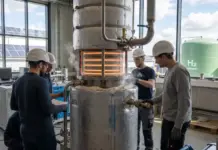
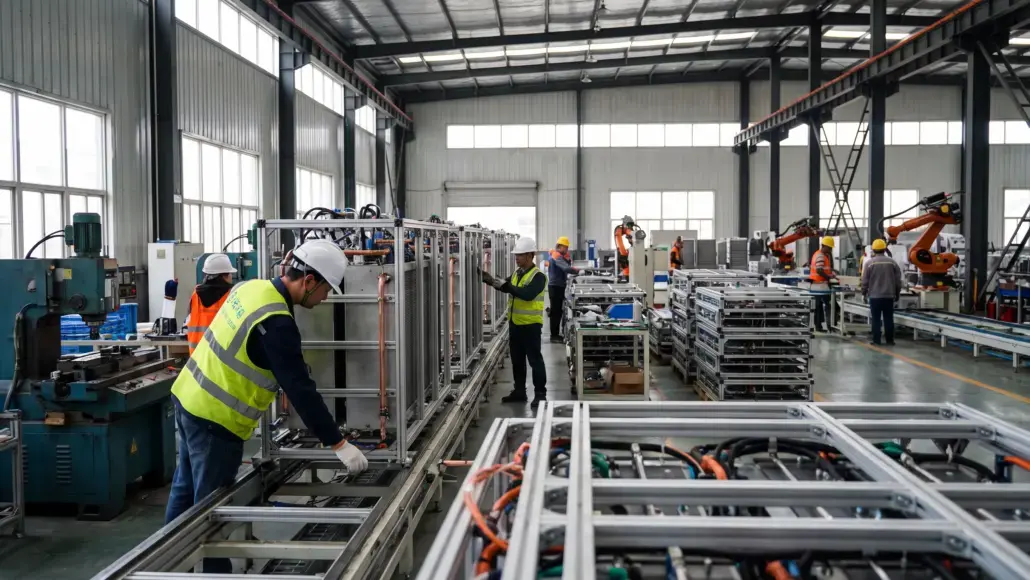
The assembly of an electrolyzer stack is a highly complex task that requires micron-level precision. A single gigawatt-scale system may consist of hundreds or even thousands of individual cells, each of which must be perfectly aligned and sealed to prevent gas leakage and ensure uniform current distribution. In the new generation of Gigafactories, this task is being handled by advanced robotic systems equipped with high-resolution computer vision and force-feedback sensors. These robots can place components with a speed and accuracy that far exceeds human capabilities, ensuring that every stack meets the rigorous safety and performance standards required for industrial operation.
Furthermore, automated assembly lines allow for integrated, real-time quality control. Sensors along the production line can perform leak tests, conductivity measurements, and visual inspections at every stage of the process using machine learning algorithms to detect even the slightest deviation from the design specification. If a defect is detected, the component can be automatically diverted for rework or recycling before it is integrated into a finished stack. This data-driven approach to manufacturing not only improves the reliability of the final product but also provides a wealth of information that can be used to further optimize the design and production process. The result is a more consistent, higher-quality electrolyzer that can be delivered at a fraction of the historical cost.
Vertical Integration and the Resilience of Global Supply Chains
As gigawatt electrolyzer manufacturing scales up, the security and resilience of the supply chain have become paramount. Relying on a fragmented network of third-party suppliers for critical components like specialized polymers, nickel foams, or noble metal catalysts is a risk that many large-scale manufacturers are no longer willing to take. To mitigate this risk, many leading companies are moving toward vertical integration—bringing the production of key materials and components in-house. For example, some manufacturers are now producing their own catalyst inks and membrane reinforcements to ensure they have full control over the performance and availability of these critical inputs.
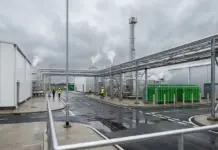
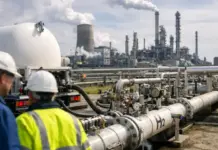
By controlling the entire production process from the raw materials to the finished system, manufacturers can better manage their costs, ensure a steady supply of inputs, and maintain tighter control over quality. This vertical integration also fosters innovation, as the proximity of material scientists and manufacturing engineers allows for faster iteration and the rapid implementation of new technologies. However, even with vertical integration, the global nature of the hydrogen economy means that manufacturers must still navigate complex international logistics. Building regional manufacturing hubs—such as the massive facilities currently being constructed in China, Europe, India, and the United States—is helping to localize supply chains and reduce the carbon footprint associated with shipping these massive pieces of equipment around the world.
The Economic Ripple Effect: Driving Down the Cost of Green Hydrogen
The ultimate goal of gigawatt electrolyzer manufacturing is to achieve a drastic reduction in the capital expenditure (CAPEX) of hydrogen production. Historical data from the solar and battery industries shows that a doubling of manufacturing capacity typically leads to a significant percentage decrease in costs—a phenomenon known as the learning curve. We are now seeing the same trend in the electrolyzer market. Large-scale manufacturing allows companies to negotiate better prices for raw materials, amortize the costs of research and development over a larger volume of products, and optimize their energy and resource consumption.
This reduction in CAPEX is the primary driver in bringing the cost of green hydrogen into parity with hydrogen produced from fossil fuels. When the initial investment in the electrolyzer is lower, the overall price of the hydrogen produced is less sensitive to fluctuations in the cost of electricity. This economic shift is attracting the attention of institutional investors and large energy companies, who see green hydrogen as a stable, long-term asset. The availability of low-cost, mass-produced electrolyzers is the key that unlocks the massive multi-billion-dollar investments needed to build the global hydrogen infrastructure of the future. Estimates suggest that reaching a global capacity of 100 GW could reduce electrolyzer costs by over 40% from current levels.
The Role of Policy and Incentives in Scaling Production
The rapid expansion of gigawatt electrolyzer manufacturing has not happened in a vacuum; it is being propelled by proactive government policies and financial incentives. In the United States, the Inflation Reduction Act (IRA) has provided substantial tax credits for both the manufacturing of clean energy equipment and the production of green hydrogen. Similarly, the European Union’s Green Deal Industrial Plan and the “Hydrogen Bank” initiatives are providing the subsidies and regulatory framework needed to de-risk large-scale manufacturing projects. In India, the National Green Hydrogen Mission is offering production-linked incentives to encourage domestic manufacturing of electrolyzers.
These policies provide the long-term market certainty that manufacturers need to commit billions of dollars to new factories. By creating a clear demand for green hydrogen through mandates in shipping and aviation, governments are encouraging companies to move down the cost curve as quickly as possible. Furthermore, international cooperation on standards and certification is helping to create a global market for electrolyzers, allowing manufacturers to compete on a level playing field. As these policies continue to evolve, they will be critical in ensuring that the manufacturing capacity of the industry stays ahead of the rapidly growing demand for clean energy solutions. Initiatives like the “Green Hydrogen Catapult” are also bringing together industrial leaders to coordinate these scaling efforts globally.
Future Outlook: Toward Terawatt Capacity
As we look toward the middle of the century, the scale of manufacturing will need to increase by another order of magnitude. Reaching net-zero by 2050 will require thousands of gigawatts (terawatts) of installed electrolysis capacity. This will necessitate a second wave of manufacturing innovation, focused on recycling and circularity. Advanced electrolyzer manufacturing will need to incorporate “design-for-disassembly” principles to ensure that critical materials like nickel, iridium, and platinum can be recovered and reused at the end of the equipment’s life.
The digitalization of the factory floor, using AI to optimize energy use and minimize waste, will also play a crucial role. We can expect to see the rise of “micro-factories” that use 3D printing and modular assembly to produce customized electrolyzer solutions for niche applications, alongside the massive gigafactories that serve the global industrial market. This diversified manufacturing landscape will ensure that green hydrogen is accessible to all, regardless of the scale or location of the demand.