







The pursuit of deep decarbonization has elevated green hydrogen from a niche industrial gas to a cornerstone of the global energy strategy. However, the widespread adoption of this versatile energy carrier has been historically hindered by the high cost of production. To reach the ambitious price targets set by international energy agencies often cited as “1-1-1” (one dollar for one kilogram in one decade) a fundamental shift in electrolyzer technology is required. Anion Exchange Membrane (AEM) electrolysis has emerged as the most compelling solution to this dilemma. By bridging the gap between the proven reliability of traditional alkaline systems and the high-density performance of proton exchange membranes, AEM electrolyzers are carving a new path toward affordable and scalable green energy production.
The Technological Hybrid: Why AEM represents the Best of Both Worlds
To understand why AEM electrolyzers are so transformative, one must look at the landscape of existing water-splitting technologies. For decades, the industry was divided between two main approaches: Alkaline Water Electrolysis (AWE) and Proton Exchange Membrane (PEM) electrolysis. Alkaline systems are rugged and use inexpensive materials like nickel, but they are bulky, operate at low current densities, and struggle to respond to the fluctuating power supply of wind and solar farms. PEM systems are compact and highly responsive, making them ideal for renewable integration, but they rely on iridium and platinum some of the rarest and most expensive elements on the planet.
AEM electrolyzers represent a technological hybrid that effectively captures the advantages of both while mitigating their weaknesses. Like alkaline systems, they operate in a basic (alkaline) environment, which allows for the use of non-precious metal catalysts such as nickel, iron, and cobalt. However, like PEM systems, they utilize a thin, solid polymer electrolyte membrane rather than a liquid electrolyte and a thick porous diaphragm. This membrane allows for a zero-gap cell design that can achieve high current densities (often exceeding 1 A/cm²) and rapid response times. By eliminating the need for expensive noble metals while retaining the performance benefits of a membrane-based system, AEM technology is uniquely positioned to lower the capital and operational barriers to green hydrogen.
The Material Science Revolution: Non-Precious Catalysts and Membrane Durability
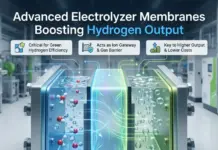
The core innovation within an AEM electrolyzer is the anion exchange membrane itself. This membrane is typically composed of a polymer backbone, such as polysulfone or polyphenylene, functionalized with quaternary ammonium groups that act as ion-exchange sites. These sites facilitate the transport of hydroxide ions (OH-) from the cathode to the anode while keeping the product gases strictly separated. Historically, the challenge with AEM has been the chemical stability of these quaternary ammonium groups in a highly alkaline environment. Hydroxide ions are aggressive nucleophiles, and early membranes tended to degrade rapidly, leading to a short stack lifespan and declining efficiency.
However, recent breakthroughs in polymer chemistry have produced a new generation of reinforced membranes that can withstand several thousand hours of operation with minimal performance loss. Researchers have developed more stable cation groups, such as imidazolium or piperidinium, which offer superior resistance to alkaline degradation. These advancements in membrane durability have unlocked the potential for using earth-abundant catalysts. In an AEM system, the anode can utilize Nickel-Iron Layered Double Hydroxides (Ni-Fe-LDH), which are significantly more abundant and less expensive than the iridium oxide used in PEM systems. Similarly, the cathode can use nickel-molybdenum or nickel-cobalt alloys instead of platinum. This shift in material requirements decouples green hydrogen production from the volatile markets of precious metals, ensuring that as the industry scales to the terawatt level, we do not run into resource scarcity that could drive prices back up.
Mechanical Simplicity and System-Level Cost Reductions
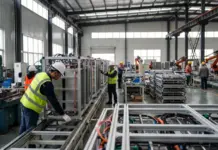
The benefits of AEM electrolyzers extend beyond the electrochemical cell and into the overall system architecture, significantly impacting the Balance of Plant (BOP). Because AEM systems can operate with a dilute alkaline solution (typically 0.1M to 1M KOH) or even pure water, the plumbing and pumping requirements are simplified. Unlike traditional alkaline systems that require large, heavy circulation pumps and complex gas-liquid separators to handle concentrated, corrosive potassium hydroxide, AEM systems can be much more compact and modular. This modularity is a key driver of cost reduction, as it allows for factory-based mass production of standardized units that can be easily transported and installed on-site.
Furthermore, the ability of AEM stacks to operate at high pressure often up to thirty or forty bar reduces the need for external hydrogen compressors. Compression is one of the most energy-intensive and maintenance-heavy steps in the hydrogen supply chain. By delivering high-pressure hydrogen directly from the electrolyzer, AEM technology improves the overall energy efficiency of the system and lowers the total cost of ownership for the end-user. These incremental savings in plumbing, pumping, and compression add up to a significant reduction in the Levelized Cost of Hydrogen (LCOH). When combined with the lower CAPEX from non-noble catalysts, AEM presents a pathway to reduce the total cost of hydrogen by as much as 30-40% compared to traditional PEM systems.
Scaling Up: From Pilot Plants to Gigawatt Hubs
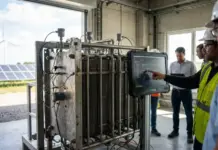
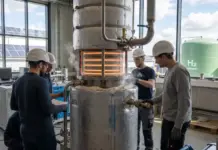
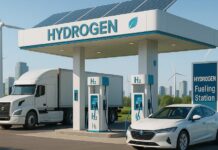
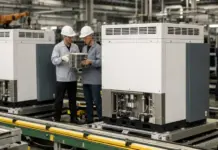
As AEM technology matures, the focus is shifting from laboratory-scale testing to industrial-scale deployment. Several innovative companies, such as Enapter, are already bringing containerized AEM systems to market, targeting decentralized applications such as heavy-duty transport refueling stations, telecommunications backup power, and seasonal energy storage for microgrids. These early deployments have proven that AEM can handle the rigors of real-world operation, including rapid start-up and shut-down cycles, providing the data needed to refine the next generation of larger-scale systems.
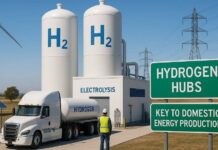
The next frontier for AEM electrolyzers is the development of multi-megawatt stacks that can be clustered into gigawatt-scale hydrogen hubs. These large facilities will be essential for decarbonizing heavy industries like steelmaking and chemical refining. The inherent cost advantage of AEM becomes even more pronounced at this scale. When purchasing thousands of stacks for a single project, the difference between using nickel and using iridium represents a saving of hundreds of millions of dollars in capital investment. As manufacturing capacity increases and the supply chain for specialized AEM membranes matures, we can expect this technology to become the dominant choice for large-scale green hydrogen projects, particularly in developing economies where access to precious metal markets may be limited.
Overcoming the Final Hurdles to Market Dominance
Despite its clear potential, AEM technology still faces a few remaining hurdles before it can achieve total market dominance. The most significant is the achievement of long-term durability that matches the twenty-year lifespan of traditional alkaline systems. While current membranes have shown impressive stability in controlled environments, their performance in the field where they are subjected to fluctuating power from renewables and varying water quality is still being validated. Continuous research into cross-linking polymers and developing more robust ion-exchange groups is key to addressing this challenge.
Another factor is the development of a standardized manufacturing ecosystem. Because AEM is a relatively young technology compared to PEM and AWE, the manufacturing processes are still being optimized for mass production. Moving from manual stack assembly to fully automated production lines, including roll-to-roll membrane coating, will be necessary to drive down costs further. However, given the rapid influx of capital into the hydrogen sector and the clear economic incentives, these challenges are being addressed with unprecedented speed. The convergence of material science, mechanical engineering, and automated manufacturing is creating a “perfect storm” that will propel AEM to the forefront of the hydrogen revolution.
The Economic Impact on Global Energy Markets
The widespread deployment of AEM electrolyzers will have a profound impact on global energy markets. By making green hydrogen affordable, it allows countries with abundant renewable resources but limited capital to become major exporters of clean energy. This democratization of energy production could lead to a more resilient and equitable global energy system. Furthermore, the use of earth-abundant materials ensures that the green transition does not replace one form of resource dependency (fossil fuels) with another (precious metals).
As the price of green hydrogen falls below two dollars per kilogram, it becomes competitive with fossil-fuel-based “grey” hydrogen, even without carbon taxes. This is the tipping point that will trigger a massive shift in the chemical and transport sectors. AEM technology is the engine that will drive this change, providing the efficiency and cost-effectiveness needed to make the hydrogen economy a reality.