














![Two technicians in green shirts inspect and adjust industrial machinery with hoses in a workshop's spacious room and large windows.]](https://www.hydrogeninforms.com/wp-content/uploads/2026/07/supply-hydrogen-fuel-cell-systems.webp "Supply Hydrogen Fuel Cell Systems")

PowerCell Sweden AB – PCELL confirmed on July 13, 2026, that it has received a firm order worth about SEK 30 million or $2.8 million to supply hydrogen fuel cell systems for a next-gen artificial intelligence data center campus located in Santa Clara, California.
The agreement to supply hydrogen fuel cell systems is an important milestone towards commercializing hydrogen-based primary power for AI workloads that are energy-intensive and strengthens the relationship between Swedish fuel cell maker and ECL, the data center operator, along with the industrial partner Bosch.
The order includes PS190 fuel cell systems from PowerCell and Distributed Master Controller licenses for ECL’s CSC-1 campus of a 35-megawatt site, which will include the fuel cells in a FlexGrid microgrid that integrates grid electricity, batteries, and natural gas as well as hydrogen. The deliveries are expected to be completed by the end of 2026. Importantly, the fuel cells will be employed in the main energy infrastructure, not as backup generation, increasing power resilience for 24/7 AI computing.
As per one of the persons familiar with the project, this isn’t a pilot, but it is a multi-megawatt installation, which will go into live production infrastructure.
The Santa Clara setup is built on an effective reference installation at ECL’s MV-1 AI data center located in Mountain View, California, where operator has been maintaining a liquid hydrogen-powered AI infrastructure for over two years. In this time, ECL assessed a number of fuel cell technologies and selected PowerCell as its partner of preference.
Along with the SEK 30 million firm order, both companies additionally entered into a non-binding memorandum of understanding – MoU for about 300 megawatts of extra hydrogen fuel cell capacity as ECL extends its FlexGrid footprint. The 300 MW is an objective, not committed capacity or assured revenue, but it’s a move in the hydrogen data center paradigm from demonstrations to scalable and long-term infrastructure that is powered by industrial manufacturing power.
That manufacturing foundation comes from Bosch, which is a major shareholder of PowerCell. This German industrial giant offers operators of data centers large-scale production capacity and service assistance in North America, making it an essential partner for meeting the dependability and volume needs. The alliance will successfully integrate the proprietary PowerCell fuel cell stack technology with the industrialized supply chain and lifecycle services from Bosch.
It is well to be noted that this deal is a strategic milestone indeed for PowerCell. The Gothenburg-based company, split from Volvo Group and listed on Nasdaq Stockholm, has historically concentrated on marine, aviation, and transport applications. The CSC-1 project confirms stationary power generation as a second primary business vertical and illustrates the commercial feasibility of industrializing fuel cell technology along with digital energy orchestration software.
The order also features Distributed Master Controller licenses, which will unlock periodic software, service, and lifecycle revenues throughout the operational life of the systems, which is a model that might enhance revenue visibility beyond one-time hardware sales.
Timing is important. The stock of PowerCell has been struggling this year, with a year-to-date fall of 33.13% as of the announcement. The company is currently valued at around SEK 1.16 billion by market standards and has a daily trading volume of about 349,765 shares. Sentiment indicators are emitting a strong sell technical alert as part of wider market skepticism toward hydrogen technology names due to high interest rates as well as slow adoption curves.
Meanwhile, ECL is billing itself as a next-generation data-center provider built for AI. The FlexGrid architecture of the company optimizes for cost, carbon intensity, and dependability by balancing multiple power sources – be it grid, batteries, or natural gas as well as hydrogen and that too in real time. A test case for how far hydrogen can move past niche sustainability plays into mainstream usage as a data center power solution is the 35 MW CSC-1 campus in Santa Clara.
The background is a power squeeze in key data center markets that is spreading fast. AI inference and training workloads use far more electrical power compared to traditional cloud computing, straining grids in hubs like Northern Virginia and Silicon Valley as well as Phoenix. Utilities are finding it difficult to obtain new generation and transmission capacities online quickly enough, creating a market for on-site, readily available clean power solutions.
Hydrogen fuel cells offer a host of theoretical benefits in this context, as they can run uninterruptedly compared to solar and wind and they have zero on-site emissions. They can be installed without the multi-year interconnection waiting periods that hinder grid-dependent projects. The problem has been cost when it comes to the fuel cells themselves as well as the supply of green hydrogen.
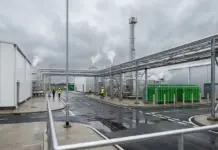
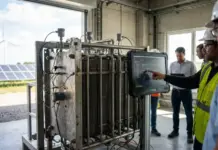
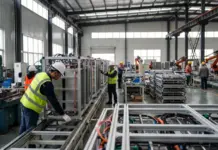
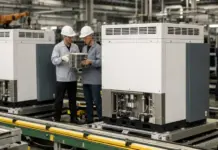
The PS190 system from PowerCell is a containerized solution for megawatt-scale applications that are stationary. The company manufactures its own fuel cell stacks along with systems in-house, focusing on sectors like off-road and on-road transport, aviation, marine, and rail as well as power generation.
While not legally binding, the MoU for 300 MW suggests that ECL sees a feasible pathway to expand hydrogen power across several campuses. A build-out of this nature, if it happens in the years to come, would be a step change in customer demand for PowerCell’s technology and could change the competitive environment for data centre backups and primary power, which is presently dominated by diesel generators as well as natural gas turbines.
The fact is that the hydrogen data center market is still in its infancy, say industry watchers. Fuel cell costs have to keep declining, and the green hydrogen production and distribution infrastructure is nascent, especially in the US. Clean hydrogen production tax credits under the Inflation Reduction Act might be beneficial, but final rules have been subject to regulatory ambiguity.
But with a firm order, an operational reference site, as well as the manufacturing backing of Bosch, the PowerCell-ECL collaboration has greater substance than a lot of hydrogen announcements in the data center space, which often have been just feasibility analyses or small pilot projects.
The deal also speaks to a larger pattern as hyperscale cloud providers and colocation operators become more inclined to experiment with novel power technologies as AI workloads alter their energy profiles. Microsoft, Google, Amazon, and Meta said they were investing in advanced clean energy, such as nuclear and geothermal, along with hydrogen, for their own fleets of data centers.
The SEK 30 million order is immediately financially material for investors, but it is small as compared to PowerCell’s market cap. The bigger question is whether CSC-1 and the 300 MW MoU are indicative of a true commercial revolution for hydrogen in data centers or just another turning point in a long, storied history of hydrogen promises that have yet to be fully realized.