













In a recent move, Hyundai E&C is expanding its hydrogen energy projects to include storage infrastructure in addition to production facilities.
The Korea Agency for Infrastructure Technology Advancement – KAIA under the Ministry of Land, Infrastructure, and Transport – MOLIT has chosen the company to work on the national R&D project – Development of Liquid Hydrogen Storage Tanks and Loading/Unloading System Technologies.
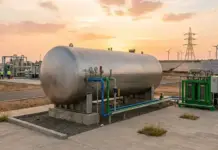
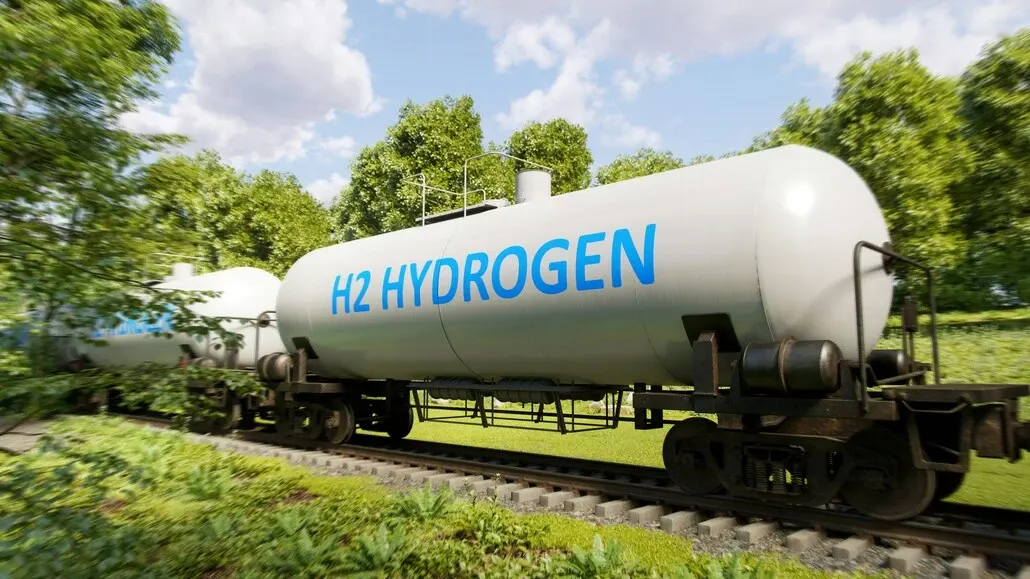
Hyundai E&C will build big tanks for storing liquid hydrogen as part of this project. The goal of the project is to make sure that key lifecycle infrastructure technologies for storing, moving, and handling liquid hydrogen at receiving terminals are safe and ready to be used when the hydrogen economy grows in the future.
The project is especially important because it is the first step toward improving the first flat-bottom liquid hydrogen storage tank technology in Korea. It will also help create the technology needed for future large-scale storage systems that have capacities of 4,000 m³ and 50,000 m³.
The government is putting in about KRW 29 billion into the project, which will last from April 2026 to December 2029.
Hyundai E&C will work with 14 partners from business, academia, and research, such as the Korea Gas Corporation – KOGAS, the Korea Gas Technology Corporation, and the Korea Gas Safety Corporation, to design, build, demonstrate, and run the liquid hydrogen storage tanks.
To make liquid hydrogen, hydrogen gas must be cooled to -253°C, which turns it into a liquid. The storage tanks for liquid hydrogen also need advanced thermal insulation design along with construction skills so as to keep the hydrogen at cryogenic temperatures. In Korea, for the first time, a flat-bottom cylindrical type structure will be used for LNG storage to increase storage space, and that too in a stable way.
The project will improve the performance of storage tanks while also focusing on reducing boil-off gas and securing safety technologies by way of construction and demonstration operation of a 200 m³ class storage tank.
This will be done by –
– Creating and standardizing a physical property database for metallic materials,
– Developing structural and high-performance thermal insulation design technologies,
– Acquiring structural, flow, and heat transfer analysis technologies, and
– Setting design standards, the project is going to enhance the storage tank’s performance while at the same time decreasing the boil-off gas and also secure safety tech via construction as well as demonstration functioning of a 200 m³ class storage tank.
MOLIT wants to use the results of this national research and development project to help with future scale-up designs and the building of liquid hydrogen terminals as well as the sale of storage facilities.
A Hyundai E&C official said that the hydrogen markets in the US and around the world have been growing quickly in recent years, but liquid hydrogen technology, which is one of the key technologies needed to speed up the shift to a hydrogen economy, is still in its early stages.
The official added that if the flat-bottom storage tank is successfully developed by means of this national R&D project, it is expected to help not only make the liquid hydrogen sector more self-sufficient in terms of technology, which has long relied on technology from other countries, but also make hydrogen infrastructure and plant projects more competitive.
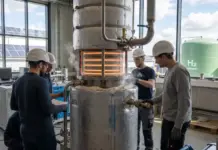
Hyundai E&C, which built Korea’s first commercial hydrogen production plant based on water electrolysis in Buan, is also getting more involved in the overall hydrogen value chain. The company is working on a number of hydrogen infrastructure projects, which include showing off Korea’s first 100 kW class high-temperature water electrolysis system module and making the master plan for the Uljin Hydrogen City development project, as well as showing how to make clean hydrogen linked to nuclear power plants at the 10 MW class.
The company is also doing everything it can to become the leader in the hydrogen sector as a future clean energy source. It is doing this by strengthening its collaborative framework in connection with the HTWO business of Hyundai Motor Group.