















Geological formations in southern Bavaria have a lot of underutilized and phenomenal potential for storing hydrogen in large amounts. So, they could be a good alternative to salt caverns in northern Germany, which would help spread out storage space more evenly across the country.
This is a conclusion of the study done on behalf of the Bavarian Ministry of Economic Affairs by the Technical University of Munich – TUM and the Technical University of Leoben – MUL.
For renewable energy to be used effectively and in a way that lasts, the energy it produces must be able to be stored. A major method is turning it into hydrogen, which then needs to be stored in large amounts and made available when needed, depending on the season. This is a great use for geological storage in the right places below ground, and it can be a big part of the energy transition.
The goal of the SpeicherCHeck study is to find out if there are any geological formations in Bavaria that could be used for safe storage. The main areas of interest are old oil and gas reservoirs and active natural gas pore storage facilities. The project’s interim report, which will last until 2027, has now been made public and shows the initial results.
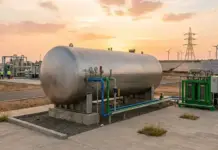
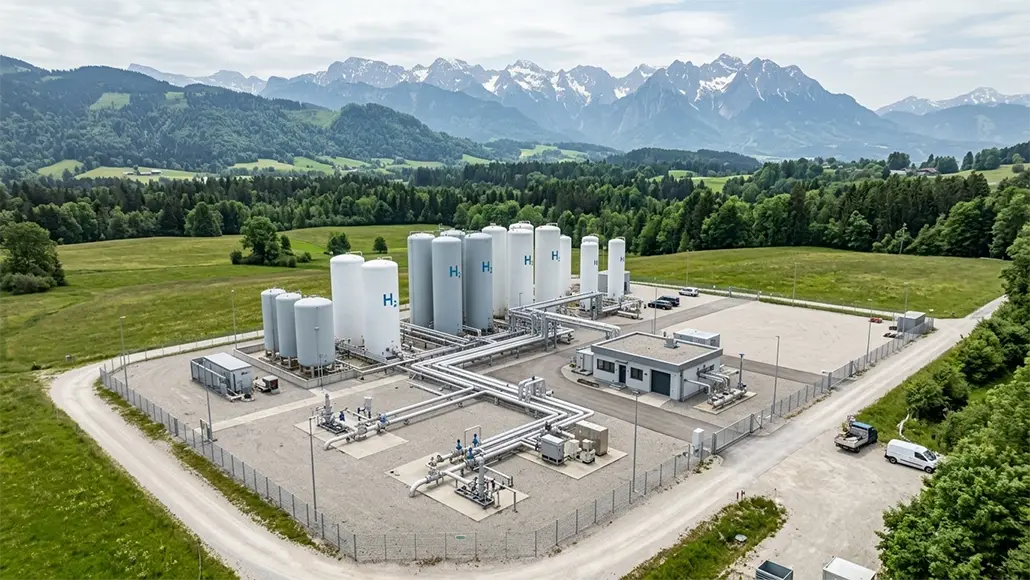
The report says that the natural gas pore storage facilities that are already in place in Bavaria’s foothills of the Alps, like those in Bierwang and Inzenham, are especially good for this purpose. Natural gas pore storage facilities are places underground where natural, porous rock formations have been used before to store extra natural gas and put it back into the grid when it is needed.
Because of these advantages in addition to the phenomenal potential for storing hydrogen, most of the required facilities already exist there. The researchers think that the current storage capacity at all of the sites they looked at is between 12.6 and 25.2 terawatt hours – TWh. The German National Hydrogen Council, on the other hand, says that the salt caverns in northern Germany can hold 33 TWh of hydrogen. According to Michael Drews, who is the professor of Geothermal Technologies at TUM, “Our results show that southern Germany also has very good conditions for geological hydrogen storage. The pore storage facilities available here could therefore make a substantial contribution to diversifying the locations of necessary underground storage facilities and to ensuring energy supply security in a future hydrogen economy.”
As per the Head of the Chair of Energy Geosciences at the Technical University of Leoben, Prof. David Misch, “The participation of the Technical University of Leoben in the project is extremely valuable in terms of cross-border efforts to further develop urgently needed storage capacities and also provides important basic knowledge for other possible applications of geological storage complexes.”
Strategic significance of energy transition in Bavaria
The Bavarian minister of economic affairs, Hubert Aiwanger, says, “To build a futureproof hydrogen supply, we will depend on large underground storage capacities. The study conducted by the Technical University of Munich clearly demonstrates that our existing natural gas storage facilities in Bavaria have significant potential to be used for hydrogen storage in the future. That is why we must maintain the Bavarian storage facilities. Initially for the secure supply of natural gas and increasingly for use with hydrogen in the transformation phase.”