









Gasunie, Open Grid Europe, along with Thyssengas, has signed an agreement to establish a Netherlands-Germany hydrogen corridor, reinforcing the clean energy infrastructure ambitions of Europe.
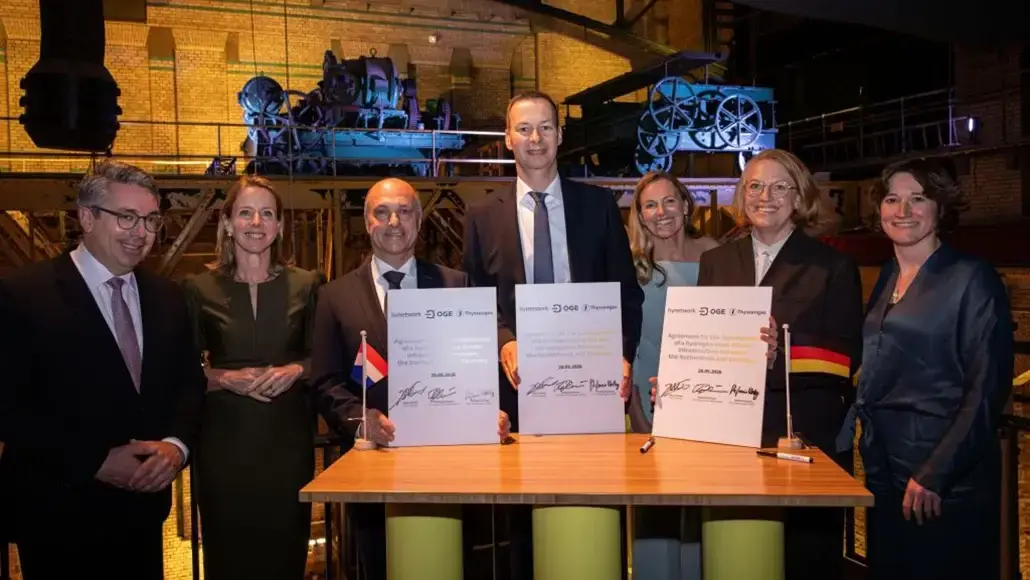
Gasunie, the Dutch energy infrastructure company, together with German transmission system operators Open Grid Europe as well as Thyssengas, is to develop a new cross-border hydrogen connection between the Netherlands and Germany, which can indeed be seen as a major step towards building a European hydrogen economy. The agreement, signed on 20 May 2026, is a further step towards the transition of Europe to cleaner energy systems and the establishment of an integrated hydrogen infrastructure network throughout North-West Europe.
The proposed Netherlands-Germany hydrogen corridor, linking the Dutch town of Zevenaar to Elten in Germany, is due to be functional around 2031. The project seeks to interconnect the hydrogen networks of both countries, using as much as possible pre-existing natural gas pipelines that can be transformed to transport hydrogen. The partners will use existing infrastructure to speed up installation times, lower costs and support broader decarbonisation goals for Europe.
The deal is the fourth cross-border hydrogen cooperation initiative by Gasunie with Germany and Belgium, underscoring the company’s growing role in establishing an integrated European hydrogen backbone. The collaboration underscores the growing urgency across European countries in order to improve energy independence and cut dependence on fossil fuels with clean hydrogen solutions.
The agreement was signed at Rotterdam’s Hydrogen Milestone Ceremony and was attended by Stientje van Veldhoven, the Dutch minister for climate and green growth. It also celebrated the conclusion of the first section of Gasunie’s Dutch hydrogen network, highlighting the fast pace of hydrogen infrastructure construction in the region.
Senior executives from all three companies attended the signing event, such as Chief Operating Officer of Gasunie, Hans Coenen, Thomas Hüwener, Chief Executive Officer of Open Grid Europe, and Dr Stefanie Kesting, Chief Executive Officer of Thyssengas. Their participation demonstrated the powerful political and industrial might in driving the initiative.
The project is focusing in particular on the Rhine-Ruhr region in Germany, which is one of the largest industrial and chemical production areas in Europe. The Zevenaar-Elten border connection will be an important entry point connecting German industrial consumers with hydrogen production plants and storage sites as well as import terminals in the Netherlands. The corridor is anticipated to allow the supply of hydrogen at scale to energy-intensive industries looking for low-carbon options to power their manufacturing and processing processes.
The partners said the first phase of development will mainly focus on hydrogen connection for the Rhine-Ruhr industrial cluster. Future expansion plans will add to the network in the direction of southern German industrial centers such as Ludwigshafen, where a large chemical manufacturing operation is located. The phased approach will eventually grow an extensive system of hydrogen transportation to meet increasing industrial demand in multiple regions.
The Delta Rhine Corridor is likely to be an important part of the overall strategy. The corridor is the Dutch transport route from the Port of Rotterdam to the German industrial hinterland. It will enable the effective transportation of hydrogen between production, import and consumption centers. Rotterdam, which is one of Europe’s biggest energy and logistics hubs, is establishing itself as a major entry point for green hydrogen, both imported and produced locally.
The announcement also signals a wider change in the energy transition journey of Europe from long-term planning and ambition to tangible execution and infrastructure installation. Initial hydrogen network sections are being completed, and cross-border transport agreements are being signed, indicating increasing progress in the establishment of a continental hydrogen economy.
European policymakers and industry leaders see an integrated hydrogen system as an important component to strengthen energy security, promote industrial decarbonisation and develop a sustainable low-carbon energy future. The Netherlands-Germany hydrogen corridor project will speed up the transition by Europe to climate-neutral industry and a sustainable energy system by linking national hydrogen grids and facilitating the trade of hydrogen around the world.