










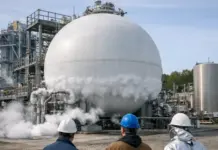



On April 4, 2026, Hydrogen Europe, an industry trade group, said that a historic deal had been made to connect the first physical hydrogen pipeline link between a Dutch distribution system operator and the new hydrogen core network of Germany.
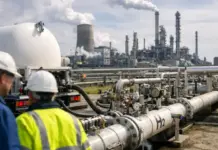
The project involves goes on to involve the installation of a specialized T-piece connection to a present pipeline corridor running between Vlieghuis, Netherlands, and Ochtrup, Germany.
This technical integration is the first time that a German transmission system operator – TSO has officially connected its high-capacity infrastructure with a regional distribution system based in the Netherlands.
The network’s goal is to offer a dependable, early-stage supply of hydrogen to a wide range of end-users through the use of this cross-border plug-in point.
The project is mainly aimed at helping small and medium-sized businesses – SMEs in the Twente region of the Netherlands, and it also aims to help large-scale industrial players become more environmentally friendly.
Hydrogen Europe went on to say in a statement that this connection is a key step in making a synchronized European hydrogen market. It demonstrates the way existing gas corridors can be changed in order to connect industrial clusters in different countries. A cross-border group that focuses on integrating local economies is behind the initiative. The Province of Overijssel, H2HUB Twente, as well as the tech group TECH.LAND are some of the most significant participants. These partners see the first physical hydrogen pipeline link connection as an important service for the Twente area, making sure the area stays competitive as Europe moves away from fossil fuels.
The Vlieghuis-Ochtrup link is expected to be a model for other interconnector projects on the continent in the time to come. Engineers can connect to the main transmission artery using a T-piece connection without interrupting the flow of the German core network as a whole. This allows for scalable distribution as the local demand for green hydrogen grows.
As Germany builds up its large hydrogen backbone, this Dutch connection is the first step toward a more detailed, interconnected grid that will reach beyond heavy industrial areas and into the wider commercial landscape of Northwest Europe.