

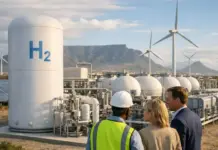

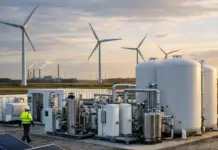
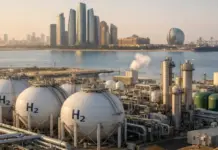
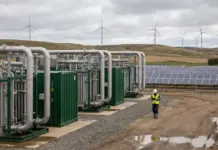
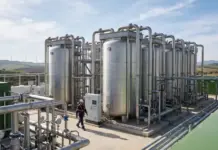


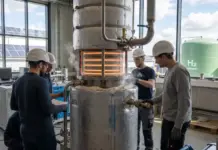
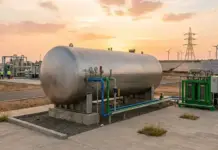
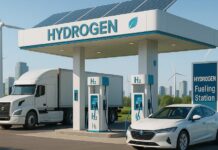
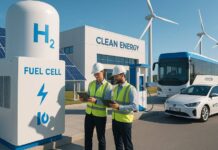
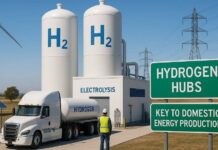

Together with about twenty public entities and many leading private companies in their sector, Boluda Corporación Marítima endorses the viability of creating green hydrogen cluster hub Renewable Hydrogen Cluster Hub Canary Islands promoted by Grupo DISA as well as Enagás, two companies that joined forces in order to accelerate the production and distribution along with the commercialisation of green hydrogen with the objective of contributing to the progressive decarbonisation of the archipelago.
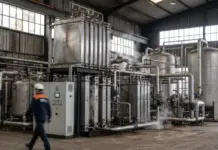
Boluda Maritime Terminals Tenerife will collaborate with Paceco Momentum in a project, comprised in the Ports 4.0 Fund, for the adaptation of the electric propulsion of an RTG Transtainer crane utilising disruptive hydrogen technologies as well as high-performance PEM fuel cells. The objective is to reach zero emissions of CO2, GHG gases as well as pollutants in the terminals, thereby adding to the improvement of the standard of life in the port surroundings.
The green hydrogen cluster hub needs an investment of almost 100 million euros in its first phase, which could reach a maximum of 1 billion by 2030 based on the level of growth of this alternative to clean energy consumption.
This initiative, submitted to the Government of the Canary Islands, is aimed at obtaining public co-financing from the European Next Generation funds. In the initial phase of operations and execution, the project would create some 200 new jobs.
The infrastructure anticipated for this first phase would possess the capacity to generate almost 1,000 tonnes of green hydrogen per year, and its final use would result in a reduction of CO2 emissions of 10,400 tonnes, a quantity which is equivalent to the absorption capacity of a forest that covers an area equivalent to 600 football fields.
It is well to be noted that hydrogen is the most common molecule in the universe, on Earth it is found paired with other elements, including water. It is a vector of energy, making it possible to lower greenhouse gas emissions and to decarbonize several sectors.
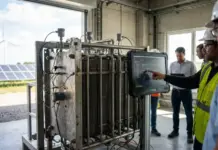
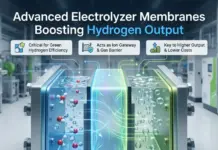
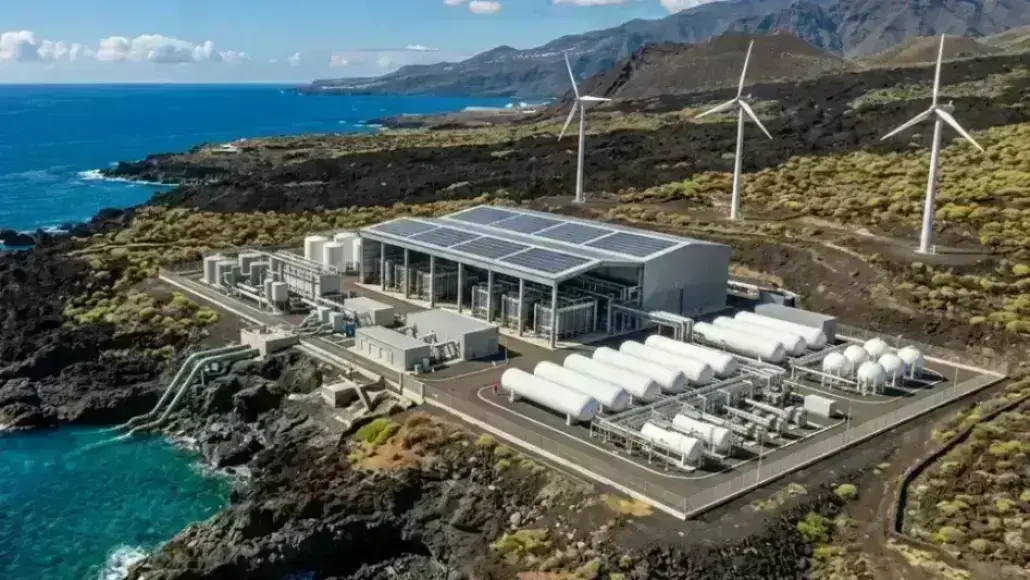
Hydrogen is green if and only if it is generated from 100% renewable energy sources. That renewable energy is going to be used to split water into hydrogen and oxygen. It could be solar or wind. The water utilised is taken from the sea and additionally goes through a process of desalination, which is done through renewable energy in the initiative promoted for the Canary Islands by DISA and Enagás. The project intends to generate green hydrogen at two facilities, one on each of the capital’s islands.
The project has been intended according to the standards that establish the new concept of sustainable industry, Industry 4.0, which the European Union intends to move throughout the entire EU territory. It aims to reinforce the guarantees that ensure a sustainable tracking of the entire manufacturing process, right from the source of raw materials, by means of each stage of transformation and exchange, to the ultimate use that the customer decides to make of the product – in this case renewable hydrogen. In this sense, the Cluster Hub is going to employ from the start digital tools that include IoT and Blockchain with the purpose of developing a system of Certificates and Guarantees of Origin – CGDO of the hydrogen that is produced.