






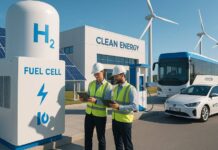
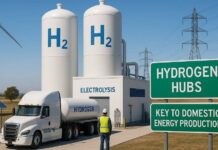



China has initiated a new pilot program to promote the development of hydrogen energy. The program has begun particularly with the goal of decarbonizing steel industry in China. Interestingly, in March, three government ministries launched an effort that offers incentives to five urban clusters to meet hydrogen-related objectives, such as projects to bring low-carbon hydrogen to steel production, reports Eco Business.
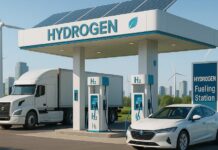
The program started with the intent to decarbonizing steel industry in China is an expanded version 2.0 of a prior 2021 effort with an emphasis on fuel cells for transportation. The new policy persists with this focus but extends the use of hydrogen to metallurgy and green ammonia as well as methanol, shipping and aviation.
Overall funding totals up to 8 billion yuan, which is equivalent to $1.17 billion over a period of four years, which is considerably less than the over 32 billion yuan spent on supporting electric vehicles in 2016–2020.
The idea is to bring down the hydrogen price for end users right from the current 35–50 yuan/kg to 25 yuan/kg by 2030 and to 15 yuan/kg across regions having high renewable energy capacity. However, the commercially viable level for hydrogen metallurgy is 10-15 yuan/kg, which suggests that the goal has not been reached yet.
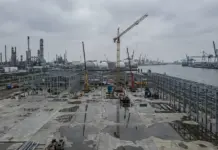
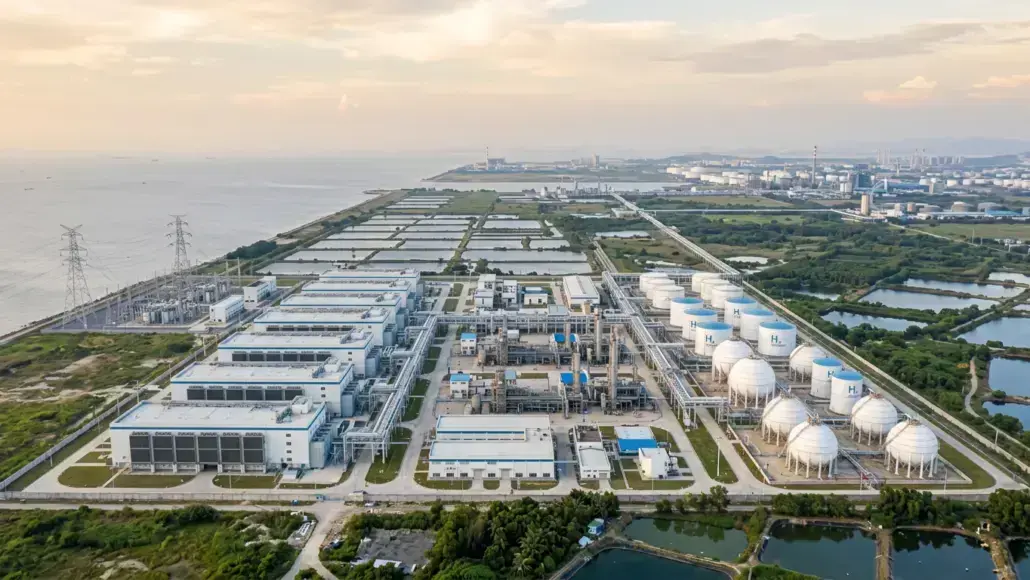
Baowu Steel, which is the world’s biggest steelmaker, was among the first in the industry to open a hydrogen-powered electric-arc furnace line having an annual capacity of 1 million tonnes by 2025 end. The company also disclosed the construction of the 11.9-billion-yuan Yangjiang hydrogen hub, having its own pipeline network. HBIS in Hebei Province also has an additional large-scale hydrogen-based steelmaking plant which is under operation.
That progress is promising, but there are still major obstacles coal-fired blast furnaces still produce approximately 90% of China’s steel and make up most of 15% of the world’s CO₂ emissions. This program is an accelerator, and it’s not a large-scale commercial transition, analysts say. What will be the deciding factor will not just be a decrease in the cost of hydrogen but also the real domestic need for low-carbon steel.
According to GMK Center, global energy monitor research shows that the green transition of the global steel industry is indeed at risk, mainly because of the high costs of blast furnace manufacturing and a lack of investments in more sustainable approaches. Interestingly, a 2035 global increase of 88 million tonnes when it comes to blast furnace capacity is anticipated.