

















Samsung C&T 028260 is putting the digital twin tech into renewable energy plant operation. This is also a strategic move so as to develop digital twin features beforehand as a competitive advantage for potential external business. By adding digital twin tech into renewable energy operations, Samsung Group is moving toward digital twin as a new business engine, which, by the way, is a trend spreading across Samsung C&T and Samsung Electronics as well as Samsung SDS.
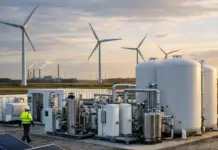
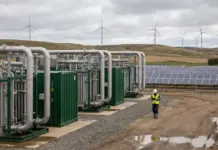
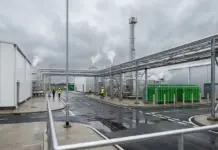
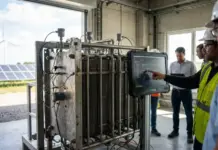
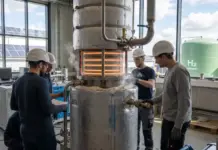
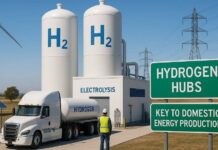
Samsung C&T’s Engineering & Construction Group and Simacro, which is a US startup founded by a Korean entrepreneur, are developing a predictive digital twin system at the green hydrogen production complex located in Gimcheon, North Gyeongsang Province, which was completed in March 2026, the information technology industry said on May 06, 2026. The Gimcheon plant is a complex set of facilities that generates over 230 tonnes of hydrogen annually solely via solar power generation with no external electricity or gas supply. Samsung C&T also holds the Gimcheon plant and plans to employ the digital twin for operations management.
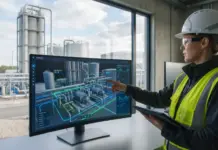
It is well to be noted that a digital twin is a technology that creates virtual spaces based on the real-world spaces and facilities.
Samsung C&T and Simacro are developing a predictive operating system. The intermittent nature of solar power generation makes it challenging to maintain a constant level of hydrogen production. The digital twin of the Gimcheon plant is being developed as a way of overcoming the weaknesses in terms of solar power generation and ensuring stable hydrogen output.
For instance, artificial intelligence- AI learns weather information, then mimics future solar power generation quantities and the resulting hydrogen production in a simulated computer environment. If the model estimates that a decrease in solar generation and the corresponding decrease in hydrogen production will take place, the system predicts an amount of electricity to compensate for the decreased hydrogen production. The managers can use the outcomes of the simulation to see if they need to change the amount of solar-generated electricity that they happen to keep in reserve. This enables avoiding variations in hydrogen production in advance. According to Yoon Jeong-ho, the CEO of Simacro, “Renewable energy production facilities usually cannot have large numbers of personnel stationed on site, and in the case of the Gimcheon plant, there is also no external power supply. ” It is a facility that produces hydrogen entirely on its own, and by embedding a predictive digital twin model here, we will maintain stable hydrogen production volumes.”
Samsung C&T looks to make digital twins a differential card when it comes to the renewable energy plant operation business.
Samsung C&T will be able to suggest more sales competitiveness in future sales related to plant operation once it internalises digital twin technology for renewable energy plants. Based on this judgement, Samsung C&T, along with Simacro, is working on the Gimcheon plant project so as to make the output available as Samsung C&T’s standard digital twin system.
Samsung Group is making digital twins a new sales tool. Samsung Electronics formed a close alliance with Nvidia in 2025 and said it would rely more on its AI factory business by way of using 50,000 graphics processing units – GPUs it had acquired as a resource. The AI factory business has external operations which support the AI transformation – AXE of production facilities at small and medium-sized suppliers within the semiconductor industry. The AI factory has functions like facility anomaly detection, failure prediction and production schedule optimisation, which are all executed on a digital twin platform.
Samsung SDS, which is the Samsung Group’s system integration SI affiliate, has picked digital twin to be one of its primary new businesses for 2026. The main strategy of Samsung SDS in 2026 is to connect the Samsung Cloud Platform – SCP with digital twin so as to build a competitive advantage against rivals. SCP aggregates data derived at industrial sites in real time to enhance the precision of digital twin simulations. The more precise the simulations, the better the data, which, in turn, creates a cycle that is beneficial. Samsung Heavy Industries is also developing a ship management solution that employs digital twin technology that tracks the vital status of ships in real time.
The digital twin business of Samsung is expected to target AXE demand from large companies at home as well as abroad in the initial stage, experts indicated. Traditional industries like manufacturing have always struggled with the gap between their normal state and the ideal state in processes, opines the CEO of data integration solutions company Boundfor, Hwang In-ho. He adds that “Simulations using digital twins are a groundbreaking way to close that gap while reducing time and manpower inputs, so interest among large companies is high.”