


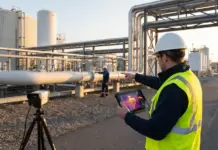
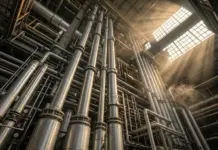
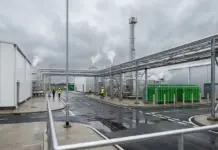






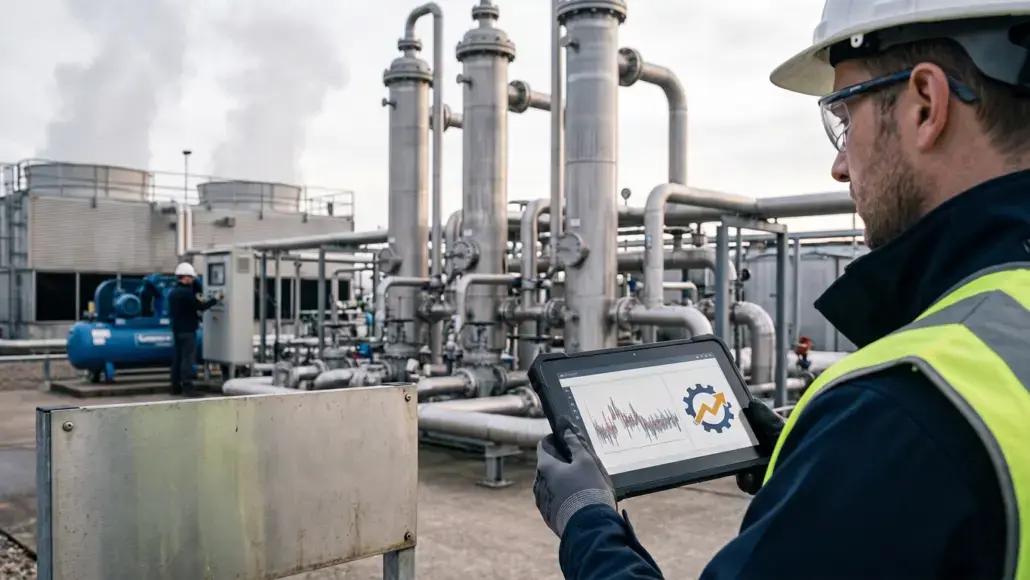

The global push toward decarbonization has positioned hydrogen as a critical energy vector, particularly for hard-to-abate sectors such as heavy industry and long-haul transportation. However, the operational reliability of hydrogen production facilities remains a significant hurdle to widespread adoption. Hydrogen, being the smallest and lightest molecule, presents unique challenges, including high diffusivity and embrittlement of metals, which can lead to rapid equipment wear and safety hazards. In this context, AI Predictive Maintenance has emerged as an essential technology, enabling plant operators to transition away from traditional time-based maintenance schedules toward a dynamic, data-driven approach that anticipates failures before they occur.
Traditional maintenance strategies often result in either unnecessary downtime for inspections of healthy equipment or catastrophic failures that disrupt production and compromise safety. In a hydrogen plant, where compressors, electrolyzer stacks, and high-pressure storage tanks operate under extreme conditions, the cost of unplanned downtime can reach tens of thousands of dollars per hour. By leveraging artificial intelligence, facilities can ingest massive volumes of sensor data ranging from vibration and temperature to acoustic emissions and chemical composition to build a comprehensive health profile of every critical asset. This proactive stance is not just about efficiency it is about building a resilient and safe hydrogen infrastructure that can meet global demand.
The Critical Role of AI in Monitoring Hydrogen Compressors
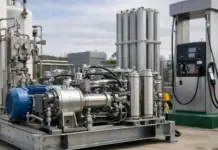
Compressors are the workhorses of hydrogen production, responsible for raising the pressure of generated gas for storage and transport. Whether using reciprocating or centrifugal technology, these machines are subject to intense mechanical stress. AI Predictive Maintenance algorithms are particularly adept at identifying the subtle onset of valve fatigue, piston ring wear, or bearing degradation in these systems. By applying Fourier Transform analysis to vibration data, AI can detect specific frequency shifts that indicate a misalignment or a loose component long before a human operator would notice a change in performance.
Furthermore, hydrogen compressors are prone to thermal instabilities. AI models can correlate discharge temperatures with suction pressures and motor power consumption to identify inefficiencies caused by internal leakage or fouling. When an AI system detects a deviation from the “golden batch” operational profile, it can trigger an alert that specifies not only the likelihood of failure but also the most probable root cause. This level of granularity allows maintenance teams to arrive on-site with the correct spare parts and tools, drastically reducing the Mean Time to Repair (MTTR) and ensuring that the compressor remains online during peak production periods.
Machine Learning for Lubrication and Seal Management
In high-speed compression systems, the integrity of seals and the quality of lubrication are paramount. Hydrogen can easily leak through the smallest imperfections, and contaminated oil can lead to catastrophic mechanical failure. AI Predictive Maintenance models analyze the chemical properties and particulate counts in lubrication oil in real-time. By detecting microscopic metallic shavings or moisture ingress, the AI can predict a bearing failure months in advance. Similarly, monitoring the pressure drop across gas seals allows the AI to identify seal face wear, preventing hazardous gas releases and ensuring that the compression process remains efficient and hermetic.
Enhancing Electrolyzer Reliability through Advanced Analytics
The electrolyzer stack is the core of any green hydrogen facility, and its health is directly tied to the plant’s profitability. Over time, electrolyzers experience degradation due to factors such as membrane thinning, catalyst poisoning, and electrode oxidation. AI Predictive Maintenance provides a window into these invisible processes by monitoring the polarization curve the relationship between cell voltage and current density. A gradual upward drift in voltage at a constant current is a classic indicator of degradation, but AI can distinguish between normal aging and accelerated decay caused by impurities in the feed water or power fluctuations.
By integrating machine learning with real-time gas analysis, AI can also detect gas crossover, where hydrogen and oxygen molecules migrate across the membrane in unintended directions. This is a critical safety concern, as it can lead to the formation of explosive mixtures. AI models trained on historical failure data can identify the “signature” of a failing membrane, allowing for a controlled shutdown and stack refurbishment before a hazardous condition arises. Consequently, AI Predictive Maintenance serves as a vital layer of the plant’s safety instrumented system, protecting both the personnel and the capital-intensive electrolysis equipment.
AI-Enhanced Safety Protocols and Leak Detection
Safety is the absolute priority in hydrogen production. The high pressure and flammability of hydrogen require constant vigilance. AI Predictive Maintenance systems go beyond mechanical health to include safety-critical monitoring. By fusing data from ultrasonic leak detectors, thermal cameras, and conventional gas sensors, AI can identify leaks that are invisible and silent to the human eye. Machine learning algorithms are trained to differentiate between the background noise of the plant and the specific acoustic signature of a high-pressure hydrogen leak. This allows for immediate localized isolation, preventing small leaks from escalating into major incidents.
Moreover, AI can predict the dispersion patterns of a potential leak based on real-time weather data and plant topography. This information is invaluable for emergency response planning and ensuring that ventilation systems are optimized for maximum safety. By integrating these safety analytics into the maintenance workflow, AI ensures that the physical integrity of the plant is maintained at the highest standards, fostering public trust in hydrogen technology as a safe and reliable energy source.
Optimizing Auxiliary Systems and Balance-of-Plant Equipment
While compressors and electrolyzers receive the most attention, the reliability of a hydrogen plant also depends on a vast array of auxiliary systems, including cooling loops, deionization units, and power electronics. Pumps and valves in these systems are often the primary sources of minor yet frequent disruptions. AI Predictive Maintenance extends its reach to these components by utilizing low-cost IoT sensors to monitor motor health and fluid dynamics. For example, AI can identify the early signs of cavitation in a centrifugal pump, which, if left unchecked, would destroy the impeller and lead to a total loss of cooling capacity.
In the realm of power electronics, AI monitors the health of rectifiers and transformers that convert grid electricity or renewable power into the direct current required for electrolysis. Thermal imaging and electrical signature analysis are used by AI models to detect hot spots or harmonic distortions that indicate failing capacitors or insulation breakdown. By maintaining the health of the entire balance-of-plant, AI ensures that the electrolyzer stack is always supplied with the optimal environment for gas production, further reinforcing the reliability of the overall hydrogen production system.
Data Acquisition and the IIoT Infrastructure for Predictive Intelligence
The success of AI Predictive Maintenance is predicated on the quality and quantity of data available for analysis. Modern hydrogen plants are increasingly equipped with Industrial Internet of Things (IIoT) sensors that provide high-fidelity data streams. However, the sheer volume of this data requires sophisticated processing architectures. Edge computing plays a pivotal role here, performing initial data cleaning and anomaly detection at the sensor level to reduce latency and bandwidth requirements. This ensures that critical safety alerts are generated in real-time, even if the plant’s connection to a central cloud server is intermittent.
Moreover, the integration of Digital Twin technology with AI allows for “what-if” simulations. By creating a virtual replica of the physical plant, AI can test how different maintenance scenarios will impact long-term reliability. For instance, if a compressor shows early signs of wear, the Digital Twin can simulate whether reducing the load will extend its life until the next scheduled outage or if immediate replacement is necessary to prevent a cascading failure. This synergy between the virtual and physical worlds provides plant managers with a powerful decision-support tool, ensuring that every maintenance action is backed by rigorous data science.
Fleet-Wide Benchmarking and Collaborative Learning
As more hydrogen plants are deployed globally, the opportunity for cross-fleet benchmarking grows. AI systems can securely share anonymized performance and failure data between different facilities. This collaborative learning approach means that an AI model at a new plant in Europe can benefit from the failure patterns observed at a mature plant in Australia. By identifying common failure modes across different manufacturers and environmental conditions, the industry can collectively drive toward higher reliability standards. This global intelligence network accelerates the maturation of hydrogen technology, reducing the learning curve for new entrants and lowering operational risks for all stakeholders.
Economic Benefits and ROI of AI-Driven Maintenance
The financial justification for AI Predictive Maintenance in the hydrogen sector is compelling. Industry data suggests that a transition to predictive strategies can reduce maintenance costs by up to 30% and unplanned downtime by as much as 45%. In the context of green hydrogen, where margins are often thin compared to conventional fuels, these savings are critical. By extending the operational life of electrolyzer stacks which can represent up to 40% of the total plant cost AI significantly improves the return on investment (ROI) for project developers and financiers.
Beyond direct cost savings, AI-driven maintenance enhances the bankability of hydrogen projects. Insurance companies and lenders are increasingly looking for evidence of robust asset management practices before committing capital. A plant that can demonstrate a high level of reliability through AI monitoring is seen as a lower-risk investment, leading to more favorable financing terms. As the industry scales, AI Predictive Maintenance will transition from being a competitive advantage to a standard requirement for any large-scale hydrogen production facility seeking to operate profitably and safely in a global market.
The Human Element: Empowering the Workforce with AI
Contrary to the fear that AI will replace human workers, its role in predictive maintenance is to empower engineers and technicians. AI acts as an intelligent assistant, filtering out the noise of thousands of sensors and highlighting only the most relevant issues. This allows the workforce to focus their expertise on solving complex problems rather than spending hours performing manual inspections. Training programs are now evolving to include data literacy and AI collaboration, ensuring that the next generation of hydrogen plant operators is equipped to handle the high-tech reality of modern energy production.
As AI models continue to learn from more diverse datasets across different plant locations and equipment brands, their predictive accuracy will only improve. We are entering an era where the machines themselves will contribute to their own longevity, communicating their needs and operational limits to a global network of intelligence. This interconnectedness will accelerate the learning curve for the entire hydrogen industry, driving down costs and improving reliability at a pace that was previously unimaginable. In this future, AI Predictive Maintenance will be the silent guardian of the clean energy transition, ensuring that the world’s hydrogen supply is as dependable as it is sustainable.