


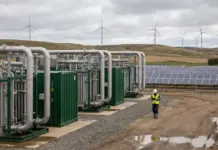
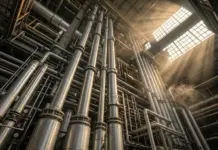
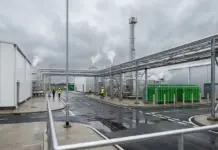


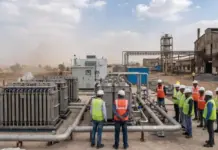
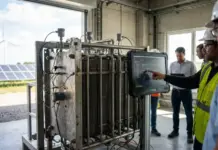
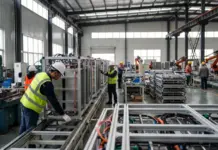
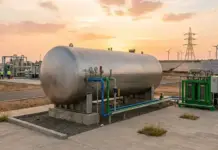

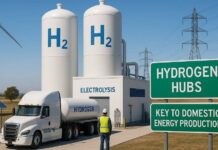
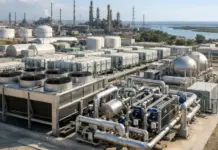

As the global energy transition matures, the ambition for green hydrogen has evolved from small-scale pilot projects to massive, gigawatt-scale industrial hubs. These facilities, often spanning vast areas and integrating hundreds of individual electrolyzer stacks, represent the future of decarbonized heavy industry and transportation. However, the sheer scale and complexity of these operations present challenges that exceed the capabilities of traditional manual or semi-automated management. AI-Driven Automation has emerged as the essential framework for these facilities, providing the systemic intelligence needed to orchestrate complex electrochemical, thermal, and mechanical processes with minimal human intervention. This transition to fully autonomous operations is not merely a luxury; it is a necessity for achieving the scalability and economic efficiency required by the global market.
The primary objective of AI-Driven Automation in large-scale plants is the maximization of uptime and production yield while simultaneously minimizing operational risks. In a gigawatt-scale facility, even a minor inefficiency or a short period of unplanned downtime can result in significant financial losses. Traditional Distributed Control Systems (DCS), while reliable for basic process logic, are not designed to manage the non-linear dynamics and high-frequency data flows of a modern hydrogen plant. Artificial intelligence addresses this by acting as a high-level orchestrator, processing millions of data points every second to make real-time adjustments that ensure the entire facility is operating at its theoretical peak.
The Architecture of Autonomous Industrial Hubs
The shift toward AI-Driven Automation involves a fundamental restructuring of the plant’s digital architecture. Instead of a centralized, hierarchical control system, modern facilities are adopting a decentralized, multi-agent approach. In this model, individual electrolyzer stacks and auxiliary units are equipped with their own “edge” intelligence local AI models that can make immediate decisions based on their specific conditions. These edge agents communicate with a high-level plant controller that manages the global objectives, such as meeting hydrogen delivery targets or responding to grid signals.
This decentralized architecture is inherently more resilient and scalable. If one stack experiences an anomaly, the local AI can take immediate corrective action, such as isolating the unit or adjusting its power draw, without disrupting the rest of the plant. Furthermore, AI-Driven Automation facilitates the integration of diverse equipment from multiple manufacturers. The AI acts as a “translation layer,” normalizing the data from different types of electrolyzers and sensors into a unified operational framework. This flexibility is crucial for large-scale projects that often utilize a mix of technologies to optimize performance across different operational regimes.
Multi-Stack Coordination and Load Balancing at Scale
One of the most complex tasks in a large-scale facility is the coordination of multiple electrolyzer stacks. Not all stacks are identical; they age at different rates, have slight manufacturing variations, and react differently to thermal stresses. AI-Driven Automation addresses this through sophisticated load-balancing algorithms that distribute the electrical current across the fleet based on the real-time efficiency and health of each unit. This “degradation-aware” scheduling ensures that the most efficient stacks handle the heaviest loads, while aging units are preserved to extend their remaining useful life.
Furthermore, AI-Driven Automation manages the complex thermal interactions between stacks. In a gigawatt-scale plant, the heat generated by one group of electrolyzers can be recovered and used to pre-heat the feed water for another, provided the flows are managed with extreme precision. The AI system simulates the thermal-fluid dynamics of the entire facility, optimizing the duty cycles of cooling towers and heat exchangers. By treating the hundreds of stacks as a single, integrated thermodynamic system, the AI maximizes the overall energy efficiency of the plant, significantly lowering the cost of every kilogram of hydrogen produced.
Synchronizing Renewables, Storage, and Electrolysis
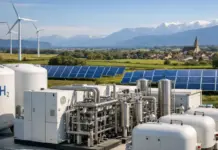
Large-scale hydrogen plants are increasingly coupled with their own dedicated renewable energy farms and battery storage systems. The synchronization of these components is a monumental optimization puzzle that AI-Driven Automation is uniquely qualified to solve. The AI system monitors weather forecasts, grid prices, and battery state-of-charge to determine the optimal production schedule. It can decide to store energy in batteries during periods of low hydrogen demand or use the batteries to supplement renewable power during a sudden wind drop.
This level of systemic coordination ensures that the plant is always utilizing the lowest-cost and lowest-carbon energy available. AI-Driven Automation also manages the interaction with the broader electrical grid, allowing the plant to act as a massive, flexible load that can provide frequency response services. By automatically adjusting its power draw in milliseconds, the plant helps to stabilize the grid, earning additional revenue that further improves the project’s economic viability. In this context, the autonomous hydrogen plant becomes a vital stabilizer for the entire clean energy ecosystem.
Robotics and Drones in Automated Physical Maintenance
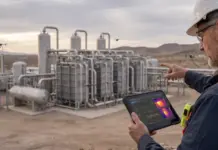
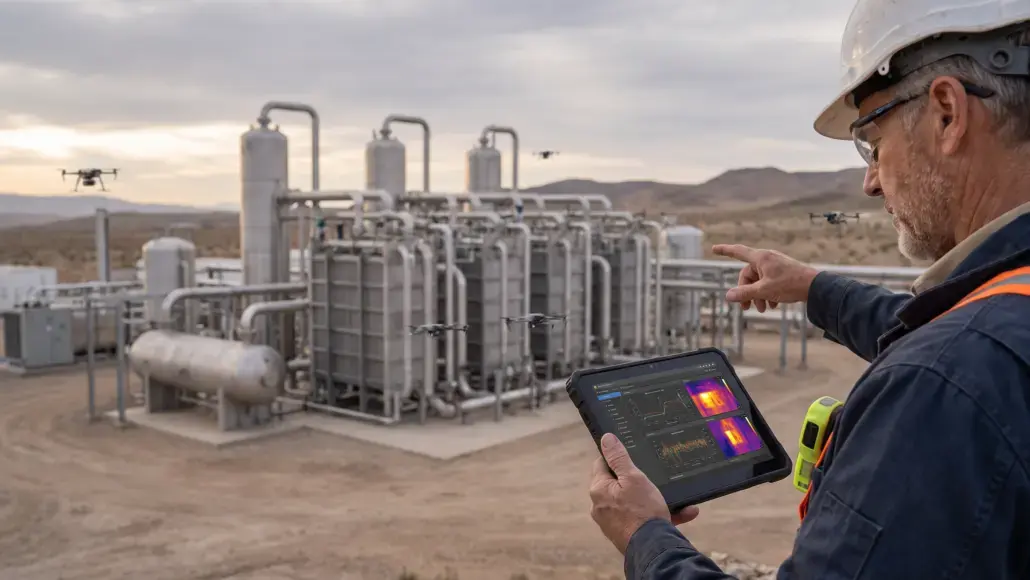
The “automation” in AI-Driven Automation is not limited to software and control logic; it also includes the physical management of the plant infrastructure. Large-scale facilities cover enormous geographic areas, making manual inspections and maintenance both time-consuming and hazardous. Modern automated plants are increasingly utilizing fleets of autonomous drones and ground-based robots to monitor equipment health. These robots are equipped with thermal cameras, acoustic sensors, and multi-gas detectors to identify leaks, corrosion, or mechanical wear.
The data gathered by these robotic inspectors is fed back into the plant’s AI, where it is used to update the Digital Twin and refine the predictive maintenance models. For example, a drone might detect a microscopic gas leak on a high-pressure pipe that is invisible to conventional sensors. The AI-Driven Automation system then automatically schedules a robotic repair or alerts a human technician with the exact coordinates and severity of the issue. By automating the physical monitoring of the facility, AI ensures that no part of the vast infrastructure is neglected, maintaining the highest levels of safety and reliability across the entire site.
High-Speed Data Governance and Compliance
The operation of a gigawatt-scale hydrogen plant generates a staggering amount of data that must be securely managed and audited. AI-Driven Automation includes sophisticated data governance layers that ensure all operational records are accurate, complete, and tamper-proof. This is particularly important for regulatory compliance, where producers must provide “Guarantees of Origin” to prove that their hydrogen was produced using truly green energy. The AI automatically tracks the source of every kilowatt-hour consumed, providing a transparent audit trail for regulators and customers.
Furthermore, AI-driven systems automate the reporting of safety incidents, environmental impacts, and production metrics. This reduces the administrative burden on plant managers and ensures that the facility is always in compliance with local and international standards. In a global market where sustainability and safety are key competitive advantages, the transparency provided by AI-Driven Automation is a powerful asset. By providing a data-driven “source of truth,” AI fosters trust among investors, insurers, and the local communities where these large-scale projects are located.
Human-Machine Collaboration and Decision Support Systems
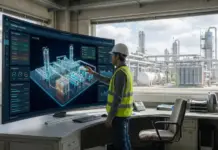
While the ultimate goal of AI-Driven Automation is full autonomy, the transition period requires a sophisticated interface between the AI and the human workforce. In a large-scale plant, the AI serves as a powerful decision-support system, providing operators with high-level insights and recommendations rather than just raw data. Through advanced dashboards and natural language interfaces, the AI can explain why it is recommending a specific load adjustment or maintenance action. This “Explainable AI” (XAI) is crucial for building trust and ensuring that human oversight remains effective.
Furthermore, AI-Driven Automation empowers the workforce by taking over the repetitive, data-heavy tasks, allowing engineers to focus on higher-level strategy and innovation. The AI can highlight trends and anomalies that require human creativity and specialized knowledge, such as developing new catalysts or optimizing the plant’s integration with a local industrial cluster. This collaborative environment ensures that the facility benefits from both the speed of artificial intelligence and the nuanced judgment of experienced professionals. As the technology matures, the “human-in-the-loop” role will shift from active control to strategic governance, defining a new era of industrial leadership.
The Role of Edge Computing in Distributed Automation
To achieve the sub-second response times needed for protecting large-scale infrastructure, AI-Driven Automation relies heavily on edge computing. In a gigawatt-scale facility, transmitting all sensor data to a central cloud server would introduce unacceptable latency and bandwidth costs. Instead, AI models are deployed directly on the industrial controllers and IoT gateways distributed throughout the plant. These edge devices can identify a pressure surge or an electrical fault and initiate a protective action in milliseconds, long before a central system could react.
This distributed intelligence is the backbone of the plant’s resilience. Even if the primary network connection is lost, the individual stacks and safety systems can continue to operate autonomously, maintaining a safe state. The edge devices periodically synchronize with the central plant controller to share learned patterns and performance metrics, ensuring that the entire facility benefits from the collective intelligence of all its parts. This synergy between local speed and global optimization is the defining technical characteristic of modern AI-Driven Automation, providing the reliability needed for the world’s most critical energy infrastructure.
The Path Toward Global Autonomous Hydrogen Networks
As we look toward the 2030s and 2040s, the evolution of AI-Driven Automation will lead to the emergence of interconnected, global networks of autonomous hydrogen factories. In this future, multiple plants across different continents will be linked through a unified AI framework, allowing for global optimization of production and supply. A surplus of renewable energy in one region could trigger increased production in its local hydrogen hubs, while other regions scale back to preserve stack health or manage grid stress.
This level of systemic intelligence will be the ultimate enabler of the hydrogen economy, providing the reliability, scalability, and affordability needed to completely replace fossil fuels in heavy industry and long-haul transport. The journey of AI-Driven Automation is a journey toward a smarter, cleaner, and more resilient energy world. By embracing these intelligent systems today, we are ensuring a truly sustainable industrial future. The era of the autonomous gigawatt-scale hydrogen plant has arrived, and artificial intelligence is the engine of its success.