
















A UK-backed maritime consortium has gone ahead and successfully verified the very first grid-independent 45MWh hydrogen power hub in the world that will accelerate port decarbonisation.
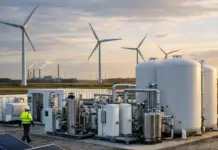
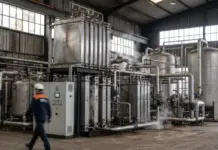
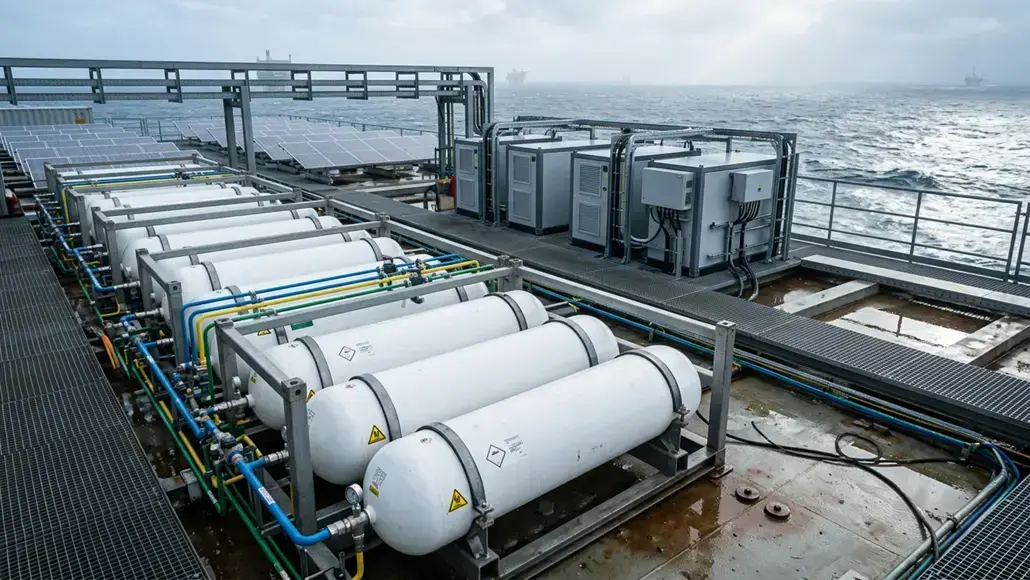
The system is made up of three modular hexagonal floating platforms, spanning a combined 12,900-square-foot area. The platforms include approximately 45MWh of battery energy storage, modular fuel cell systems, hydrogen-based generation, onboard renewable energy sources and advanced grid-forming AC/DC electrical architecture to deliver power directly to vessels.
The concept was validated in a six-month programme delivered in partnership with the UK Shipping Office for Reducing Emissions under the UK Research and Innovation Clean Maritime Demonstrator Competition Round 6. The work involved hydrodynamic, structural, electrical and operational testing.
Partners say the project showed that current hydrogen, battery, fuel-cell and electrical technologies can be combined into a modular floating system capable of providing power to large ships while they are docked and deployed at ports around the world.
Tackling bottlenecks in port electrification with 5MW output
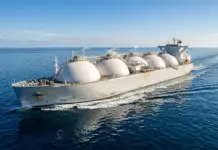
This first grid-independent 45MWh hydrogen power hub in the world is intended for large-scale maritime operations and can provide up to 5 MW of continuous clean power directly to vessels in berth. The system is capable of handling both 6.6kV and 11kV shore power hook-ups and has sufficient capacity to support medium-sized cruise ships and other power-hungry maritime assets.
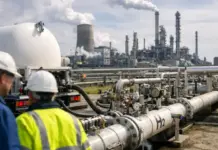
The project aims to address one of the biggest challenges of decarbonising ports: availability of reliable electrical infrastructure. Limited grid capacity, long utility connection timelines, space constraints, complex permitting requirements and high costs associated with conventional shore-side power installations have left many ports still struggling to deploy shore power at scale.
The floating platform’s independence from existing grid infrastructure provides ports with an alternative route to reducing vessel emissions. Instead of building big infrastructure on land, it is built in the water itself, on a floating platform. Traditional shore power projects can take three to seven years or more to complete and often require substation upgrades, grid reinforcement, significant civil works and lengthy permitting processes. The system could offer ports a quicker way to reduce emissions by sidestepping many of these requirements.
The consortium claims that the platform is capable of delivering approximately 91MWh of energy per week and can support repeated vessel charging operations. The design aims to reduce the need for major construction projects, land reclamation work or expensive upgrades to existing electrical infrastructure.
Less reliance on permanent port fuel infrastructure
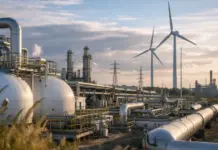
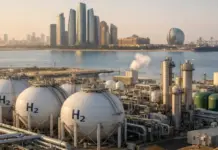
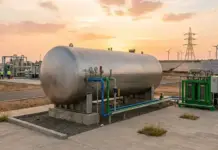
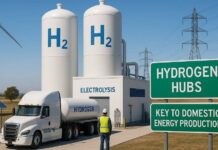
The platform consumes approximately 16,500 to 17,600 pounds of hydrogen each week to keep it operational, stored in modular, ISO-compatible low-pressure containers integrated into the floating structure. The approach aims to simplify fuel logistics and maintain flexibility for diverse port environments.
Right now, it has seven onboard hydrogen storage tanks and is expected to refuel about twice a week. “This setup allows ports to start deploying hydrogen-powered shore power systems without first investing in permanent hydrogen infrastructure, potentially lowering barriers to adoption in the early stages of implementation,” said the project team.
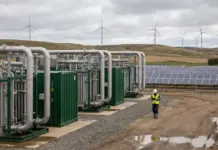
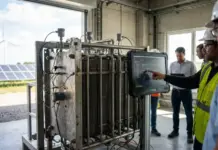
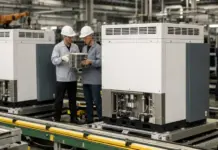
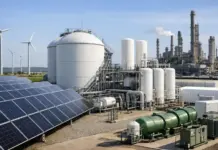
The system uses 1.3MW modular fuel cells to continuously charge onboard batteries as opposed to relying on large generators, allowing energy to be delivered quickly when ships connect at berth. It also provides 146kW of onboard solar capacity to help reduce hydrogen consumption.
Further testing by the University of Strathclyde confirmed the platform’s stability, structural performance, motion characteristics and multi-platform connectivity in various sea conditions, attesting to its feasibility for long-term maritime operations.