

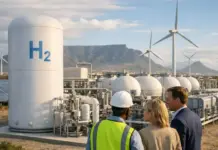

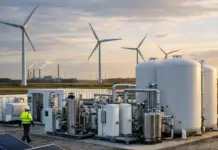

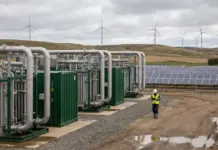
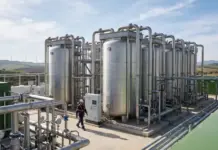

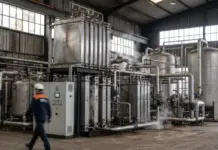

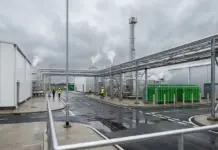


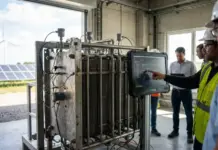
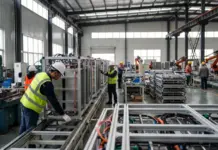
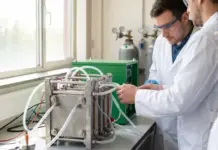
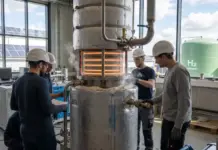
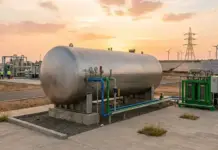

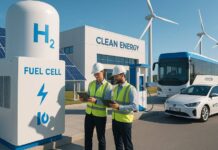
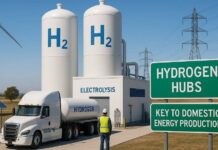
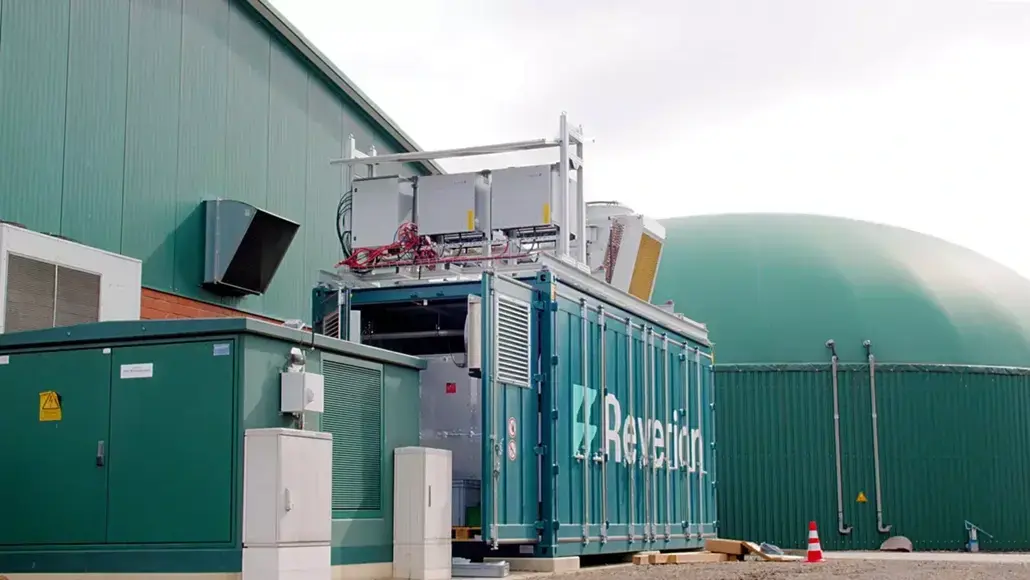

The HARTING Technology Group is commissioning a new hydrogen fuel-cell plant in Germany at Espelkamp, which is indeed a testament to the long-term commitment to a sustainable and robust energy infrastructure. The pilot plant was developed with the Bavarian technology company Reverion and is an addition to the prevailing photovoltaic and biogas system at the location and an important step toward achieving climate-neutral industrial processes.
The new hydrogen fuel-cell plant in Germany initially serves for the conversion of locally generated biogas into electricity to meet the energy requirements of production and administration facilities across the Espelkamp campus. Currently the system provides near 3% of the energy demand and is fitted in plants 2, 3a, 3b and 7.
The project is intended not only to improve the utilisation of renewable energy but also, at the same time, to support future needs for energy storage and load balancing. It is worth noting that reversible fuel cell technology allows for temporary storage of renewable electricity as green hydrogen and its transformation back to electricity when required. The goal of this strategy is to enable stable operations during times of elevated energy demand or supply shortfalls.
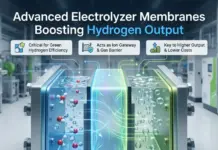
The Reverion system, as per the company, is said to be far more energy-efficient than traditional hydrogen storage methods. Conventional systems, with detached electrolysers and gas storage, typically achieve round-trip efficiencies of 40 to 50%, while the Reverion technology can reach as much as 75%. Furthermore, the system produces usable process heat which can be diverted to facilitate fermentation processes in the biogas plant.
The technology incorporates the processes of electrolysis and gas storage as well as reconversion into one integrated system, avoiding combustion-based energy conversion. This combined strategy helps minimise energy losses and increase efficiency in operations.
With 43 sales companies, 14 production facilities as well as 6 development sites around the globe, the HARTING Technology Group is a worldwide leader in industrial connectivity. Connectivity solutions help with the transmission of data and signals as well as power in different sectors such as transport, renewable energy, electromobility, automation and mechanical engineering. In the fiscal year 2022/23, the family-owned company generated sales of EUR 1,036 million.
The plant has been closely associated with the broader energy management strategy of the company, noted the Vice President of Corporate Real Estate Management & Facility Management at Sven Oßenbrink. The standardised infrastructure allows for transparent tracking and controllable energy flows that are critical for the reliability of operations and future growth of the renewable energy ecosystem of the company, he said.
Apparently, HARTING is at present evaluating various system configurations to determine future storage capacity and scaling possibilities. The system is technically capable of running with a power input of as much as 250 kilowatts in electrolysis mode and a reverse power output of around 100 kilowatts in fuel cell mode.
The project also features industrial connectivity technologies from HARTING. The Reverion plant uses connectors from the Han® portfolio like Han® HPR housings and Han-Modular® inserts. They provide interfaces for the delivery of power, data and signals across the structure and allow modular incorporation of various transmission media in one connector.
Reverion described the Espelkamp site as an important industrial reference project, showing how reversible hydrogen technologies can be successfully integrated into existing production environments. The collaboration is expected to help support the company’s energy systems for industrial applications with further commercialisation and scaling.