

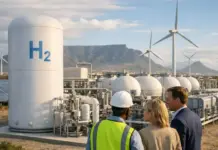

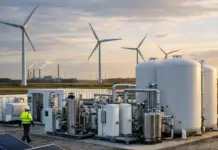
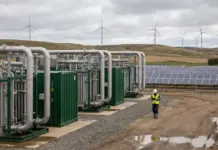
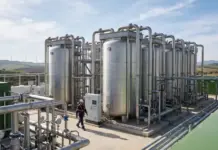
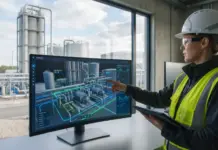
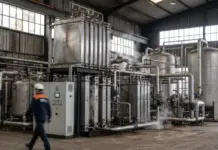
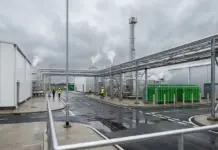


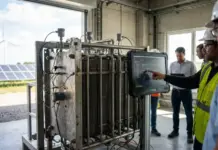
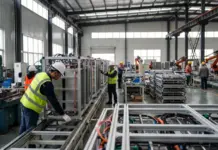
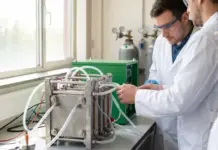
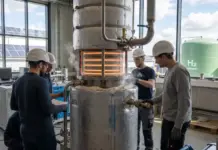
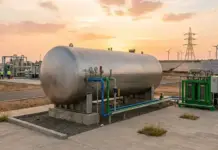


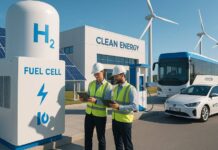
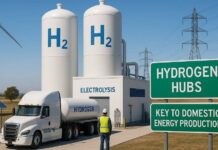
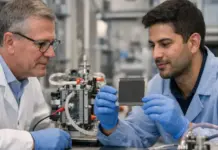
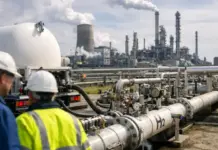
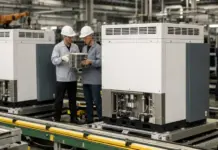
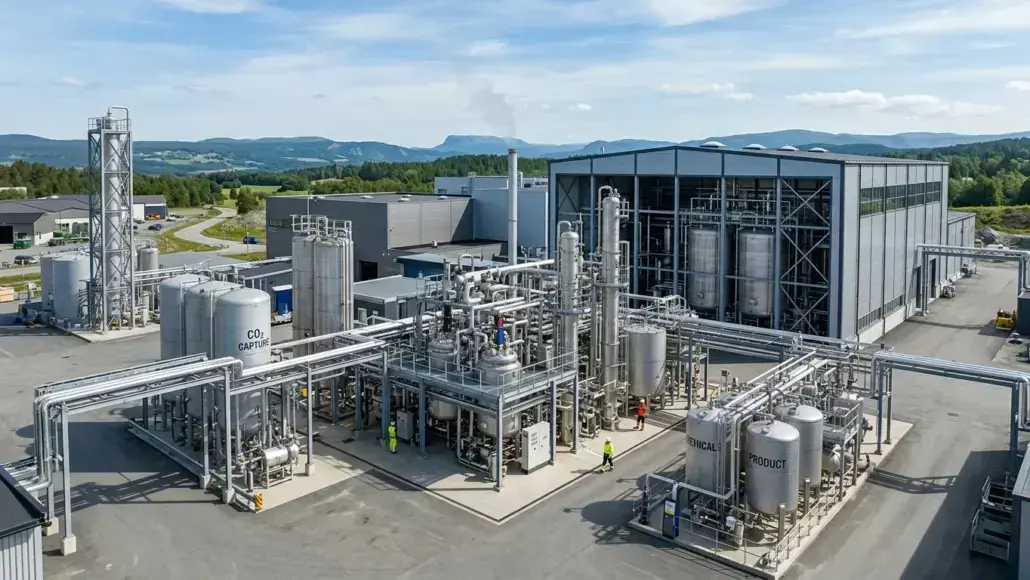

The newly formed pilot-scale facility at the SINTEF Process Technology Centre will be a distinctive arena for creating and evaluating green biotechnological solutions on a larger scale. The plant will be first indicated to test technology for the transformation of CO2 to new products such as chemical acetone as part of the EU project PYROCO2.
This facility gives SINTEF Process Technology Centre a distinctive arena for evaluating and creating technologies that are beneficial to both the industry and the environment, more precisely the transformation of CO2 to new products, commonly referred to as Carbon Capture and Utilisation – CCU.
It is well to be noted that the new demonstration facility originated from PYROCO2 – the EU-funded European Green Deal project and the requirement to validate its technology at a larger scale. The PYROCO2 project seeks to turn CO2 and green hydrogen into the industrial chemical acetone and then into a whole range of useful products.
One example of the increasing need for research-based pilot activities at Tiller is PYROCO2. For over 40 years, SINTEF at Tiller has proven to be instrumental in piloting and ramping up industrial processes. Here industry is privy to a distinctive infrastructure and multidisciplinary knowledge for the creation and verification, under safe HSE guidelines, of solutions before their commercialisation.
The new pilot plant will make SINTEF even better prepared to satisfy the demand for validation and testing of novel green and circular solutions.
According to Duncan Akporiaye, the vice president of research, “When developing and testing technologies, strong research support is crucial. The location at Tiller, close to research environments at SINTEF and NTNU, provides clear advantages. It allows technologies to mature before industrial deployment.”
Innovative approaches for carbon capture & utilisation
SINTEF has served closely with the industry for many years to create solutions for carbon capture, utilisation and storage – CCUS and they come with outstanding knowledge and infrastructure to showcase technologies throughout the entire CCUS value chain.
“There is no doubt that carbon capture and storage is necessary to reduce greenhouse gas emissions. At the same time, to move toward a more circular and sustainable industry, we must increasingly adopt solutions that utilize captured CO₂ as a resource,” adds Akporiaye.
New ways to collect, use and store carbon from carbon-intensive sectors can both cut emissions and utilise some of the carbon that is released.
“Through biotechnological processes, captured carbon can be converted into new products, and many industries are already leveraging biotechnology to move away from processes based on fossil carbon,” he says.
There is a growing interest when it comes to alternative sustainable feedstocks like biomass as well as CO2. But these raw materials need to be transformed via green value chains, novel technologies, and cutting-edge processes. SINTEF has long been involved in these bioprocesses, and there already exists a foothold for sophisticated industrial biotechnology in Norway.
The new pilot facility will offer additional opportunities for demonstrating gas fermentation for the creation of new chemical and plastic as well as fuel products – which is indeed a possible breakthrough as far as high-emission industries are concerned.
Confirms Chief Scientist Alexander Wentzel, “By converting CO2 into valuable products, industry can meet increasingly strict climate requirements while maintaining competitiveness and contributing to a sustainable circular bioeconomy.”
Almost 300 tonnes of acetone every year
Currently, PYROCO2 is the sole technological platform of its kind to utilise gas fermentation to generate acetone from CO2. The new Tiller plant will be able to produce around 300 tonnes of acetone a year from 700 tonnes of industrial CO2 as well as renewable hydrogen. It will also provide essential research data for additional scaling of the technology, for instance, at Herøya Industrial Park along with other industrial clusters in Europe. The aim is to allow cuts of almost 17 million tonnes of CO2 equivalent by 2050.
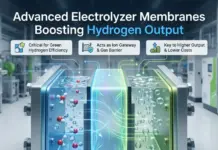
This scale of operating CO2-based gas processes of fermentation also necessitates a large electrolyser. Power to Hydrogen – P2H2, a U.S. company, shall supply an electrolysis system for the new plant. It will use only renewable power to separate water into hydrogen as well as oxygen. The bacteria in the bioreactors will transform the hydrogen and captured CO2 to acetone. The system is expected to be delivered in the Q4 of 2026.
Concludes Duncan Akporiaye, “The electrolysis system is designed to operate on renewable electricity, making it completely emission-free. It is also built for rapid adaptation to variable renewable power, fluctuating hydrogen demand, and long operational life – making it well suited for projects like PYROCO2.”