



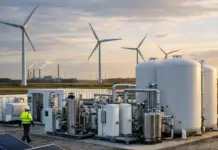











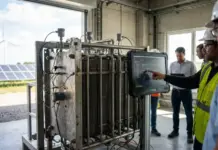










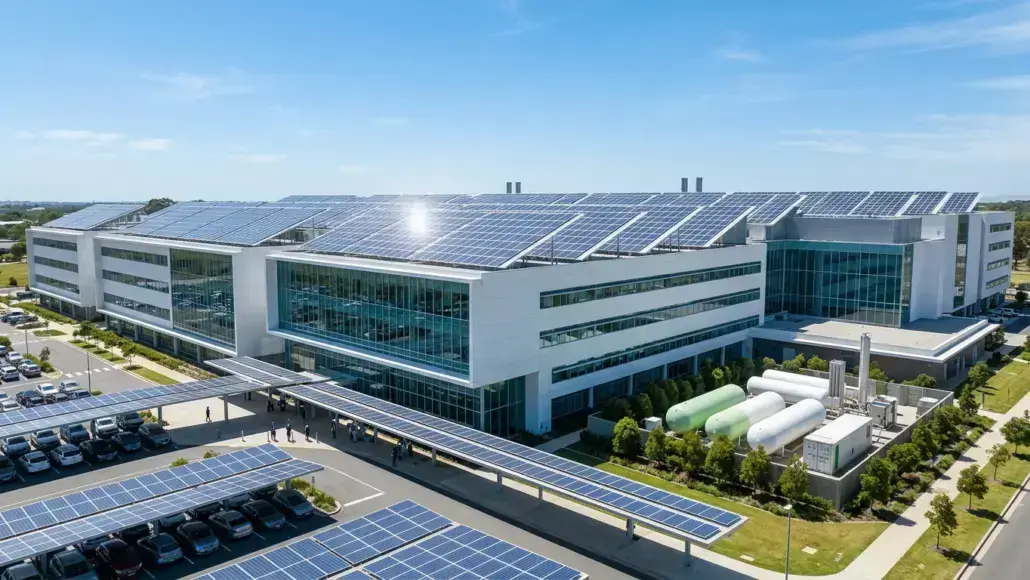

Soon, hospitals may be able to light their buildings with the power of the sun and a little help from AI. Scientists have gone ahead and developed a new renewable energy system for hospitals that combines solar energy, hydrogen storage as well as oxygen production to provide a steady, sustainable energy supply for healthcare centers. The technology harnesses artificial intelligence to optimise performance in real time, reduce dependence on the grid and at the same time ensure critical hospital functions never lose power.
Connecting Energy Reliability as well as Sustainability in Hospitals
The building sector is responsible for an important portion of global energy consumption and carbon emissions. Hospitals, for example, make up the most energy-intensive facilities and require very reliable and uninterrupted power.
The intermittent nature of solar power limits its potential to independently meet hospital demands, creating a consistent gap between the demand and supply of energy.
Previous studies have looked at hybrid energy systems with solar and batteries or hydrogen storage. These systems boost efficiency and lower emissions, but most of these approaches focus on system sizing or static optimisation. Real-time control and dynamic operation are frequently overlooked, which are the keys to high reliability in healthcare scenarios.
This study intends to address this limitation by designing an integrated solar-hydrogen energy system with AI-based optimisation. The system is composed of photovoltaic panels, an electrolyser, and hydrogen storage along with a fuel cell integrated into a single framework. A supervisory control algorithm controls the energy flows in real time, giving priority to solar usage and ensuring the system’s stability and reliability. The design strives to minimise costs and emissions and strengthen energy resilience.
The results show that the system enhances the overall energy performance and the co-production of medical oxygen throughout hydrogen generation. This extra functionality makes it more useful for healthcare applications. In the end, the study points out how intelligent energy management can contribute to the move towards hospitals with near-zero energy consumption.
System Design AI Optimisation Simulation
In this study, a holistic simulation-based framework is used for precise and consistent assessment of the system. It incorporates building energy modelling, renewable energy system simulation and sophisticated optimisation techniques into one single workflow. The first step involves the creation of a model of a hospital building in OpenStudio and EnergyPlus based on the standards of the U.S. Department of Energy.
The model predicts explained energy demand profiles, including heating, ventilation and air conditioning – HVAC operations, medical equipment loads, along with occupancy profiles. It indicates a multi-floor hospital, and it determines the hourly energy demand for a full year to account for realistic operating conditions.
Then the renewable energy system for hospitals is modelled through the use of Transient System Simulation TRNSYS. It comprises photovoltaic panels, an electrolyser, a fuel cell, hydrogen storage tanks, and oxygen storage units. Solar energy is the main power source throughout daylight hours. The system electrolyses the excess electricity into the gas and stores it for use later. As solar generation decreases, the fuel cell transforms the hydrogen back into electricity so as to keep the energy flowing.
System operation is governed by a supervisory control algorithm. It prefers direct use of solar, hydrogen storage, and then grid electricity as a fallback. The study results in a dataset based on Sobol sampling and TRNSYS simulations for optimisation. An artificial neural network undergoes training as a surrogate model in terms of system performance prediction. Then a genetic algorithm scans optimal configurations so as to balance cost and carbon emissions as well as system reliability.
Performance, Energy Balance and Efficiency
The integrated system works well in the Beijing climate. The model is validated against continuing research and experimental data, and the deviation in photovoltaic performance is less than 4%, which indicates the reliability of the model. The system reduces dependence on the grid to a great extent. Photovoltaic panels cover 45.22% of the total electricity demand, while hydrogen storage covers 32.84%. The grid only accounts for 21.94%; thus, the system is operated with more than 78% of the hospital energy demand supplied from renewable sources.
The system performance is highly dependent on seasonal variations. Solar generation is highest in summer, when the radiation is higher and the daylight hours longer, but it falls off sharply in winter. Hydrogen storage may make up for this fluctuation by providing stored energy, guaranteeing a constant and stable power supply regardless of low solar periods. Also, the system reacts well to altering energy demand. Electricity consumption rises in the summer months with increased cooling needs and falls in the winter months with the use of other sources of heat. The hybrid configuration efficiently handles these fluctuations, and stability of the system is maintained.
In addition to supplying energy, the system offers an important healthcare advantage by producing oxygen. The electrolyser generates medical-grade oxygen and hydrogen, enabling thousands of oxygen cylinders to be produced annually.
The optimisation results show the benefits of AI-based control. The optimised configuration consists of a large number of photovoltaic panels and correctly sized electrolyser and fuel cell units. The result is lower operating costs and a big reduction in CO2, estimated at some 2000 tonnes per annum. Overall, the results show that the combination of solar energy, hydrogen storage and AI-based optimisation provides a reliable, efficient and sustainable energy solution in terms of hospital applications.
AI & Hydrogen for Hospitals with Near-Zero Energy
The present study shows the significant potential of the integrated solar-hydrogen systems in healthcare applications. The blend of PV generation, hydrogen storage and smart control is a robust and dependable energy solution. It reduces carbon emissions significantly and reliance on fossil fuels.
A major contribution of this study is the use of AI-driven optimisation. The method combines neural networks as well as genetic algorithms to overcome the shortcomings of traditional simulation methods. It allows designing systems faster, improving precision and making effective real-time decisions.
The system adds value by generating medical-grade oxygen, too. The electrolyser also produces oxygen, which will increase the hospital’s self-sufficiency and support critical health care. This ability is particularly critical during times of emergencies or supply interruptions, such as natural disasters or pandemics, when access to medical-grade oxygen may be compromised.
This research contributes to the trend towards sustainable buildings and low-carbon infrastructure. It showcases the application of advanced energy systems in essential amenities such as hospitals. The fact is that AI-optimised solar-hydrogen systems represent an encouraging path to near-zero energy hospitals. They boost energy security, decrease ecological effects and support healthcare robustness.