

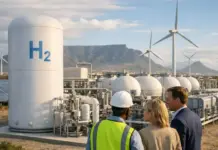

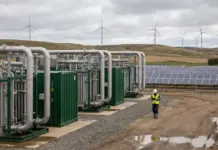

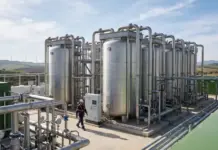

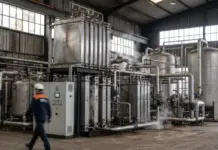
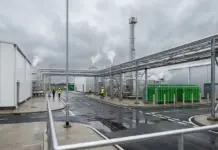






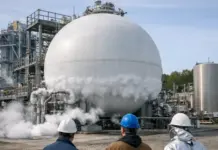

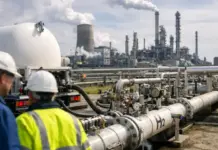
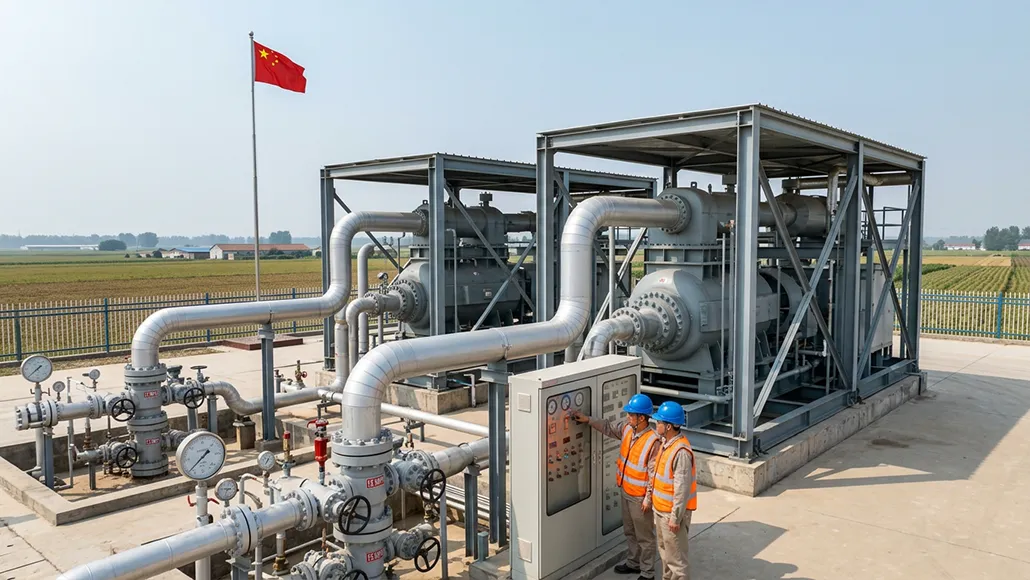

China’s first demonstration project of salt cavern hydrogen storage at the million-cubic-metre level has now officially gone into full operation in Pingdingshan, central China’s Henan Province, bringing in a new phase of industrialisation of the country’s hydrogen energy chain. Salt cavern hydrogen storage is an important technology to end the bottleneck of large-scale hydrogen storage and transportation and to promote the construction of a new energy system, said Yang Chunhe, one of the academicians with the Chinese Academy of Engineering, at the commissioning ceremony of the project that took place on April 25, 2026.
The project was carried out based on the high-quality salt rock resources of a gas storage and salt chemistry company in China Pingmei Shenma. The most important technological breakthroughs were spearheaded by the Institute of Rock and Soil Mechanics of the Chinese Academy of Sciences, alongside the participation of China National Petroleum Corporation – CNPC and China Petrochemical Corporation – Sinopec in design and construction.
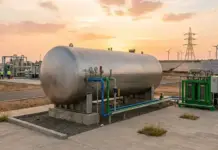
As per Liang Wuxing, China Pingmei Shenma’s deputy chief economist, the project aims to build a salt cavern with a water-soluble volume of over 30,000 cubic meters along with a hydrogen storage capacity of 1.5 million standard cubic meters.
Currently, the project utilises two compressors in order to inject hydrogen at a pressure of 15 MPa and at a flow rate of 2,000 standard cubic meters per hour. According to Yang, the project has confirmed the long-term sealing capability and engineering feasibility of hydrogen storage in layered salt rocks.
The project’s engineers have pledged to investigate further possibilities when it comes to large-scale hydrogen power utilisation and proactively encourage diversified application scenarios like hydrogen-blended natural gas, hydrogen-powered heavy-duty trucks as well as hydrogen-fired boilers.