









In March 2026, China’s Ministry of Industry and Information Technology – MIIT, the Ministry of Finance – MOF, and the National Development and Reform Commission – NDRC all started a large-scale integrated hydrogen energy pilot program. In this four-year program, around five city clusters are going to compete for performance-based subsidies of almost 1.6 billion yuan each. The goal is to move from standalone trials to large-scale, multi-sector commercialization, which will lower costs for end users and at the same time also increase demand when it comes to transport and heavy industry.
Pilot Structure and Investment
Based on the local industrial structure, renewable resource endowment, and present hydrogen infrastructure, along with policy support, this integrated hydrogen energy pilot program picks five city clusters through a fair and open process. Individuals who want to apply, whether they are part of a state-backed consortium or a private company, must show that they are ready throughout the hydrogen value chain. Winners go through a four-year trial phase, during which the central government gives them rewards determined by certain results. Every year, third-party auditors will check on progress through looking at documents and visiting sites. They will give out credits valued at 80,000 yuan each. To be eligible, funds must be used for projects that span hydrogen production, compression, storage, and distribution, as well as end-use. This will make sure that every segment of the industry grows at the same rate.
The goal of this integrated hydrogen energy pilot program is to build integrated hydrogen hubs that can power everything from fuel cell vehicles to low-carbon steelmaking along with chemical manufacturing by way of pooling resources as well as incentives.
Targets for Cost and Deployment
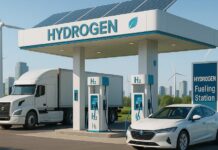
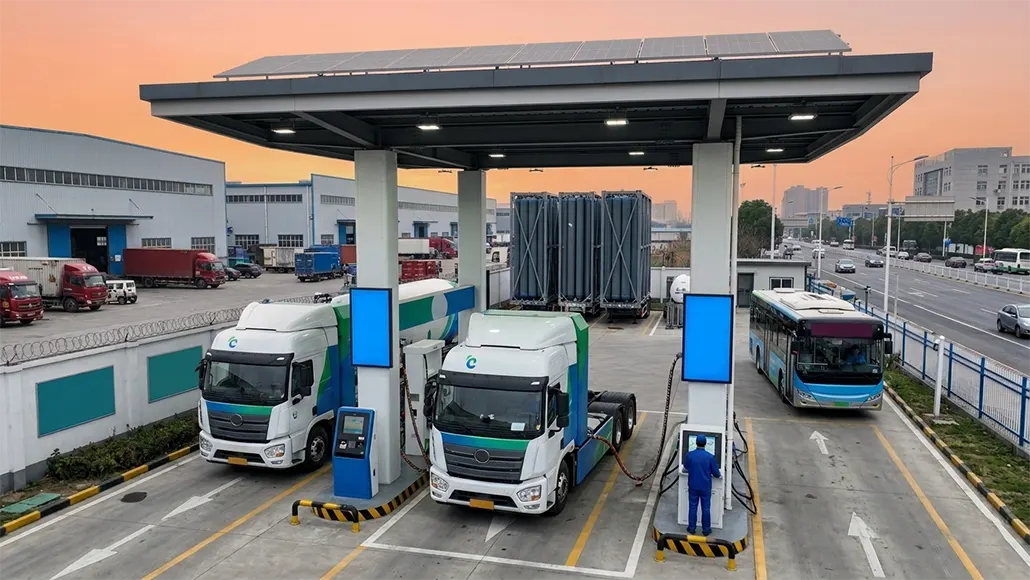
One of the main goals of the pilot is to lower the average cost of producing and delivering hydrogen. By the end of the decade, clusters should bring terminal prices down to less than 25 yuan for every kilogram, and areas with many resources should aim for prices around 15 yuan per kilogram. Beijing wants to almost double its fleet of fuel cell vehicles – FCEVs that were around 40,000 at the end of 2025 to roughly 100,000 by 2030. It will focus on heavy-duty trucks, buses, and cold-chain logistics, where quick refuel times of hydrogen fuel cells are an obvious benefit. The goal is to start a virtuous cycle in which lower costs as well as more vehicles help each other.
Applications in Multiple Sectors
The pilot covers six main areas –
- Fuel cell vehicles along with networks for refueling.
- Electrolysis making green ammonia and methanol.
- A chemical feedstock that can replace hydrogen from fossil fuels.
- Hydrogen metallurgy when it comes to low-carbon steelmaking.
- Mixing hydrogen in combustion applications.
- New tests such as hydrogen rail traction and marine propulsion, as well as energy storage.
Strategic point of view
This whole thing is part of China’s two carbon objectives – to reach peak emissions by 2030 and to be carbon neutral by 2060. The 2021–2035 medium-to-long-term plan initially mentioned hydrogen as a strategic area. Then, in late 2024, the government went ahead and gave a detailed order so as to speed up the use of clean hydrogen. It is well to be noted that in the 2026 Government Work Report, hydrogen was officially named a new growth driver. The 15th Five-Year Plan – 2026–2030 went even further, calling it a future industry. Interestingly, the series of policy nods demonstrates how serious Beijing is about adding hydrogen to the energy mix of the country.
As per the official numbers, Chinese manufacturers now make more than half of the electrolyzer output in the world. By the end of 2025, they already have projects with financial investment decisions – FID worth over 10 GW. The amount of green hydrogen capacity is about 250,000 tons per year. Adding about 40,000 fuel cell cars and the world’s largest network of refueling stations, which is an important part of a strong hydrogen infrastructure, goes on to create an ecosystem that is big enough to change global supply chains and set new standards. In short, China’s size is not just impressive, but it is also altering the rules of the game, and that too on the world stage.
Balance supply and demand
Supply has grown quickly however, when we talk of demand, it is still behind because cheaper grey hydrogen is still in charge without subsidies. This pilot fills that gap by lowering costs and making sure that there is enough demand via FCEV expansion and industrial substitutions. This will initiate the process of decarbonizing industry. It also makes use of electrolysis to store extra wind and solar energy in places having a lot of resources. This goes on to make the grid even more stable and gets more value out of the renewable energy.
Implications and risks for the industry
Central funding to make early hydrogen projects less risky, along with strict metrics for assessment that only reward real, measurable progress, have made things clearer as far as equipment makers, energy companies, and logistics operators are concerned. The pilot’s crystal-clear scoring system links every subsidy yuan to real results, whether one is building electrolyzers in a workshop or managing a fleet of hydrogen-powered trucks. As production increases and unit costs go down, domestic suppliers pertaining to hydrogen fuel cells and high-pressure storage vessels, as well as compression systems, are going to benefit.
Main possible advantages
- Economic growth – New industrial clusters and jobs, along with help for local manufacturers.
- Environmental benefits – When clusters use green hydrogen, they do not release hundreds of millions of tons of CO₂.
- Grid flexibility – Storing hydrogen for a long time by way of using extra renewable energy.
- New technology – Faster research and development in storage systems and fuel cells, as well as electrolyzers.
Some important risks to keep an eye on
- Making sure that subsidies are made use of wisely and that progress is reported honestly.
- Putting green hydrogen first so as to stay on track with decarbonization objectives.
- Following stringent safety and hydrogen infrastructure rules.
- Bridging the regional gaps so that it can be replicated all over the country.
Comparisons on a global and local level
It is worth noting that Europe and the US are focusing on hydrogen valleys through certain areas and planning huge gigafactories. The performance-driven model of China stands out because it links central subsidies directly to the specific deployment metrics. This sort of a mix of ownership and size could be a model for other countries that want to speed up the building of large-scale hydrogen infrastructure without sacrificing oversight. Policymakers all over the world might get new ideas on how to combine fast growth alongside strict performance checks.
Applications are open at present, and cluster selections will be made in the next few months. If these first five areas meet their goals for cost and deployment, as well as technology, they will serve as examples for a larger national rollout. This will solidify China’s position as a leader in the global hydrogen economy and at the same time set new, high standards in terms of integrating large amounts of sustainable energy and also decarbonizing the industry.