


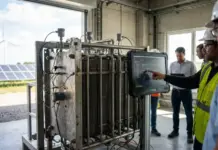
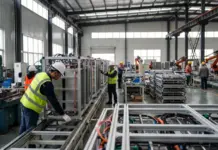


Nel ASA and Rheinmetall AG have entered into a Memorandum of Understanding – MoU to examine joint possibilities for decentralized renewable fuel production in support of critical infrastructure as well as energy security. The partnership will combine electrolyzer technology of Nel with Rheinmetall’s Giga PtX concept and systems-integration knowledge to evaluate flexible, scalable, modular solutions when it comes to the local production of low-carbon synthetic fuels for defense and critical infrastructure use cases.
It is well to be noted that Rheinmetall is actively looking for and confirming strategic alliances with local champions in specific markets for the Giga PtX project. This great progress is being built upon, and Rheinmetall is broadening its robust partner alliance with Nel as far as the Norwegian market is concerned.
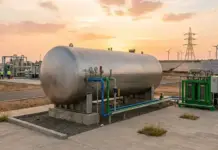
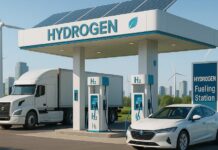
The parties will investigate the implementation of decentralized synthetic fuel production using renewable hydrogen produced by electrolysis, which will allow the production of synthetic fuels that can replace traditional fuels without alteration of end-user applications. These fuels can be produced closer to the point of use, reducing reliance on centralized production and long, fragile supply chains. The partnership aims to enhance energy security and readiness by establishing a more decentralized fuel supply system by means of the deployment of modular fuel production closer to demand centers.
Interestingly, Nel will contribute its electrolyzer technology for renewable hydrogen production, and Rheinmetall will offer its Giga PtX concept, systems-integration skills, and expertise in strategic planning infrastructure.
In an era of rising geopolitical tension, trustworthy access to fuels is an increasingly crucial aspect of national preparedness. Long, centralized logistics chains supply refined products as many countries are still dependent on imported fuels. Manufacturing fuels closer to where they are used may also decrease the risk of interruptions and improve energy security at both national as well as regional levels. This challenge is particularly visible in Norway. With only one refinery functioning, the country exports large quantities of crude oil to Europe to be refined before refined products are shipped back for domestic consumption. In times of disruption this could leave essential elements of the fuel supply chain reliant on infrastructure outside of national control.
The longer and more exposed the fuel supply chains of a country, the greater the uncertainty.
According to the CFO of Nel, Kjell Christian Bjørnsen, “Countries that depend on long and vulnerable fuel supply chains face increasing uncertainty. We believe renewable hydrogen can play an important role in enabling more resilient fuel systems while reducing emissions. Through this collaboration with Rheinmetall, we are exploring how our technology can be integrated into new value chains for synthetic fuels.”
It is worth noting that Rheinmetall has profound industrial expertise in the areas of defense and advanced systems engineering as well as infrastructure development and sees enormous potential when it comes to fuel ecosystems of the next generation.
Says Head of Hydrogen Program of Rheinmetall AG, Shena Britzen, “The transformation of energy systems requires new partnerships across industries. By working with Nel, we are exploring decentralized synthetic fuel solutions that can support both civilian and defense-related needs. We see localized synthetic fuel production, enabled by electrolysis, as an important element in strengthening energy security and future fuel supply chains.”
Norway is a natural starting point with its robust renewable power base and industrial capabilities along with ongoing development of carbon capture and utilization value chains, although the scope of the cooperation is not limited geographically.
Norway’s energy system is not so much characterized by a lack of electricity generation as by bottlenecks in transmission as well as distribution. Decentralized renewable fuel production can very well help renewable energy to be converted and made use of closer to the source, adding more flexibility to the way renewable power resources are used and potentially relieving pressure on existing infrastructure.
As per the MoU, Nel and Rheinmetall will jointly evaluate technical and commercial viability, including locations, infrastructure, ability to access renewable power, sustainable carbon sources, and priority use cases.
Cooperation could include pilot projects for the validation of modular concepts and the demonstration of the viability of decentralized fuel ecosystems. The fact is that the MoU is non-binding, and further actions would require mutual agreement as well as regular assessments.