







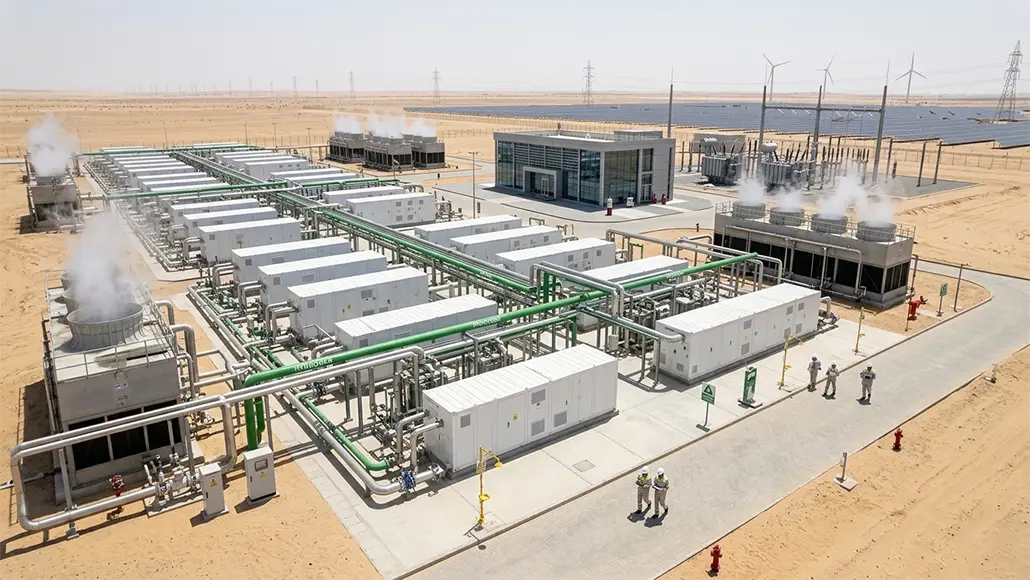

As the world looks for cleaner fuels when it comes to heavy industry, shipping, and power generation, Saudi Arabia is trying to become a major exporter of green hydrogen.
The Neom Green Hydrogen Co. is at the center of this effort. It is a joint venture building what is anticipated to be one of the largest green hydrogen production facilities in the world in Neom, along the Kingdom’s Red Sea coast.
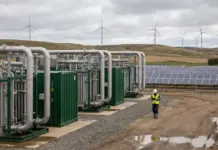
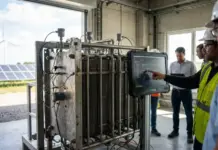
The project will make use of solar and wind farms in order to make hydrogen by way of electrolysis. This hydrogen will then be turned into green ammonia, which will be sent to markets all over the world.
According to the CEO of Neom Green Hydrogen Co., Wesam Al-Ghamdi, the project is based on long-term export agreements that will help create a global hydrogen market.
He adds, NGHC’s green hydrogen output is fully committed under an exclusive 30-year offtake agreement with Air Products, which will take 100 percent of the production and export it to global markets in the form of green ammonia.
This setup makes sure that all of the hydrogen made is going to be sold via long-term contracts as opposed to short-term spot markets.
Al Ghamdi further says that, Air Products manages the downstream marketing and global distribution, providing long-term commercial certainty across the value chain.
It is increasingly realized that hydrogen is an important part of the global energy transition because it can decrease emissions in areas that are hard to electrify. These involve steel production, manufacturing of chemicals and fertilizers, maritime shipping, as well as certain types of power generation.
Al-Ghamdi said that the hydrogen markets that are growing the fastest are the ones that already have climate policies in place and infrastructure that can handle imports.
As per him, From an export perspective, markets that are progressing fastest tend to be those with clear decarbonization policies, advanced port and shipping infrastructure, and near-term demand in hard-to-abate sectors such as heavy industry, chemicals, fertilizer, power generation, and maritime transport.
He also said that NGHC’s job is to make sure that these new markets have a steady and large supply to help them grow.
NGHC’s role in this ecosystem is to deliver large-scale, reliable supply that can support these emerging markets as they mature, remarked Al-Ghamdi.
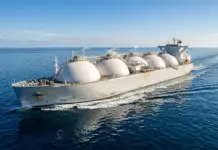
Transporting hydrogen over long distances is very difficult because it is not very dense and hard to store. The Neom project solves this by turning hydrogen into ammonia before international shipping.
Said the top executive, Our project is designed to transport green hydrogen in the form of green ammonia, which is a highly dense, carbon-free hydrogen carrier that is easier to transport and store than hydrogen.
This choice reflects both technical and logistical considerations at scale, particularly for long-distance maritime transport.
It is well to be noted that ammonia can be shipped using standard global practices, which makes it one of the most effective current methods to export hydrogen.
Al-Ghamdi says that ammonia allows hydrogen to be shipped using established global shipping practices, which is critical for enabling early international trade.
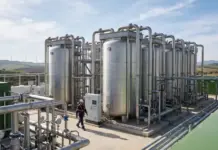
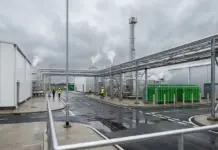
The Neom facility is also going to include specialized infrastructure so as to handle the exports of ammonia.
The project also includes dedicated infrastructure, including an export jetty, specifically designed for ammonia handling and shipping. Al-Ghamdi opines.
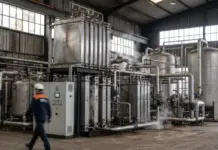
Once completely functional, the facility is anticipated to be one of the largest green hydrogen plants based in the world.
As per Al-Ghamdi, At full operations, NGHC will produce up to 600 tonnes per day of carbon-free hydrogen, exported as up to 1.2 million tonnes of green ammonia annually.
Forecasts when it comes to global demand say that hydrogen could become a major traded energy commodity in the upcoming few decades. But analysts warn that many projects may stop moving forward if there are no buyers.
According to Al-Ghamdi, The project is anchored in long-term contractual arrangements rather than spot market exposure. This long-term offtake structure underpins the project’s bankability, supports investment at scale, and reflects the importance of stability in scaling first-of-a-kind hydrogen infrastructure.
The plant will be powered through a large-scale renewable energy system that combines both solar and wind power.
He adds that The project’s 4 GW solar and wind power generation sites are expected to be completed by mid-2026, followed by commissioning of the electrolyzers, with expected product availability in 2027.
These milestones will give the time that is needed for training the workforce, testing operations, and also validating the system before full-scale production commences.
Saudi Arabia is viewed as an ideal spot for producing a considerable amount of hydrogen because of its natural resources as well as strategic location and eyeing to become a major exporter of green hydrogen doesn’t come as a surprise.
Al-Ghamdi remarks, Saudi Arabia’s emergence as a global hydrogen exporter is firmly anchored in Vision 2030, which sets out a clear national pathway toward economic diversification, clean energy leadership, and achieving net zero by 2060.
The Kingdom happens to have immense solar and wind resources, which makes it possible to make renewable energy at low costs.
The Kingdom is uniquely positioned due to its abundant natural resources, particularly world-class solar irradiation and strong wind profiles, which enable large-scale renewable energy generation at a competitive scale, Al-Ghamdi added.
The Neom location of the project also gives it direct access to important shipping routes.
As per Al-Ghamdi, At the crossroads of global trade, our project’s location at Neom and by the Red Sea provides unparalleled strategic advantages, connecting our plant directly to major shipping routes across the Middle East, Africa, Europe, and Asia.
Even though the hydrogen industry is growing, it still has challenges, such as building supply chains and infrastructure, as well as a skilled workforce.
As a nascent industry, and like any emerging sector, green hydrogen will face both challenges and opportunities as it transitions from early ambition to large-scale industrial deployment. Scaling hydrogen as a traded commodity requires alignment across the full value chain, from renewable power generation and electrolysis to conversion, shipping, and long-term offtake.
NGHC is also helping with initiatives in order to train the workers who will be required to operate hydrogen facilities.
Al-Ghamdi remarks that Through initiatives such as the Kingdom’s first specialized vocational training program in renewable energy and green hydrogen and academic partnerships in the Tabuk region, NGHC is helping address critical barriers to scale: the skilled workforce and operational excellence required to sustain global hydrogen trade.
If the project works, it could as well demonstrate how hydrogen can be made and sold on a large scale, which would help cut down on emissions throughout the world.
The top boss finally adds, Our green hydrogen facility will contribute to the Kingdom’s clean energy and circular carbon economy strategy, as well as deliver on Saudi Vision 2030’s economic development goals.