






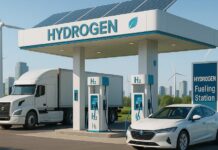
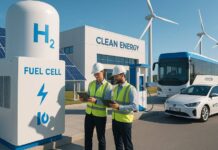
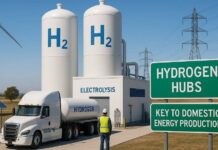

If one has been paying attention to the green hydrogen trend in Europe, they probably would know that Occitanie has slowly developed into one of the best places to be.
It is well to be noted that the region started its green hydrogen plan in 2022. Now, a dream team comprising Airbus and Safran, as well as Genvia, is going to be working with the Occitanie Region, CNRS, the University of Toulouse, as well as ONERA so as to build what is going to be the biggest green hydrogen testing center in Europe based at Francazal Airport near Toulouse.
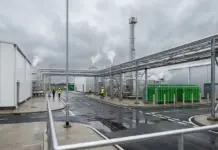
Apparently, the site just got the go-ahead from the environment and the general public. It will include everything right from making and storing hydrogen to innovative hydrogen propulsion and also hydrogen testing benches, all with the hope of making aviation and beyond less carbon-intensive.
Scale – It will cover 10,000 to 15,000 square meters in two phases, starting in 2027 and reaching full speed by 2026.
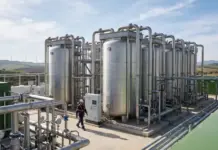
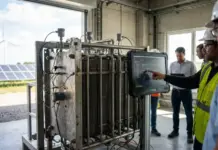
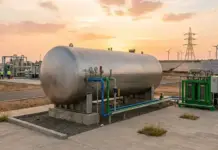
Major Activities – Include water electrolysis, high-pressure hydrogen storage, and tests of both fuel cells as well as combustion-based propulsion.
Collaborators – Genvia, Airbus, Safran, the Occitanie Region, the University of Toulouse, CNRS, and ONERA, along with equipment companies such as Liebherr and Vitesco Technologies.
Regional coordination – Will be a key part of the Green Hydrogen Plan from Occitanie and the €110 million H2 Corridor when it comes to heavy-duty transport.
Effect – It will help create research and development jobs, enhance hydrogen infrastructure throughout France, and indicate that hydrogen aircraft prototypes are viable.
Project Scope along with Facilities
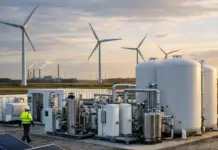
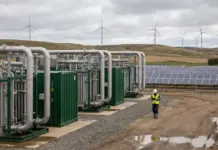
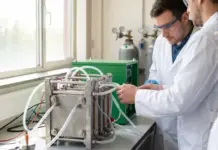
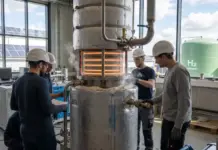
Just picture a campus where you can plug into halls that are powered by solar and wind energy for high-temperature electrolysis, roll into advanced compression as well as storage areas, and then turn on the dynamic test benches that operate like real flight and engine loads.
That’s what the biggest green hydrogen testing center in Europe is all about – the perfect link between small-scale hydrogen production tests as well as full-blown pilot demonstrations, and that too without even leaving the site.
Occitanie’s History
The fact is that Occitanie didn’t just wake up one fine day and decide to go this way. Interestingly, they have been working on green hydrogen since 2022. The Hyport incubator for mobility startups, along with the Lhyfe electrolyzer pumping out 2 tonnes of H₂ a day, in addition to the Hyd’Occ plant striving for 16 tonnes a day, were some of the first successes it had. The H2 Corridor has included places for trucks and buses in order to refuel, and even the HydrOmer dredger has received a hydrogen upgrade. It has indeed been quite a steady rise to this point.
Funding and Strategic Partnerships
It is well to be noted that a mix of regional money as well as EU support for hydrogen valleys is propelling all of these initiatives forward. Airbus, along with Safran, happens to have decades of experience when it comes to aerospace propulsion. Genvia, on the other hand, has its high-temperature fuel cell stacks, whereas research powerhouses such as CNRS, the University of Toulouse, and ONERA go on to add their lab know-how. Companies like Liebherr as well as Vitesco Technologies are gearing up to test new compressors along with control systems on the gear side.
Technology Focus
The main goal of Technocampus is to make hydrogen have no emissions by way of connecting electrolyzers to renewable energy sources. Thereafter, they go on to test both hydrogen fuel cells as well as modified combustion engines. Fuel cells, apparently, are indeed great for short flights, whereas combustion-based turbines are better when it comes to bigger jets. The point is that it’s all about making sure that the industry is indeed ready for anything.
Ecosystem and Regional Impact
It is worth noting that Occitanie is more than just a dot on a map, as it has over 6 million people living there along with a strong aerospace network. This new hub apparently makes use of the present supply chains and also a large pool of skilled workers. The local value chain, which goes on to include everything right from electrolyzer makers to engine integrators, gets a big boost as an umpteen number of R&D jobs are created and all kinds of component suppliers go on to come together. Additionally, connecting to regional renewable projects happens to mean that the hydrogen made here meets all the key needs when it comes to sustainable energy.
Creating Value for Industry in the Long Run
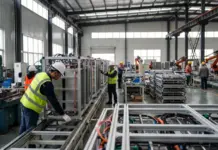
Having a massive, home-field testbed seriously cuts down on development time and makes certification steps much less of a risk for big companies such as Airbus and Safran. Genvia goes on to get valuable information as well as to how its stacks work in real-world aviation cycles and equipment vendors happen to test new compressors and control setups.
One can indeed go on to call the Technocampus a one-stop shop for research and development, right from hydrogen molecules to propulsion analytics.
Things to think about and problems
Let’s be honest – making the jump to full-size planes is never easy. It goes on to depend on a consistent supply of renewable energy and storage solutions, which cannot be broken. To keep everything running smoothly, grid upgrades, local permitting that’s easy, and ongoing community conversations are going to be very significant. Be it noise, safety, or transportation logistics – all need to be watched and that too at the time, especially since people will look forward to knowing that their airspace is not becoming an endless test zone.
Marching Forward
Notably, the first phase is going to begin in 2027, and all of it will be done by 2026. That apparently goes on to fit perfectly with the dream of hydrogen-powered regional planes landing in the early 2030s, which would indeed be a great test when it comes to manufacturers. And as the EU goes on to push for a pan-European hydrogen backbone, Francazal’s Technocampus could as well become a template for hubs across the world.
The Hydrogen Technocampus at Francazal is indeed more than just a place to test as it is an actual instance of how smart public-private teamwork can accelerate the process of getting rid of carbon within the industry. If everything goes well, one can soon see hydrogen not just fueling buses and trucks, but also going ahead and powering planes.