
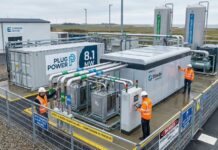
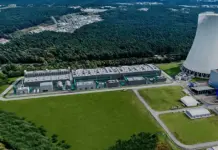



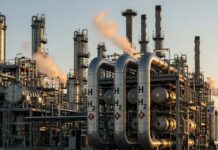
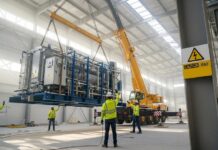
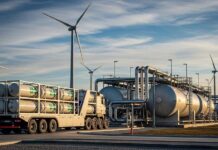









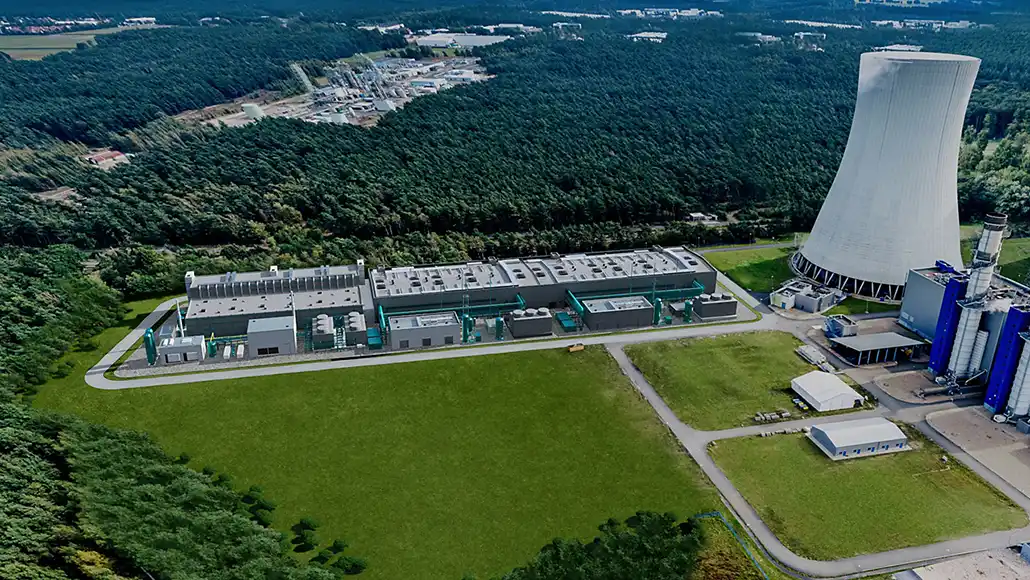

RWE, which is Germany’s largest power producer, has started commissioning the first 100 MW of electrolysis capacity at its Lingen site, hence representing a major landmark for what is set to become the largest green hydrogen plant in Europe. The facility goes on to form the initial phase of the 300 MW GET H2 Nukleus project, which is located at the existing gas-fired power plant in Lower Saxony of RWE.
The company says that the commissioning of the first phase is still underway, with commercial operations targeted for 2026. Once completely built out, the Lingen project will deploy 200 MW of PEM electrolyzers from ITM Power in addition to 100 MW of alkaline electrolyzers that are supplied by Sunfire, thereby bringing total capacity to 300 MW by 2027. When functional, the plant will be almost twice the size of the present largest electrolyzer in Europe, which is the 54 MW PEM facility brought online by BASF located in Ludwigshafen earlier in 2025.
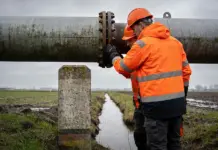
It is worth noting that this upcoming largest green hydrogen plant in Europe has already secured a long-term demand. In March 2025, the utility signed a 15-year offtake agreement with TotalEnergies of France to supply 30,000 tonnes per year of green hydrogen to the Leuna refinery of the company starting in 2030. The hydrogen is going to be transported through a 600 km pipeline, forming part of the emerging hydrogen core network in Germany, where it is going to displace fossil-derived hydrogen, which is used in fuel production processes.
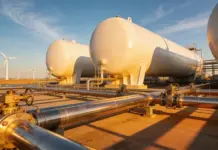
In order to manage the intermittency from renewable power, RWE looks forward to relying on booked capacity at its Gronau-Epe hydrogen storage cavern, which is all set to enter into operations in 2027. The maturity when it comes to both the GET H2 nucleus in Lingen as well as the hydrogen storage in Epe helped them to negotiate a 15-year offtake agreement along with TotalEnergies, remarked Sopna Sury, the chief operating officer for hydrogen at RWE Generation. RWE also moved early by ordering long-lead equipment and, at the same time, also starting preparatory works much ahead of the final government funding commitments.
But the timeline goes on to expose a familiar execution barrier. While the commissioning is still underway now and a complete production is anticipated in 2027, the Leuna offtake contract does not start until 2030, hence leaving a three-year gap wherein the hydrogen output is going to need to find alternative outlets. RWE has not disclosed how the volumes are going to be managed during that period or if interim offtake, storage, or curtailed operation is going to be used.