



























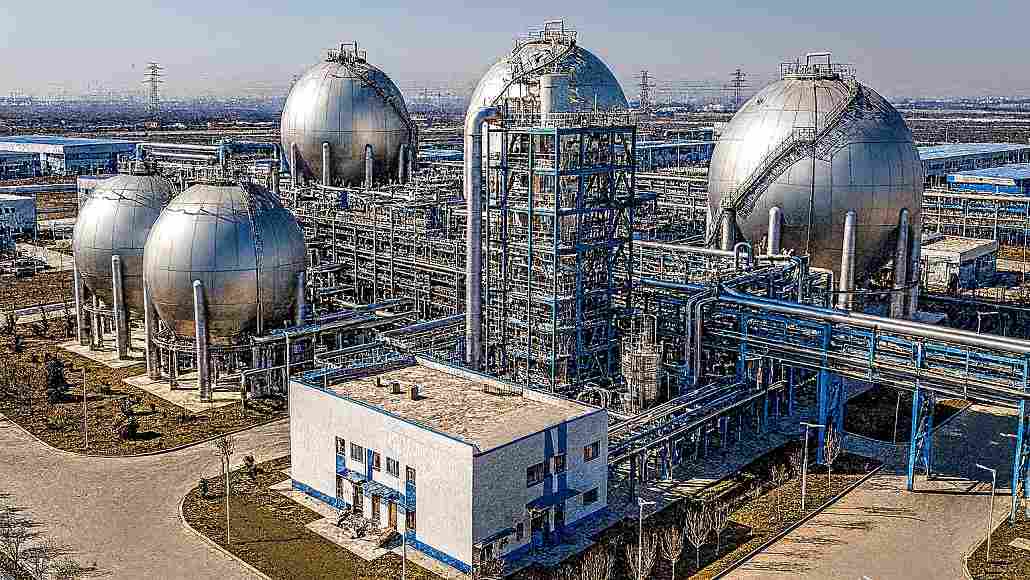

The Qilu Liquid Hydrogen Project has moved into mass production, now turning out 10 tons of liquid hydrogen each day with equipment and engineering support supplied by GUOFUHEE. It marks a key moment for the Qilu Liquid Hydrogen Project, which is noted as China’s first 10-ton-class liquid hydrogen facility built entirely with domestically developed intellectual property. GUOFUHEE says the achievement reflects years of continuous technical refinement and engineering work, forming the base upon which larger-scale liquid hydrogen development in China can grow and adding momentum to the wider hydrogen energy sector.
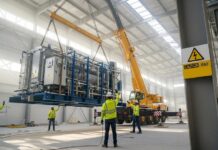
Project records show that GUOFUHEE advanced the effort through a series of stages. In May 2023, the company completed its core equipment package after working through several challenges specific to liquid hydrogen production. By May 2024, the systems had been delivered and installed at the Qilu Hydrogen Energy base in Zibo, Shandong, where the full operating sequence was commissioned. A panel of domestic liquid hydrogen specialists reviewed the setup and gave it the go-ahead. Once the team wrapped another cycle of optimization and steady-state testing, the project shifted into steady mass production, holding to its early pledge to deliver engineered capability and industrial output on time.
Performance indicators from the Qilu Liquid Hydrogen Project provide a snapshot of how the facility is performing at scale. The comprehensive energy consumption for liquefaction is reported at under 12 kW•h/kg-LH₂. Para-hydrogen content in the product exceeds 98.5%, and the purity reaches above 7N—figures that meet or surpass recognized international thresholds. These results support lower production costs and match the needs of downstream users, including fuel cell vehicle suppliers and semiconductor-grade gas applications. The plant’s operation is built around GUOFUHEE’s multi-stage pre-cooling hydrogen expansion refrigeration technology, and both the 20K hydrogen liquefaction cold box and the hydrogen expander carry independent intellectual property rights.
GUOFUHEE notes that the equipment design, with its compact form, stable operation, and heat-exchange performance, suits larger deployment scenarios. The mass production level reached at the Qilu Liquid Hydrogen Project is seen as an early marker for the hundred-ton-class liquid hydrogen projects expected to follow. It also aligns with China’s “West Hydrogen East Transmission” strategy, supporting long-distance movement of hydrogen and offering a model for peak-shaving and storage within pipeline networks. As liquid hydrogen moves deeper into applications tied to new energy, aerospace, advanced materials, and the low-altitude economy, the project is positioned to feed into wider industrial development and a new wave of emerging growth areas.