
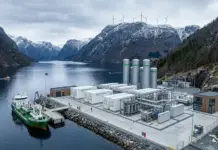


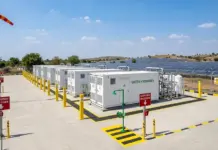

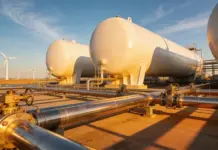


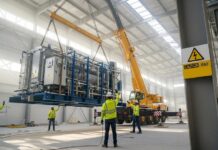









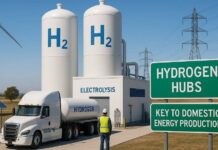


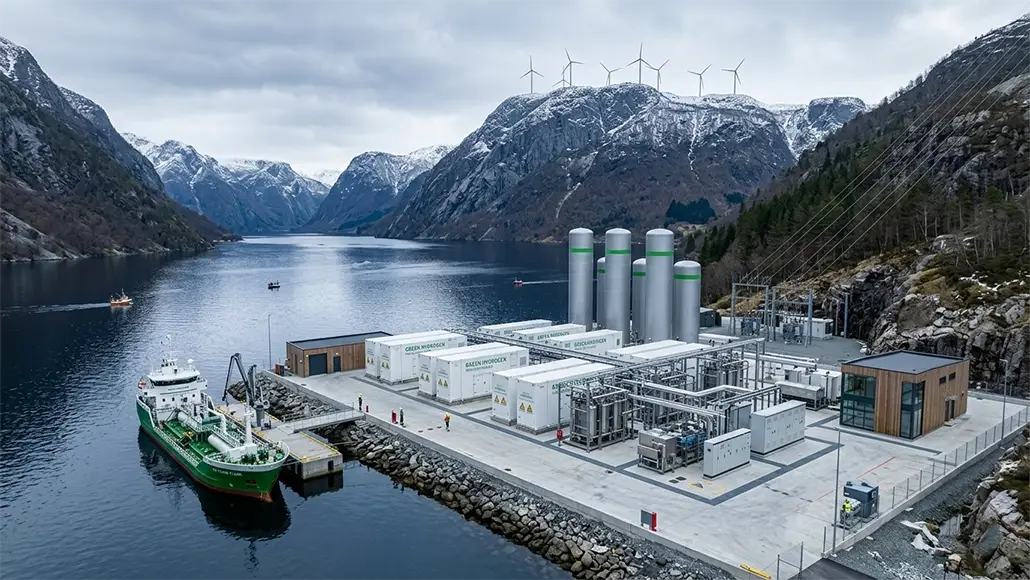

There is a new project that looks to increase the hydrogen production in Norway to 37,081 tonnes per year by the end of the decade.
Called NORHyWAY, the project happens to position Norway as a European leader when it comes to industrial hydrogen production, helping with emission reductions and also green competitiveness.
Andreas Bjelland Eriksen, the Norwegian minister of climate and environment, said that “This project is, in many ways, what has been missing to unlock the potential that exists in the next phase of the energy transition that we are about to enter. Hydrogen is going from something that people debate whether it’s good or bad to something the business community actively uses and depends on – both for climate commitments and for the development of jobs and industrial growth.”
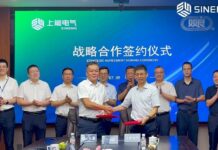
It is well to be noted that SINTEF is going to act as the R&D partner of the project so as to ensure that the research and innovation get translated into industrial uptake along with large-scale rollout.
Jumping the barriers that persist in hydrogen production in Norway
Hydrogen is most likely to play a significant role when it comes to decarbonizing sectors wherein direct electrification gets challenging.
But there are many barriers that still exist, such as a mismatch when it comes to production and demand and also regulatory uncertainty along with high expenditures.
NORHyWAY looks forward to overcoming these challenges through developing 4 complete local value chains that span the land-based transport and maritime sectors as well as the national power system, together having 16 industrial partners.
By doing so, the project looks to come up with a Norwegian hydrogen production capacity of 37,081 tons per year by the end of the decade. This corresponds to a yearly emissions reduction of almost 345,000 tonnes of CO₂, which is comparable to emissions from almost 8,000-10,000 flights between London and Oslo.
The project is the first large-scale hydrogen valley of Norway and is part of a European initiative in order to establish the local value chains that are based upon green hydrogen as a second option to fossil fuels.
Bridging the gap between development and execution
As the R&D partner of the project, SINTEF is going to help make sure that research and innovation activities stay relevant and effective, thereby leading to industrial uptake.
According to the senior business developer at SINTEF and technical coordinator for NORHyWAY, Kyrre Sundseth, “We have to bridge the infamous ‘valley of death’ between technological development and real-world implementation. NORHyWAY will seek to develop effective and scalable solutions across the whole Norwegian hydrogen value chain through collaboration between research, industry, and authorities.”
It is well to be noted that SINTEF has had an extensive collaboration with the hydrogen ecosystem of Europe for many years, as evidenced by an EU project portfolio that looks wide, including REFHYNE, H2Accelerate Trucks, and H2Glass.
Expansion of the hydrogen valleys throughout Europe
NORHyWAY goes on to represent an overall investment of around €963.3m, which includes €21m when it comes to funding from Horizon Europe.
Due to this project, SINTEF happens to move from being just a participant in European hydrogen initiatives to rather helping roll out large-scale industrial execution in hydrogen valley programme of Europe.
The EU looks forward to having 50 hydrogen valleys that would be functional or under development by the end of the decade.
The EVP of sustainability with SINTEF and also the director of FME HYDROGENi, Nils Røkke, opined that “The solutions in NORHyWAY will have high international transfer value. We see this in practice by connecting Norwegian efforts with European initiatives to accelerate the development towards a zero-emission society.”