
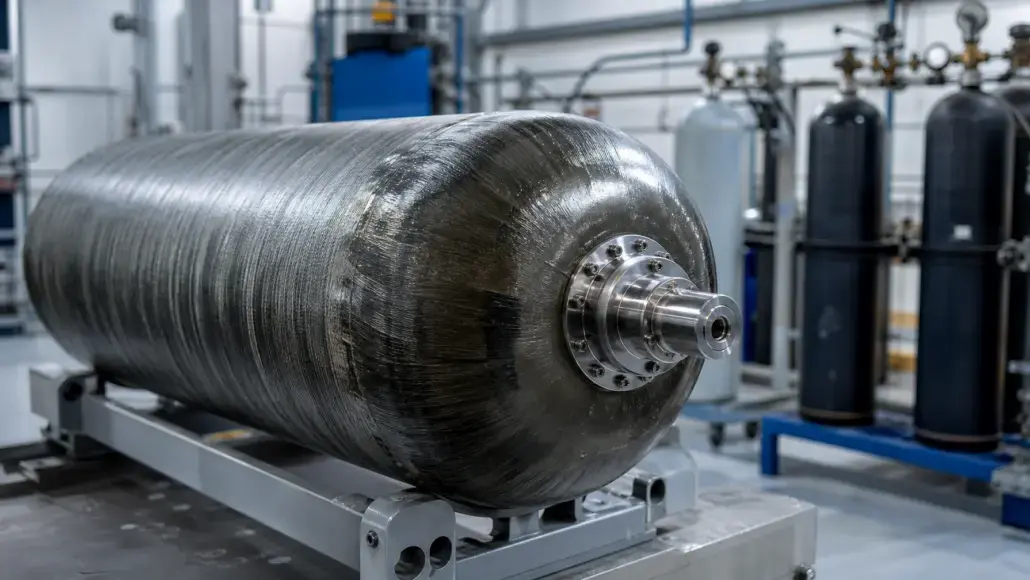

The widespread adoption of hydrogen in the transportation and industrial sectors requires storage solutions that can safely handle high pressures while minimizing weight and volume. Advanced materials are at the center of this challenge, as traditional steel tanks are often too heavy and prone to degradation under high pressure hydrogen service. The development of next generation storage vessels relies on the use of composite materials and specialized metallic alloys that can withstand pressures of 700 bar and above. These materials must not only provide structural integrity but also offer a high resistance to gas permeation and environmental stress cracking. As the industry moves toward commercialization, the optimization of these materials is essential for improving the overall energy density and economic viability of hydrogen storage systems. The physical properties of these substrates determine the functional boundaries of the entire energy carrier network.
Selecting the right combination of materials involves balancing mechanical performance, chemical compatibility, and manufacturing cost. Type IV pressure vessels, which feature a non metallic liner wrapped in carbon fiber composites, have become the standard for mobile applications due to their high strength to weight ratio. However, the production of carbon fiber is energy intensive and expensive, prompting researchers to investigate alternative fibers and resin systems. Additionally, the interface between the liner and the composite wrap is a critical point of failure that requires precise engineering. By advancing our understanding of material behavior at the microscopic level, the energy sector can develop storage systems that are safer, more durable, and more affordable for long term deployment. The transition toward these sophisticated structures represents a fundamental shift in pressure vessel engineering.
Carbon Fiber Composites and Structural Reinforcement Techniques
Carbon fiber reinforced polymers are the most critical high performance materials in the construction of modern high pressure hydrogen tanks. These composites consist of high strength carbon fibers embedded in a thermoplastic or thermosetting resin matrix. The fibers provide the necessary tensile strength to contain high internal pressures, while the resin protects the fibers and helps distribute the load. The performance of these tanks is largely determined by the winding pattern of the carbon fiber, which must be optimized to handle the multi axial stresses experienced during filling and discharge cycles. Automated filament winding technology allows for high precision in fiber placement, reducing material waste and improving the consistency of the final product. The structural efficiency of the winding pattern directly correlates with the burst pressure of the completed vessel.
Despite their performance advantages, carbon fiber composites present challenges regarding recyclability and long term durability. The resin matrix can degrade over time due to thermal cycling and exposure to environmental factors, potentially compromising the structural integrity of the tank. Researchers are exploring the use of bio based resins and recyclable thermoplastics to improve the environmental footprint of these storage systems. In addition, the development of hybrid composites, which incorporate glass or aramid fibers alongside carbon fiber, offers a way to reduce costs while maintaining acceptable performance levels. These innovations in composite technology are essential for scaling the production of hydrogen tanks to meet the growing demand from the automotive and heavy duty transport sectors. The long term fatigue life of these hybrid systems is currently a major focus of international testing protocols.
Polymer Liners and Gas Permeation Barrier Development
The inner liner of a Type IV storage vessel serves as the primary barrier against hydrogen gas permeation. Because hydrogen is the smallest and lightest molecule, it can easily diffuse through many traditional materials, leading to fuel loss and potential safety risks. Advanced materials for liners must possess exceptionally low permeability while remaining flexible enough to withstand the mechanical strain of pressure cycles. High density polyethylene and specialized polyamides are commonly used, but these materials still allow for some degree of gas diffusion at 700 bar. Improving the barrier properties of these polymers is a major focus of ongoing material science research. The choice of liner material also influences the thermal response of the tank during rapid refueling events.
One approach to reducing permeation is the incorporation of nano additives, such as graphene or clay platelets, into the polymer matrix. These additives create a tortuous path for the hydrogen molecules, significantly slowing down the rate of diffusion. Another strategy involves the use of multi layer liners, where a thin metallic or ceramic layer is sandwiched between polymer sheets to act as an absolute barrier. However, ensuring a strong bond between these dissimilar materials is difficult and requires advanced surface treatments. The successful development of high performance liners will not only improve the efficiency of high pressure storage but also reduce the requirements for ventilation and safety monitoring in hydrogen powered vehicles. The chemical resistance of these liners to trace impurities in the hydrogen stream is also being evaluated to ensure long term reliability.
Metallic Alloys and Hydrogen Compatibility Standards
While composite tanks dominate the mobile market, large scale stationary storage often utilizes metallic vessels. In these applications, high performance materials must be chosen based on their resistance to hydrogen embrittlement. Austenitic stainless steels and specific aluminum alloys are preferred because they maintain their ductility and toughness in the presence of hydrogen. However, these metals are heavier and more expensive than carbon steels, limiting their use to critical components like valves, fittings, and high pressure manifolds. The development of lower cost, hydrogen compatible alloys is a key priority for reducing the capital expenditure of hydrogen refueling stations and industrial storage hubs. The structural weight of these metallic systems remains a logistical challenge for regional distribution.
Material scientists are using computational modeling to design new alloys that are inherently resistant to hydrogen damage. This involves controlling the grain size, phase distribution, and alloying elements to prevent the accumulation of hydrogen atoms at critical stress points. For example, adding nickel or manganese can stabilize the austenitic phase of steel, improving its performance in hydrogen service. In addition, the use of specialized coatings, such as nickel plating or ceramic films, can provide an additional layer of protection for less expensive metallic substrates. As global standards for hydrogen compatibility continue to evolve, the rigorous testing of these new alloys will ensure the safety and reliability of the global hydrogen infrastructure. The standardizing of these metallic grades across different regions is essential for the growth of international energy trade.
Integration of Smart Sensors and Material Health Monitoring
The next generation of high pressure storage systems will likely incorporate advanced materials with integrated sensing capabilities. These smart materials can monitor their own structural health in real time, detecting early signs of fatigue, impact damage, or gas leaks. For example, optical fibers can be embedded directly into the carbon fiber wrap during the winding process to measure strain and temperature across the entire surface of the tank. This data provides operators with a detailed understanding of the tank’s condition, allowing for predictive maintenance and extending the useful life of the asset. The real time analysis of these signals requires sophisticated digital platforms capable of handling high frequency data streams.
The development of these integrated monitoring systems is particularly important for mobile applications, where tanks are subject to mechanical vibrations and potential collisions. By using advanced materials that can communicate their status, manufacturers can improve the safety of hydrogen vehicles and reduce the need for frequent manual inspections. Additionally, the data collected from these sensors can be used to optimize future tank designs, providing real time feedback on how different materials perform under real world conditions. The convergence of material science and digital technology will be a defining feature of the hydrogen economy, ensuring that high pressure storage remains a safe and reliable component of the energy grid. This integration also supports the broader goal of scaling hydrogen storage infrastructure to support renewable energy integration by providing the necessary data for large scale grid management. The automation of these health checks reduces the operational overhead for commercial fleet owners.
Future Research Directions in Lightweight Storage Solutions
Looking beyond current technologies, researchers are exploring even more advanced materials for the next decade of hydrogen storage. This includes the development of metal organic frameworks and carbon nanotubes that can store hydrogen through adsorption rather than high pressure compression. While these materials are still in the early stages of development, they offer the potential for much higher storage densities at lower pressures, significantly improving the safety and efficiency of the overall system. The primary challenge lies in scaling the production of these nanomaterials and integrating them into practical storage vessels. The thermodynamic stability of these adsorbed layers is a critical factor for commercial viability.
Another area of interest is the use of additive manufacturing, or 3D printing, to create complex tank geometries and graded material structures. This technology allows for the precise placement of different materials within a single component, optimizing the performance for specific load cases. For example, a tank could be printed with a higher concentration of carbon fiber at the domes, where stresses are highest, and a lower concentration along the cylindrical body. As the cost of additive manufacturing decreases and the range of printable materials expands, this technology will play an increasingly important role in the production of high performance hydrogen storage systems. By continuing to push the boundaries of material science, the energy sector can enable new possibilities for the storage and transport of clean energy. The synergy between material design and manufacturing process will define the next generation of energy hardware.