







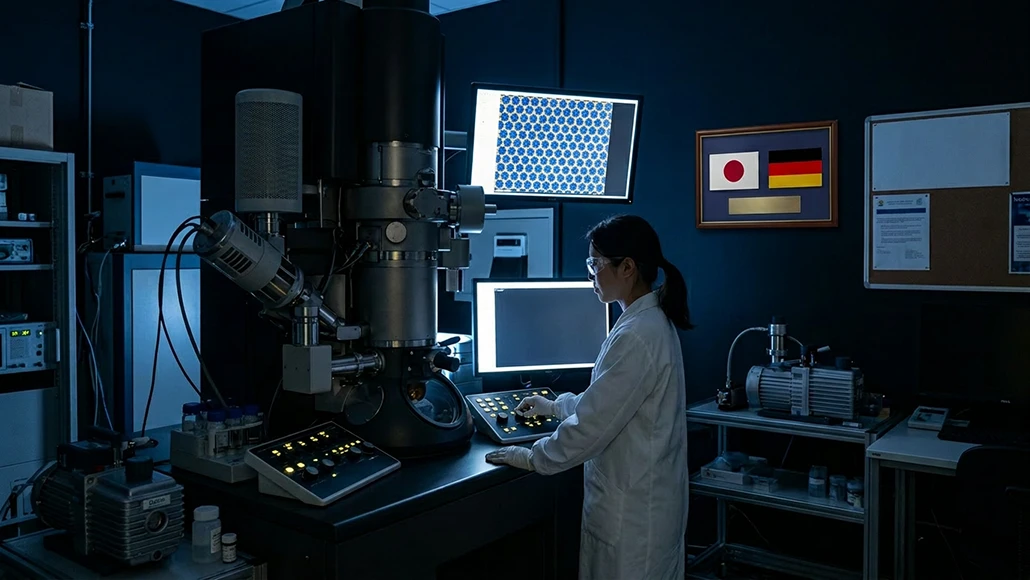

In April 2026, a team from the University of Yamanashi of Japan flew to Germany for a meeting at the Department of Chemistry at the University of Hamburg. With zero-emission tech in the spotlight, they want to leverage what Yamanashi has in nanomaterials with what Hamburg has in catalysis. The objective? Start working on Fuel Cell Nanomaterials and Hydrogen production.
Strategic Research Talks in Hamburg
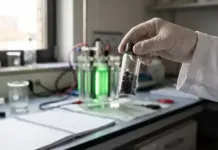
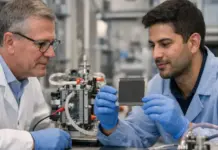
Rather than signing papers on the spot, the two sides spent their time rolling up their sleeves together, looking at ongoing projects and planning joint grant proposals. They brainstormed new alloy nanoparticles for faster oxygen reduction, refined ideas for high-performance membrane electrode assemblies, and also defined durability tests that simulate real-world cycles.
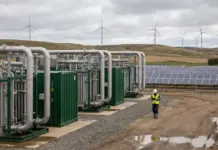
They even surveyed demo sites across the Rhine and back in Yamanashi prefecture, working through permits and transport logistics along with regulatory hurdles. Hamburg showcased its big guns, such as transmission electron microscopy – TEM and synchrotron-based X-ray spectroscopy, while the Yamanashi team exhibited its proficiency in the fields of atomic layer deposition along with scalable catalyst synthesis.
Fuel Cell Nanomaterials and Hydrogen for Next-Generation
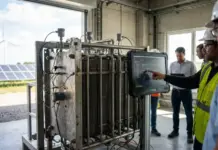
Nanostructured materials are key to enhancing fuel cell technology. By dialling in particle size, composition and support frameworks, researchers can nearly halve precious-metal loadings and ramp up catalytic activity. Yamanashi’s team has been developing carbon-supported platinum alloys via controlled porosity in order to enhance mass transport and stable behaviour under dynamic loads. Meanwhile, Hamburg’s group has developed in situ electrochemical cells that enable one to watch catalyst degradation unfold, giving clues to how to extend the lifetime of a cell. Bringing together these skills goes on to build a more seamless highway from lab demos to commercial PEMFC stacks for transport and stationary applications alike.
Policy and economic factors
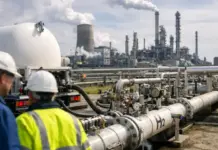
It’s not all about lab-bench wins, but policy push and public cash matter enormously. The Basic Hydrogen Strategy from Japan was initiated in 2014. It happens to have aggressive targets when it comes to cost-competitive green hydrogen and use of hydrogen fuel cells in vehicles, homes and factories. In Europe, Energiewende from Germany and the Fuel Cell and Hydrogen Joint Undertaking – H2ME have been pouring money into refuelling stations and demo fleets. This new research partnership takes advantage of those programs in order to support high-risk, high-reward R&D within nanomaterials for cleaner industry.
Continuing a Partnership Tradition
Universities in Japan and Germany have been working together for decades on catalyst screening and membrane studies, making this meet-up more of a sequel than a start-up. Yamanashi is a pioneer in fuel cells, which was founded in 1949, and Hamburg’s chemistry department is a hotbed of materials science breakthroughs, which includes work on hydrogen infrastructure along with sustainable fuel cell systems. Now they are looking at student exchanges, joint doctoral programs, and shared pilot-scale testbeds so as to keep that collaborative engine running.
Potential effects and next steps
This partnership could significantly shorten the time to market for advanced PEMFCs if it takes off. One should look out for co-authored papers and harmonised testing protocols along with pilot demonstrators highlighting novel catalyst designs. Both sides will form steering committees so as to set research objectives, determine intellectual property regulations and also look out for funding from NEDO of Japan and the European Research Council – ERC.
Problems? Lab methods will need to be scaled, materials shipped across international borders, and different funding timelines balanced, all of which will keep project managers on top of their game.
Mobilisation of Funding and Networks
Making this partnership work is about matching grant calls, aligning budgets and also building institutional mojo. The teams are getting ready for Horizon Europe green hydrogen calls and are writing mirror proposals for NEDO. The winning of those multi-million-euro awards could well go on to cover every stage, right from catalyst recipes to stack prototypes.
They will also tap networks such as the Joint Programming Initiative on Climate – JPI Climate – and the German-Japanese Center for Industrial Cooperation in order to fill the gaps in policy and the private sector. The goal is to attract EU structural funds and also corporate backers in autos and energy.
Industry & Student Engagement
This is not just professors exchanging white papers, but the graduate students get in on the fun, too. Doctoral candidates will rotate through labs in Hamburg so as to get hands-on experience with operando spectroscopy while spending time in Yamanashi, learning how to fabricate catalysts at scale. Meanwhile, industry partners, right from fuel cell stack integrators to electrolyser manufacturers, will be part of advisory boards in order to ensure research remains rooted in real-world needs.
Yamanashi and Hamburg could also benefit from early-stage tech spin-offs or licensing deals which go on to create jobs.
System-Level Integration from Lab to Demo
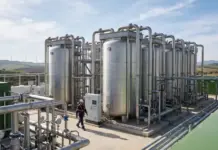
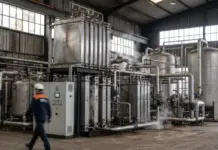
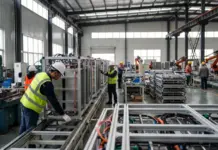
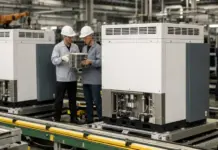
The real test is to plug those new catalysts into a full PEMFC system. The plans are to combine electrolyser work on the high-surface-area anodes with fuel cell stacks for integrated tests. Degradation rates will be studied in pilot-scale modules according to dynamic load cycles, temperature swings as well as start-stop protocols. These trials should identify good practices when it comes to membrane electrode assembly fabrication and early warning signs of malfunction.
This kind of a budding partnership, for those watching the drive toward zero-emission tech and sustainable energy, is a case study in how academic alliances can go ahead and de-risk breakthrough innovations. Pay attention to the jumps in catalyst performance, standardised testing playbooks, and the first gleaming demo units as standard proposals firm up and the pilot programs emerge. This partnership could as well just go on to pave the way for hydrogen production as well as hydrogen fuel cells’ future in a decarbonised world.