
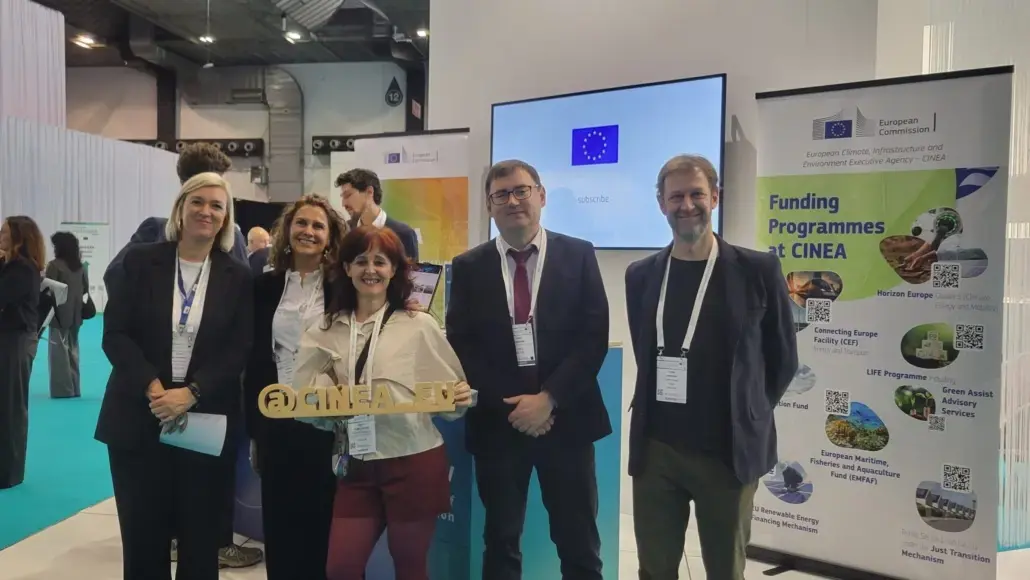

The European Climate, Infrastructure and Environment Executive Agency – CINEA of the EU participated in the European Hydrogen Week 2026, held at Brussels Expo from October 26 till October 30, 2026, which attracted 7,500 participants.
The event brought participants, be they policymakers or companies, for panel talks, networking opportunities, and lunch discussions on the subject of opportunities in scaling hydrogen, strengthening resilience, CINEA said in a statement on October 30, 2026.
The European Commissioner for Energy and Housing, Dan Jørgensen, stated in the opening session of the High-Level Policy Conference that hydrogen could underpin a more sustainable energy system that was also more safe and cost-effective, and this is the reason why Europe’s future depends on it.
CINEA took part during the three days at the European Commission booth, gave presentations at the Innovation Forum, and showcased hydrogen projects handled by the agency via EU funding programs which indeed highlighted the opportunities in scaling hydrogen.
Hydrogen projects – right from cruise ships to ports
An official video released in the week shows evaluations of a working prototype liquid hydrogen tank and its Tank Connection Space as part of a project titled sHYpS, funded under Horizon Europe.
CINEA Project Adviser Gerd Muysewinkel, while congratulating the sHYpS partners for their progress, said, “Innovation is not only about ambition; it is also about rigor, learning, resilience, and teamwork.”
Richard Ferrer, who is the head of the sector at CINEA, laid out EU funding possibilities for hydrogen projects right from research to deployment and market uptake as well as infrastructure at the Innovation Forum.
Notably, the week concluded with a business trip to Port of Antwerp-Bruges, where attendees had the opportunity to explore Belgian projects along with European Hydrogen Hubs, such as Amplifhy Antwerp.
It is worth noting that Amplifhy Antwerp is an EU project of common interest, which is co-financed by the Connecting Europe Facility – CEF Energy and is projected to generate 140,000 tonnes per year of hydrogen from ammonia for direct use in fertilizer and nylon or cracked into hydrogen.