
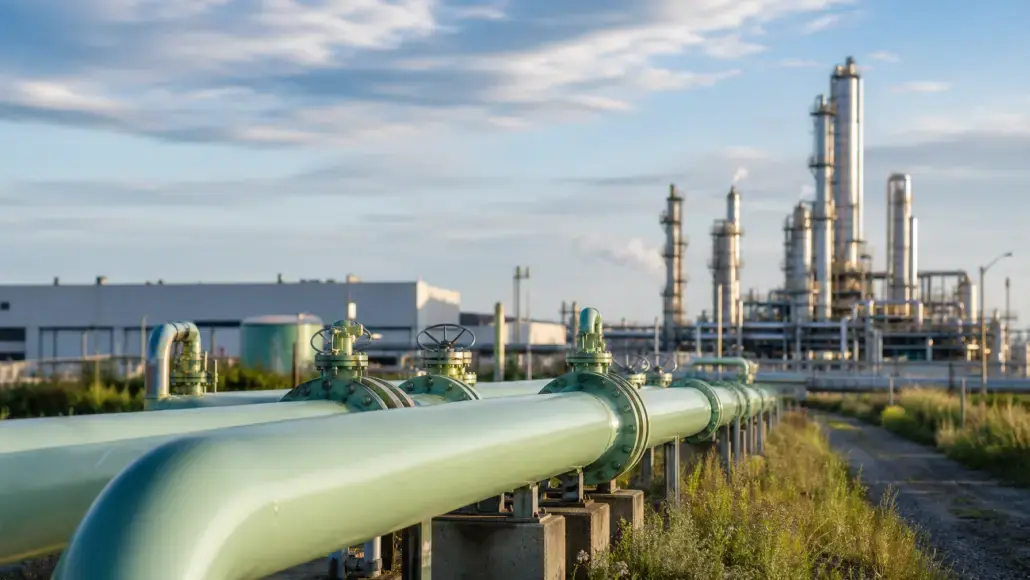

The success of the hydrogen economy relies on the effective delivery of the fuel to the point of consumption. While long distance transmission pipelines move large volumes across states or countries, the development of local distribution networks is what truly enables the decarbonization of the industrial sector. These networks serve as the last mile of the hydrogen value chain, connecting regional production hubs to specific factories, steel mills, and chemical plants. Unlike the high pressure transmission lines, distribution systems typically operate at lower pressures and are designed to handle the variable demand profiles of individual industrial consumers. Building this infrastructure is a critical step in providing a reliable and cost effective alternative to traditional natural gas and coal. The physical deployment of these networks is a massive undertaking that requires careful planning and coordination.
Industrial clusters are the logical starting point for these distribution networks. By co locating multiple high volume users, operators can share the cost of the infrastructure and create a stable anchor for the regional hydrogen market. This geographic concentration allows for shorter pipeline runs and simplified logistics, reducing the overall complexity of the project. As more companies within a cluster transition to hydrogen, the resulting economies of scale drive down the cost for everyone involved. The strategic development of these regional hubs is essential for meeting national climate targets and ensuring the long term competitiveness of the manufacturing sector in a net zero world. The concentration of demand provides the financial security needed to justify the high initial investment in pipeline construction.
Planning and Design of Regional Industrial Hydrogen Hubs
The design of a regional distribution network begins with a detailed assessment of the local industrial demand. Engineers must map out the location of each potential consumer and calculate their peak and average energy requirements. This data informs the sizing of the pipes and the placement of pressure regulation stations. Because industrial processes vary widely, the network must be flexible enough to deliver different volumes and purities of hydrogen. For example, a glass manufacturing plant may require a consistent flow for high temperature furnaces, while a nearby refinery might need high purity hydrogen for chemical processing. The ability to meet these diverse needs is what makes a distribution hub successful.
Geographic considerations also play a major role in the planning process. Distribution networks must often be routed through densely populated industrial zones where space for new utilities is limited. This requires close coordination with local governments and other utility providers to identify existing rights-of-way or to repurpose older natural gas lines. In many cases, the most efficient approach is to build a ring main around an industrial park, allowing multiple users to tap into a single high capacity loop. This design provides redundancy, ensuring that if one section of the pipe requires maintenance, the rest of the industrial consumers can continue to receive fuel from the other direction. The use of digital mapping and geographic information systems is essential for optimizing these complex routes.
Technical Challenges in Last Mile Hydrogen Delivery
Delivering hydrogen to an industrial site involves more than just laying pipes. Each connection point requires a specialized metering and regulation station to ensure that the gas is delivered at the correct pressure and that the volume is accurately recorded for billing. These stations must be equipped with advanced safety systems, including automated shut off valves and hydrogen detectors. Because hydrogen is a much smaller molecule than methane, it is more prone to leaking through standard pipe joints and valve packings. This necessitates the use of high quality seals and frequent leak detection surveys to maintain the integrity of the distribution networks. The maintenance of these small scale assets is just as important as the management of the large transmission lines.
Another technical challenge is the management of gas purity within the network. If the hydrogen is being sourced from multiple producers,such as a large scale electrolyzer and a biomass gasification plant, the resulting blend must meet the specifications of the most sensitive consumer on the line. In some cases, this may require the installation of central purification units at the hub level or localized polishing units at the customer’s site. Additionally, the thermodynamic properties of hydrogen mean that as the gas expands through a pressure regulator, it can actually heat up, unlike natural gas which cools down. This reverse Joule Thomson effect must be accounted for in the design of the regulation stations to prevent the equipment from overheating. The thermal management of these stations is a key area of engineering focus during the design phase.
Economic Models for Shared Infrastructure Investment
The high upfront cost of building distribution networks is one of the primary barriers to the adoption of industrial hydrogen. Traditional utility models, where the cost is recovered through a tariff on the delivered gas, may not be sufficient in the early stages of the market when volumes are low. To overcome this, many regions are exploring public private partnerships where government grants or low interest loans cover a portion of the initial capital expenditure. This reduces the risk for private investors and helps to lower the final price of the hydrogen for the industrial consumer. The involvement of public funding is often the catalyst that allows these projects to move from the planning stage to construction.
Shared investment models among the industrial users themselves are also becoming more common. In this scenario, a group of companies within a cluster forms a consortium to fund and manage the distribution infrastructure. By acting as a single entity, they can secure better financing terms and coordinate their transition to hydrogen more effectively. This collaborative approach also allows for the optimization of the network based on the collective needs of the group, rather than the interests of a single provider. Addressing liquid hydrogen vs ammonia for long distance hydrogen shipping is often a precursor to these local investments, as the method of bulk arrival dictates the design of the onshore distribution and storage facilities. The alignment of international trade and local distribution is a requirement for a cohesive global energy market.
Regulatory Frameworks and Safety Standards for Local Networks
Safety is the paramount concern when operating regional grids in close proximity to industrial workers and the public. Existing codes for natural gas distribution provide a useful baseline, but they must be adapted to account for the unique properties of hydrogen. This includes its wide flammability range, high flame speed, and tendency to disperse upwards. Regulatory bodies are currently working to standardize the requirements for pipe materials, welding procedures, and odorization in hydrogen service. Unlike natural gas, most common odorants contain sulfur, which can poison fuel cell catalysts, leading to a search for new, hydrogen compatible odorants. The development of these new chemical markers is essential for the safe detection of leaks in urban or industrial environments.
Permitting for these regional grids can also be complex, as it often involves multiple layers of government, from local planning commissions to national safety boards. Clear and consistent regulations are essential for providing the certainty that businesses need to make long term investments. Beyond the physical safety of the pipes, regulations must also address the digital security of the network control systems. As distribution hubs become increasingly automated, they must be protected against cyber threats that could disrupt energy supplies to critical industrial sectors. A stable regulatory environment not only ensures safety but also builds public trust in hydrogen as a viable and secure energy source. The transparency of the permitting process is a key factor in gaining community support for new infrastructure projects.
Integration with Smart Grids and Demand Response Systems
Modern regional grids are increasingly being designed as smart systems that can interact with the broader energy grid. By using real time data from electrolyzers, storage facilities, and industrial consumers, operators can optimize the flow of hydrogen to match the availability of renewable electricity. For example, during periods of peak wind production, the network can increase the pressure in the distribution lines to store extra hydrogen, acting as a form of line pack storage. Conversely, during periods of high electricity prices, industrial users might be incentivized to reduce their hydrogen consumption or switch to backup fuels. This level of coordination is necessary for maximizing the value of renewable energy across the entire economy.
This integration allows the hydrogen network to serve as a flexible load for the electrical grid, helping to balance the overall energy system. Industrial consumers can participate in demand response programs, receiving lower energy prices in exchange for providing flexibility to the operator. This level of coordination requires a sophisticated digital infrastructure, including IoT sensors at every node and machine learning algorithms to predict demand patterns. As these smart regional grids mature, they will become the backbone of a highly efficient and integrated energy system, where hydrogen and electricity work together to power a sustainable industrial future. The synergy between these two energy carriers will define the next generation of industrial utility systems.