
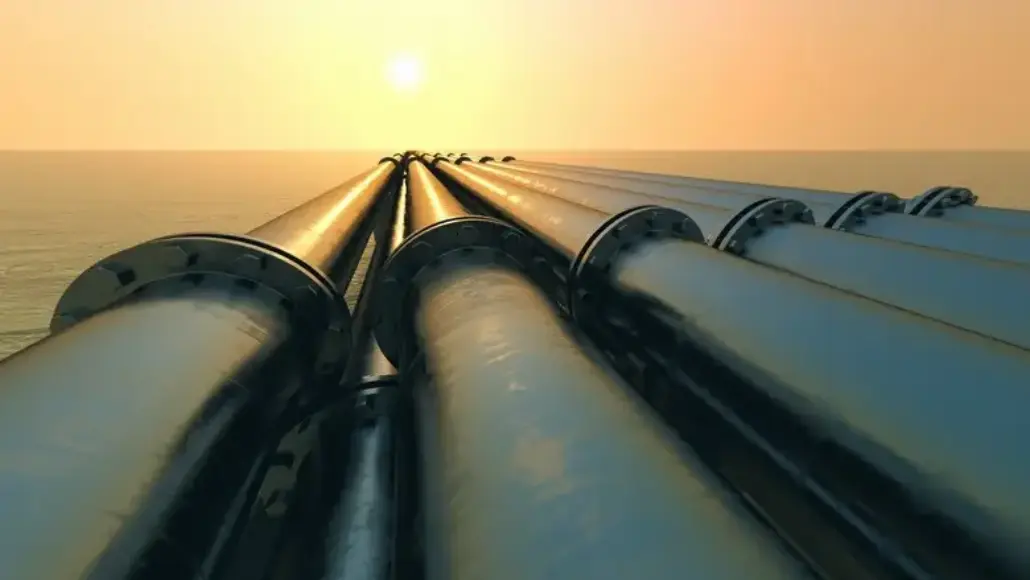

The green hydrogen industry of Denmark has reached a significant turning point, with over 500 MW already booked for the planned hydrogen pipeline – meeting a key demand that was set by a majority of parliament for the pipeline to be built.
Simultaneously, Everfuel and CIP, as well as European Energy, have entered into contracts with the German government so as to supply green hydrogen to industrial customers within Germany. According to Hydrogen Denmark, these developments are key steps in positioning Denmark as the top supplier of green hydrogen in Europe. According to the CEO of Hydrogen Denmark, Linea Soegaard-Lidell, “Important steps have been taken today to realize the enormous opportunities for green hydrogen. Danish producers have not only signed contracts with the German state to deliver hydrogen but have also reserved substantial capacity in the upcoming hydrogen pipeline. The pipeline is now on its way, and it will be essential for European energy independence, climate action, and competitiveness.”
Everfuel, CIP, and European Energy – the latter in partnership with Engie have also entered into agreements with the German government, indicating that they are entitled to declare support of DKK 10 billion over 10 years. In this connection the companies have offered bank guarantees of approximately DKK 800 million.
Apparently, two more projects, which will be receiving similar support from the EU, have to go through the same process in November 2026 by entering into contracts with the European Commission. Linea Soegaard-Lidell added, “The companies are taking significant financial risks. They are making financial commitments to deliver hydrogen to German customers through the pipeline, and they will soon make multi‑billion‑kroner investments in green hydrogen production. The political agreement eased the requirements just enough to make those risks manageable. The signatures and capacity reservations show that the policy has worked. This is very positive.”
It is well to be noted that the 1133-km hydrogen pipeline will extend from Esbjerg through Vejen to the border between Denmark and Germany. From there the pipeline will be extended by Germany to major industrial companies further down south. German industries, which are indeed energy-intensive, will be capable of substituting fossil natural gas with green hydrogen from Denmark through electricity generated by wind turbines as well as solar power. It is therefore considered a green transition project and an asset when it comes to achieving the much-needed European energy security.
The German government recently unveiled a package to get the market for green hydrogen going. The package comprises schemes for industrial hydrogen assistance, specifications for hydrogen-produced green steel in offshore wind tenders, as well as a strategy when it comes to converting power plants to operate on hydrogen.
Said Linea Soegaard-Lidell, “The German government sees Denmark as an important import route for green hydrogen to heavy German industry. Germany wants to receive green hydrogen from Denmark, and its latest policy package demonstrates its determination to ensure that German industrial customers purchase it.”