



















Japan Engine Corporation and Kawasaki Heavy Industries, both from Japan, have started hydrogen co-firing on a full-size main engine made for big commercial ships. This is a step toward making hydrogen-powered shipping a reality.
The project is backed by the government through the New Energy and Industrial Technology Development Organization, as well as Mitsui O.S.K. Lines – MOL, MOL Drybulk, Onomichi Dockyard, and ClassNK.
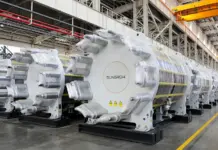
The companies said that the engine, which is meant to be installed on a ship that travels across oceans, has achieved hydrogen co-firing in all cylinders, with a ratio of over 95% at full load while keeping stable operation. More tests will be done so as to improve performance.
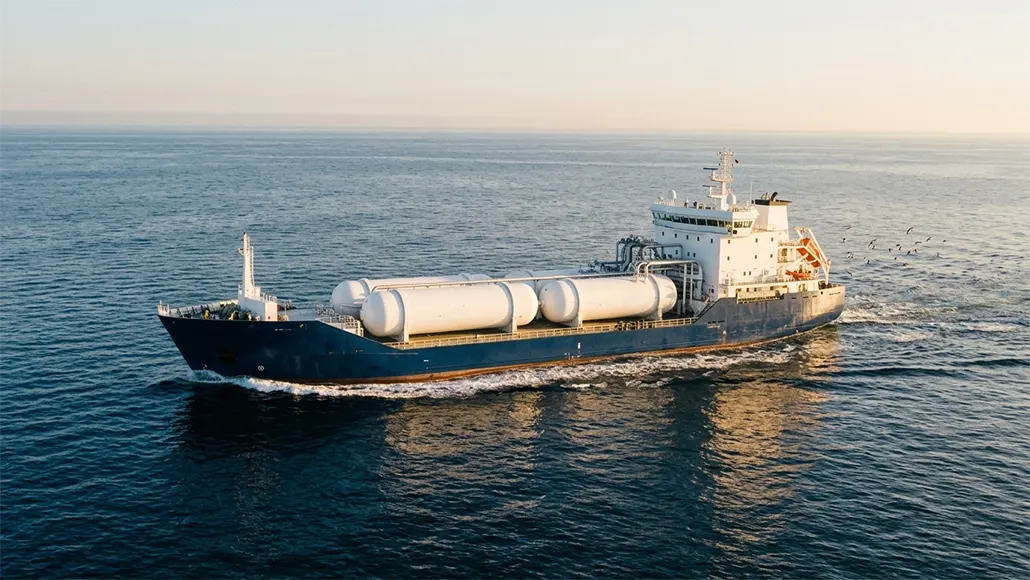
In the past few years, hydrogen-powered shipping has sped up, but most projects have been for smaller ships that only travel short distances. The companies said that the new engine is meant to allow high-output operations over long distances via using liquefied hydrogen fuel and a low-speed, two-stroke engine.
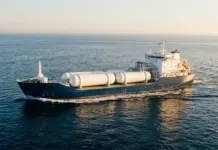
The engine is set for delivery in January 2027 and will be put on a 17,500-deadweight-tonne multi-purpose ship that Onomichi Dockyard is building.
MOL and MOL Drybulk are expected to start a three-year demonstration program with the vessel in fiscal year 2028.
Kawasaki Heavy Industries is working on the marine hydrogen fuel supply system of the ship, and ClassNK will check the safety at every stage as far as the project is concerned.
The goal of the project is to help make big merchant ships that run on hydrogen and cut down on greenhouse gas emissions from the maritime industry.